Top IT Hardware Leasing Platforms
Your employees move. Your leased laptops need to follow. Compare the top 8 IT hardware leasing platforms on global reach, Apple support, and device recovery.
 Ahmad ZakariaNovember 27, 2026
Table of contents
- What's the Difference Between an IT Leasing Company and an IT Leasing Platform?
- Why Do IT Hardware Leases Go Wrong for Distributed Teams?
- Best IT Hardware Leasing Platforms for Remote Teams
- What Should You Ask Before Signing an IT Hardware Lease?
- Which Leasing Option Fits Your Team?
- Lease the Hardware, Plan for the Handoff
IT hardware leasing platforms let you equip employees with laptops and other devices through fixed-term agreements and regular payments. You can spread hardware costs over the lease period without paying the full purchase price upfront.
But for a distributed, Apple-first company with 500+ employees, the challenge is in managing those devices as employees join, leave, or move between countries.
When an employee leaves, your IT team needs to retrieve their laptop, check that it's unlocked, and get it back before the lease expires. That adds to your team's workload, even with HRIS, IdP, and MDM systems in place.
Unreturned laptops and Macs that remain activation-locked can also hold up lease closure and increase your final costs. This makes the support you get throughout the lease an important deciding factor.
With several options available, this article compares 8 best IT hardware leasing platforms on pricing models, coverage, device management, and end-of-lease services, so you can choose a provider that fits your distributed workforce.
What's the Difference Between an IT Leasing Company and an IT Leasing Platform?
The main difference is the scope of services. Here’s what it means:
Type | What it provides | Who it's for | Examples |
Independent lessors | Finance IT equipment from different manufacturers, with options to purchase or return devices at the end of the term. | Companies that already have hardware suppliers and need financing without being tied to one manufacturer. | CHG-MERIDIAN, CSI Leasing |
OEM captive lenders | Finance equipment from their own manufacturers, often through leasing or installment plans. | Businesses that mainly use a single manufacturer's hardware and want flexible renting through that vendor. | Dell, HPE Financial Services |
Lifecycle leasing platforms | Combine hardware leasing with services such as procurement, delivery to employees, asset tracking, maintenance, retrieval, and eventual disposal. | Distributed companies that need leased devices delivered to remote employees and retrieved during offboarding, hardware refreshes, or at the end of the lease term. | Deel IT, Firstbase |
Why Do IT Hardware Leases Go Wrong for Distributed Teams?
IT hardware leasing comes with fixed contract terms, but the demands of a distributed team keep changing. The following is how the issues can show up in the different stages of your equipment’s lifecycle:
Challenge | Why is it an issue for distributed teams? |
|---|---|
Delayed hardware delivery | International shipping, customs clearance, and supplier delays can affect onboarding schedules, leaving employees without their assigned laptops on their start dates. |
Incomplete device provisioning | Laptops may arrive without MDM enrollment, security settings, or required applications. Your IT team must then coordinate remote configuration before employees can start using them. |
Inaccurate asset records | Lease records may not reflect current device assignments or locations. This affects inventory accuracy and slows down verification of leased equipment at contract expiry. |
Repairs and replacement delays | Faulty devices must be shipped for repair or replacement. Without local IT support or spare devices, employees may face extended downtime. |
Remote equipment retrieval | Collecting laptops from departing employees requires shipping arrangements, return tracking, and receipt confirmation. Late collections can leave leased assets unaccounted for. |
Lease-end return requirements | Devices must be collected and returned within contractual deadlines. Late returns, missing accessories, or equipment damage may result in additional charges. |
Data security during returns | Leased devices need secure data erasure and appropriate MDM unenrollment before return or reassignment. Incomplete processing creates security risks and holds up device returns. |
Best IT Hardware Leasing Platforms for Remote Teams
Here’s a quick view of the leasing platforms compared:
Provider | Best for | Lease terms | Apple support | Key limitation |
CHG-MERIDIAN | Companies with existing suppliers | Custom terms | Yes | Quote-based pricing with no standard leasing and asset management package. |
CSI Leasing | Multi-vendor equipment leasing | Usually 6-60 months | Yes | No published fixed rates |
Dell | Dell-heavy fleets | FMV and $1 buyout options | No | Extra fees, including a $75 processing charge |
Lenovo | Standardizing Lenovo equipments | FMV: 24-48 months | No | $4,000 minimum order and business eligibility criteria |
HPE Financial Services | Infrastructure refresh cycles | Typically 24-48 months | No | Primarily leases servers, storage, and networking equipment |
Deel IT | Remote teams needing repairs and device replacements. | 12-48 months | Yes | Requires an upfront payment covering six months of leasing |
GroWrk | Preconfigured laptops for remote teams | 3-36 months | Yes | No standard buyout option listed |
Firstbase | Leasing with hardware lifecycle management | 24 or 36 months | Yes, US authorized reseller | Less suited to single-office teams managing hardware internally |
Independent lessors
Independent lessors finance equipment from different manufacturers. Here are two providers, each with different leasing terms and services.
CHG-MERIDIAN
With CHG-MERIDIAN, you choose the IT equipment and supplier. The supplier ships the hardware directly to you, and CHG-MERIDIAN pays for it after you confirm receipt. You then pay the company in regular installments over the agreed lease term.
As the lessor, CHG-MERIDIAN retains ownership throughout the lease. When your lease expires, you can return the devices, extend the agreement, or request a purchase quote.
There’s also a run-on option to continue using the equipment after the original term with no lock-in period.
Best for: Companies with established supplier relationships that want to retain control over equipment selection and negotiation under a leasing arrangement.
Not for: Businesses looking for a standard leasing package with upfront pricing and asset management features included in the regular cost.
Global coverage and Apple support
CHG-MERIDIAN operates in over 30 countries and provides services in up to 190 countries through its subsidiaries, partners, and affiliates. As a manufacturer-independent lessor, it also leases Apple devices, including MacBooks, iPhones, and iPads, as well as equipment from other manufacturers.
CSI Leasing
CSI Leasing offers lease terms usually between 6 and 60 months, depending on the equipment. You can pay monthly or quarterly, either at the beginning or end of each billing period.
For larger hardware rollouts, CSI’s SmartTrack program lets you add equipment from different vendors over 90 days. It then combines those orders into a single quarterly lease schedule.
With the platform’s FMV leases, CSI Leasing retains ownership. At the end, you can return the equipment, extend the lease, or purchase it at its current market value. These options also apply to individual devices.
Best for: Mid-sized and large companies looking to connect equipment lease management with their existing IT systems, including ServiceNow.
Not for: Businesses that prefer fixed leasing rates published upfront to compare costs when evaluating providers.
Global coverage and Apple support
CSI Leasing provides equipment financing in 50 countries and has over 70 offices worldwide. The platform also supports Apple hardware through vendor relationships, including assistance with equipment orders and supplier-related issues.
OEM captive lenders
OEM captive lenders are financing companies owned by equipment manufacturers. The following are the top platforms to consider:
Dell
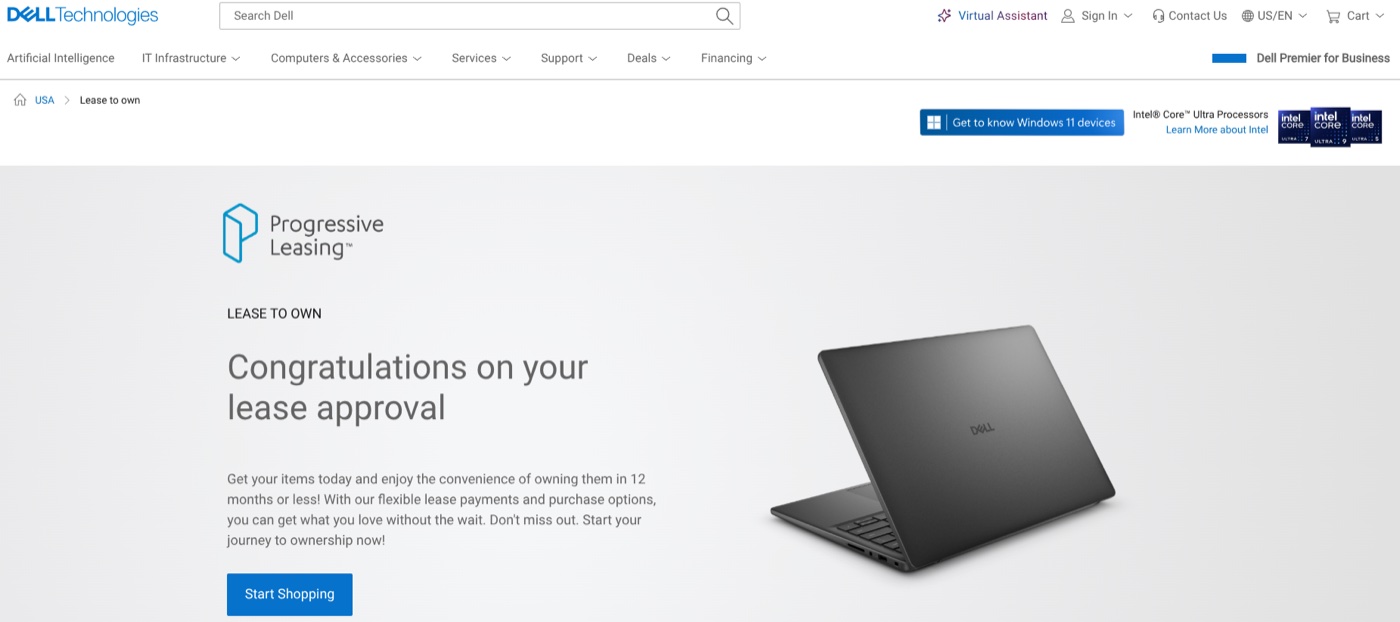
Dell provides equipment leasing through Dell Financial Services (DFS). It has two plans with fixed monthly payments.
One is technology rotation, where you purchase the equipment at its fair market value when the lease ends. You can also extend the agreement for a fixed period, or return the devices and upgrade to newer models.
The other is technology ownership, where you can buy the equipment for $1 at the end of the term or return it and upgrade to newer devices.
Best for: Companies with a Dell-heavy device fleet that want to combine hardware leasing with Dell's ProSupport and deployment services.
Not for: Businesses that want to avoid extra leasing charges, as the platform applies a $75 transaction processing fee.
Global coverage and Apple support
Dell Financial Services provides leasing in more than 50 countries, either directly or through financing partners. Coverage includes North America, Europe, and Asia-Pacific, although available plans and terms change by location.
DFS also finances non-Dell equipment, but details about Apple device leasing aren't publicly available.
Lenovo
Lenovo handles equipment leasing through Lenovo Global Financial Services (LGFS), with two financing options: Pay to Use and Pay to Own.
With Pay to Use, you rent Lenovo equipment for an agreed period and make fixed, recurring payments. Pay to Own lets you spread the equipment cost over scheduled payments and own it at the end of the term.
It also offers:
Fair market value (FMV): Return the equipment, continue leasing it, or buy it at its market value when the agreement ends.
$1 purchase option: Acquire the equipment for $1 at the end of the financing term.
Best for: Businesses that want a choice of lease durations, as Lenovo's FMV leases run for 24, 36, or 48 months.
Not for: Teams with small equipment orders. Lenovo's business financing program requires a minimum order of $4,000, at least 10 employees, and two years in business.
Global coverage and Apple support
Lenovo uses a hybrid financing model that combines its own LGFS operations with third-party partners to support businesses worldwide. Its published leasing options focus on its own hardware, with no confirmed support for Apple devices.
HPE Financial Services
With HPE Financial Services (HPEFS), you can lease IT equipment through its Technology Refresh program. You make monthly or quarterly payments, typically over a 24- to 48-month term, under a fair market value lease structure.
HPEFS retains ownership throughout the lease. At the end of the term, you can return the equipment, purchase it, or renew the agreement under mutually agreed terms.
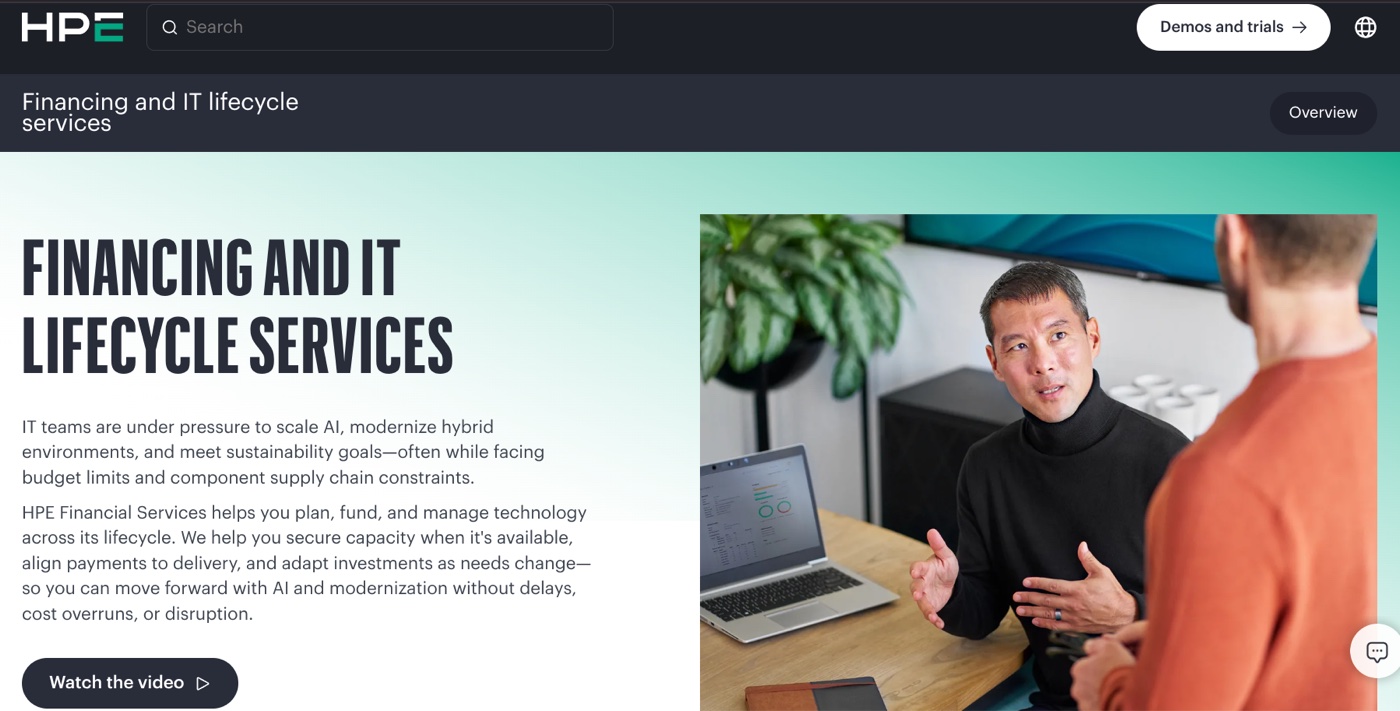
If you're replacing the equipment, HPEFS begins planning the refresh 120 days before your agreement expires.
Best for: Enterprises with scheduled infrastructure replacement cycles to meet changing performance and capacity needs.
Not for: Businesses mainly looking to lease employee laptops, monitors, and accessories, as this program covers servers, storage, and networking equipment.
Global coverage and Apple support
HPE Financial Services supports customers in the Americas, Europe, the Middle East, Africa, and Asia-Pacific. As for Apple support, it doesn't publicly confirm whether its Technology Refresh program covers MacBooks, iPads, or iPhones.
Lifecycle leasing platforms
Lifecycle leasing platforms combine equipment leasing with end-to-end hardware management services. Let's compare the top ones in this category.
Deel IT
Deel IT brings equipment leasing directly into your employee onboarding process. You can select laptops, monitors, and accessories from its catalog, customize their specifications, and set the rental terms.
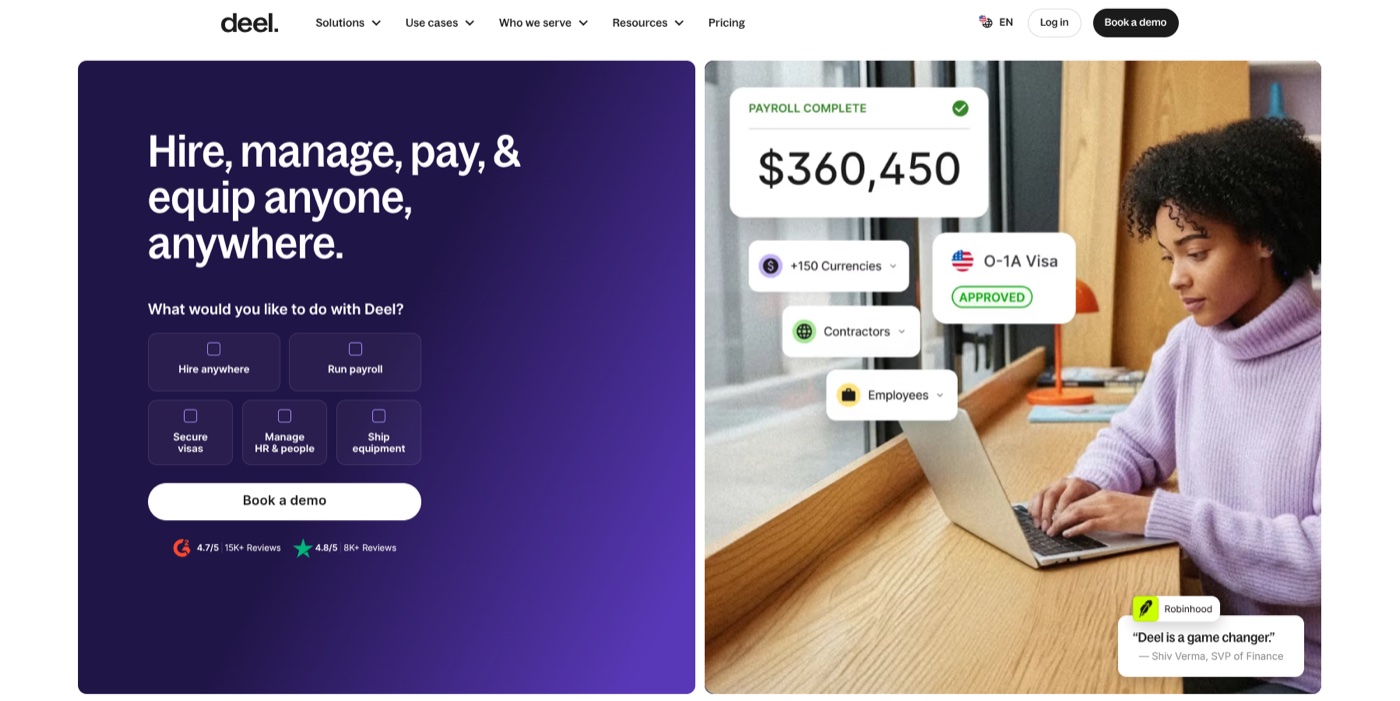
Your IT, HR, and finance teams can approve the request through the platform. You can renew the lease, reassign the equipment, or arrange its collection at the end of the term. Purchasing the device is possible only as an exception.
The platform also handles the equipment procurement process through its global vendor network. You can rent devices for 12 to 48 months, with Deel IT retaining ownership, or you can purchase them outright and own them from day one.
Best for: Companies with lean IT teams that need 24/7 technical support, replacement devices, and repair assistance for remote employees.
Not for: Small businesses that cannot afford a large upfront payment, as Deel IT requires six months' rent in advance.
Global coverage and Apple support
Deel IT coordinates equipment procurement, delivery, replacements, and returns in over 130 countries.
For Apple support, the platform is an Apple Authorized Reseller in the US and the Netherlands, covering Apple device sales in the United States and the EEA. It also provides zero-touch deployment with automated MDM enrollment.
GroWrk
GroWrk lets you choose a MacBook, Linux workstation, or Windows laptop, add peripherals, and select a lease term. Agreements run from 3 to 36 months, with monthly charges based on the device, country, and duration.
When your lease expires, you can upgrade to newer equipment, extend your current devices, or return them.
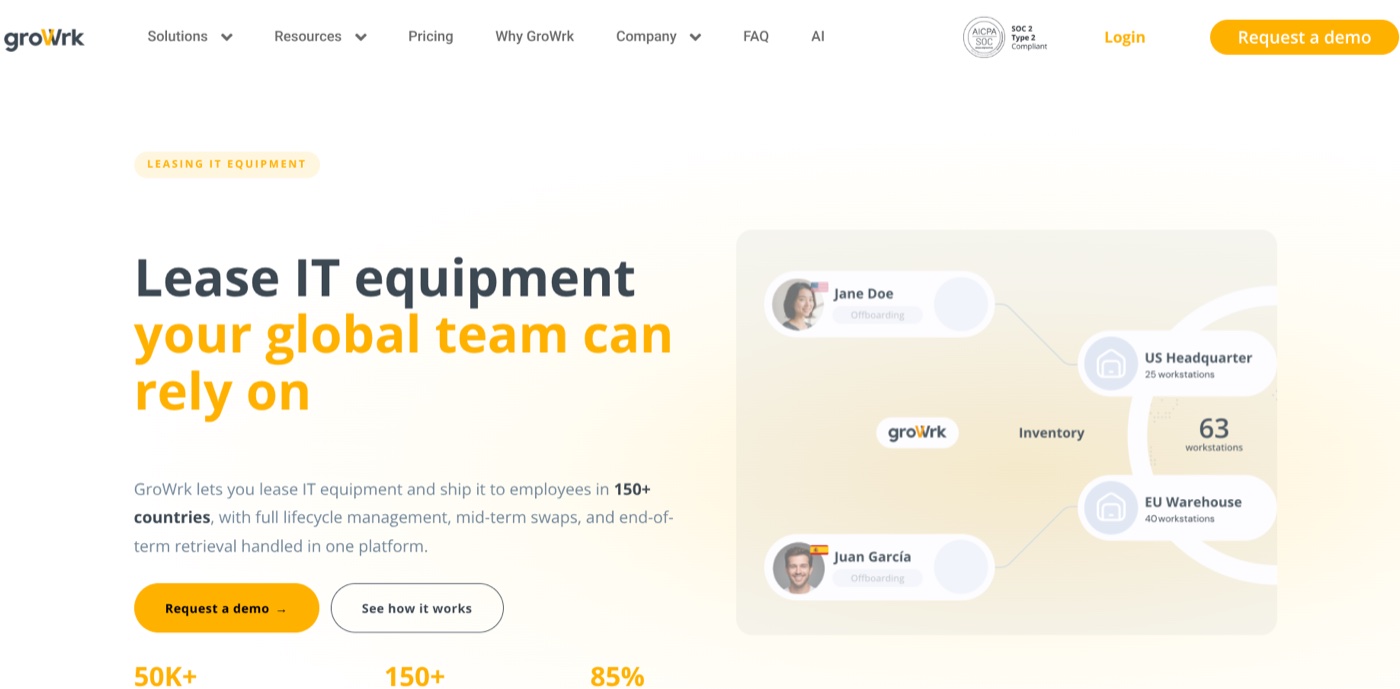
GroWrk collects and performs certified data wiping for returned hardware. The devices then go for resale or recycling, and you can access the destruction certificates through your dashboard.
Best for: Companies that want leased laptops delivered preconfigured and enrolled in their preferred MDM system.
Not for: Businesses that want to own their laptops after the lease ends, as the platform doesn’t list a standard purchase or buyout option.
Global coverage and Apple support
GroWrk supports IT equipment leasing in 150+ countries, with local delivery and support for country-specific tax and compliance requirements. The platform also supports MacBook leasing.
Firstbase
Firstbase lets you lease employee laptops and other IT equipment through its OEM-neutral Hardware as a Service (HaaS) model. You can lease through Firstbase or work with your preferred vendor. Hardware subscriptions are available for 24 or 36 months, with monthly or annual payment models. Fees are set out in your agreement.
Firstbase or its affiliates retain ownership of leased devices. At the end of the initial term, you can return the equipment, continue leasing, or, where available, request a buyout.
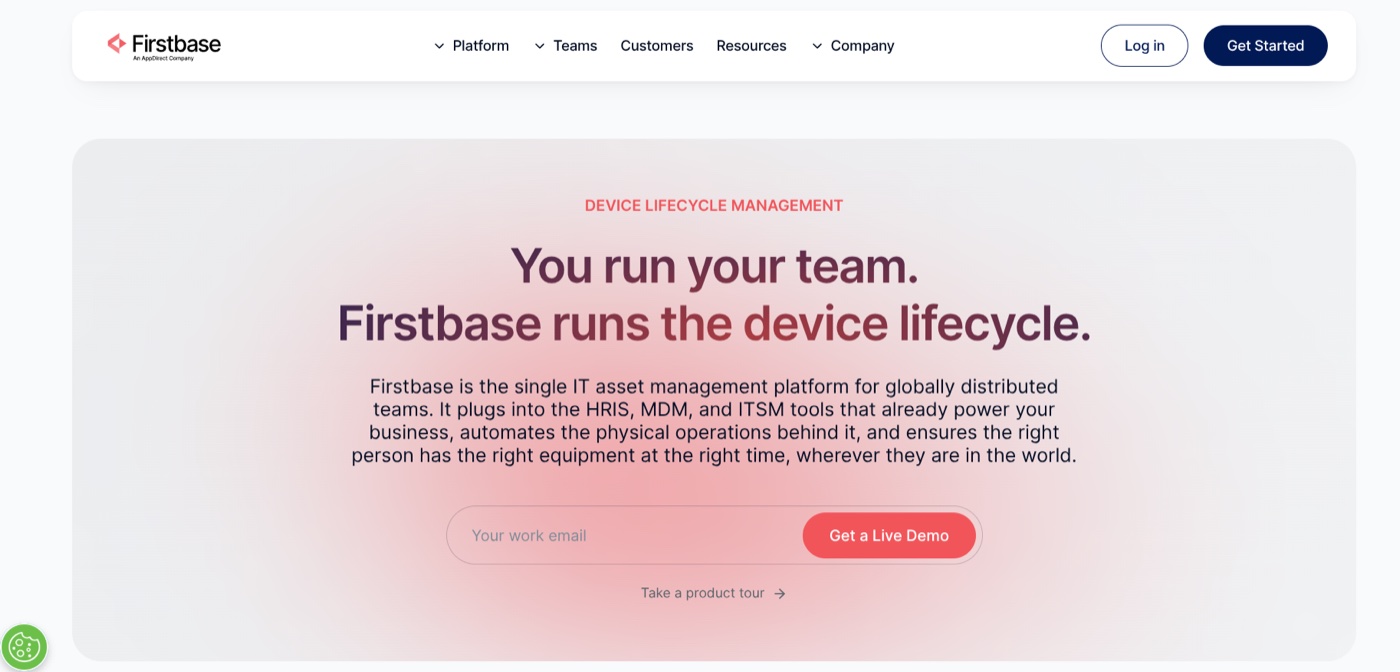
The platform manages the hardware lifecycle, from preparing and shipping devices directly to remote employees to coordinating repairs and replacements. For returns, it arranges retrieval kits, shipping labels, and carrier pickups, achieving a 97% retrieval rate.
It also delivers 1.8x clearer fleet visibility, with live warranty, location, and lifecycle tracking.
Returned leased devices go through Firstbase's IT asset disposition process, depending on their condition. This includes NIST 800-88-compliant data wiping, asset tracking, and certificates of destruction where applicable. Devices can then be remarketed or recycled.
Best for: Companies managing hardware for distributed employees in multiple countries, particularly those with frequent hiring and offboarding.
Not for: Small businesses with a single office that only need basic laptop leasing without extensive lifecycle management.
Global coverage and Apple support
Firstbase manages hardware operations in 150+ countries, covering the end-to-end lifecycle processes.
The platform is an Apple Authorized Reseller in the US, supporting direct Apple procurement, zero-touch provisioning, and AppleCare for enterprises. It also integrates with Jamf and Kandji and handles Apple device retrieval and redeployment.
What Should You Ask Before Signing an IT Hardware Lease?
A lease that looks good on paper may not be the right fit for your distributed team. The real test is how well the agreement supports your IT operations over time. Use these questions to review the terms before signing:
Does the provider support leasing in every country where you have employees?
Check leasing availability by country, supported device models, and regional restrictions. A provider may ship hardware to a country without supporting leasing agreements for employees based there.
How Firstbase addresses it: Firstbase coordinates hardware procurement and direct delivery to employees in multiple countries through its regional fulfillment network and local partners.
Will employees receive fully configured devices?
Ask whether the provider handles MDM enrollment, security configuration, and application installation before shipping. Confirm which setup services are included in your agreement.
How Firstbase addresses it: Firstbase prepares devices with company security settings, encryption, and department-specific applications prior to delivery. It also supports custom device imaging and configuration requirements, reducing your IT team's setup work.
Can you track leased devices throughout the contract?
Check whether the provider's asset management system records employee assignments, device locations, shipping status, and contract dates. Confirm if it connects to your existing systems.
How Firstbase addresses it: Firstbase connects to HRIS systems like Workday and MDM tools such as Jamf and Microsoft Intune. These integrations keep employee assignments and device information up to date. Its Asset Lifecycle Tracker also maintains hardware records for inventory reviews and audits.
Who collects equipment when an employee leaves?
Confirm whether asset recovery for offboarding is included in the lease. Check who collects devices, tracks outstanding returns, and covers the costs of failed collections.
How Firstbase addresses it: Firstbase follows up with departing employees for up to 30 days if they don't respond to return requests. IT administrators receive an escalation after two weeks, and return statuses help identify outstanding collections.
Which Leasing Option Fits Your Team?
The right leasing arrangement should match how your company manages its hardware. Use the table below to see which option makes the most sense for your team.
Option | Right choice if | Not the right choice if | When to consider Firstbase |
Independent lessors (CHG-MERIDIAN, CSI Leasing) | You already have hardware suppliers and want financing for equipment from multiple manufacturers. | You need leasing combined with employee delivery, device configuration, and retrieval services. | You want leasing and hardware lifecycle management under one provider, without coordinating these services separately. |
OEM captive lenders (Dell, Lenovo, HPE Financial Services) | You mainly use one manufacturer's equipment or need financing for regular infrastructure upgrades. | You want to lease equipment from multiple manufacturers under one agreement. | You need OEM-neutral leasing for an Apple-first fleet, with deployment, tracking, and returns included. |
HR-platform leasing (Deel IT) | You already use Deel for HR or payroll and want to coordinate employee hardware through its ecosystem. | You prefer to select your hardware leasing provider independently of your HR and payroll software. | You want a dedicated hardware lifecycle platform that integrates with your existing HRIS and MDM tools. |
Buying outright | You have the upfront budget, want full ownership, and plan to use your devices for several years. | You need recurring payments to spread hardware costs over time. | You want to retain ownership but reduce your IT team's workload by outsourcing device procurement, deployment, repairs, and retrieval. |
Lease the Hardware, Plan for the Handoff
Traditional lessors are good at financing IT equipment. If your company has a standardized fleet and an internal team managing hardware logistics, they can be a practical choice.
But distributed teams have more to deal with. A configured MacBook needs to reach a new hire in another country, and that same device must be retrieved and unlocked before the lease expires.
Firstbase brings leasing into the broader hardware lifecycle. You can lease devices on 24- or 36-month terms, buy them outright, or bring in equipment you already own. All of them can be managed together, with the platform coordinating procurement, deployment, repairs, and retrieval.
Book a demo to see how we can support your next hardware lease, from procurement to final return.
Written by
Ahmad Zakaria
Ahmad Zakaria covers IT operations, hardware lifecycle management, and distributed workforce solutions at Firstbase. His content is built from real customer data, operator interviews, and hands-on experience managing devices across 150+ countries.
Get started with
Firstbase today
Remote and hybrid work aren't going anywhere. It's our mission to make it easier to manage the assets your distributed team needs—from onboarding through offboarding and every repair, replacement, and upgrade in between.
Fill out the form and a member from our team will reach out by phone!
Get a Live Demo