Oomnitza Alternatives
From managing software licenses to retrieving employee laptops, compare 8 Oomnitza alternatives and see which IT problems each platform solves.
 Ahmad ZakariaNovember 27, 2026
Table of contents
Oomnitza lets your IT team track company hardware through digital asset records, track software usage and automate routine IT tasks. It connects to your existing systems to monitor device assignments, update inventory, and coordinate offboarding. All this helps carry workflows forward with less manual effort.
Still, your priorities may differ when you're an IT manager, IT director, or IT operations leader overseeing employee hardware for a distributed company. Here are the factors why you could consider Oomnitza alternatives:
You want software that takes less time to learn and configure.
You need a simpler way to track hardware assets without extensive customization.
You want to reduce your current IT asset management costs by switching to a more affordable platform.
You have up-to-date asset records, but still rely on manual processes to ship, retrieve, and dispose of employee laptops.
Each reason for switching calls for a different solution. This article compares the top 8 Oomnitza alternatives to help you find the right tool that fits your IT team's needs.
We'll look at their strengths, use cases, and limitations, including how Firstbase keeps employee hardware moving between locations through procurement, returns, and redeployment.
Why Are IT Teams Moving Away from Oomnitza?
Oomnitza earns positive reviews for its integrations, customization, and asset visibility. Still, you may find a few drawbacks that lead you to consider alternatives. Let’s take a closer look:
Complex configurations and permissions
Oomnitza supports custom workflow automation, but setting up the platform can take time and require technical expertise. Platform users mention this issue:
“Initial setup, schema design, and workflow logic can feel complex without strong planning or technical ownership….. It’s powerful, but not always plug-and-play - you need someone technical to really unlock its value.”
Source
A Reddit thread also points to this challenge:
“I found it to be quite tedious for my use case. Everything requires setting up a workflow automation which becomes a very heavy manual effort on my part to set those up initially.”
Pricing concerns
Oomnitza uses custom pricing. Independent estimates place the costs at $40,800 annually, with reported contracts ranging from $11,583 to $95,900. Your final quote depends on your asset count, integrations, and additional modules, leaving you with limited pricing visibility until you contact sales.
Difficult UI Navigation
Oomnitza's interface can slow down everyday IT tasks, as finding and changing settings may take extra time. A platform users shares this concern:
“The interface can place data, inputs, and controls in many different areas, so you may need to jump between several screens to make configuration changes.”
What Does "Oomnitza Alternative" Actually Mean?
Oomnitza covers software and license management, hardware asset records, and IT workflows. Your reason for switching determines which type of platform you need.
If you're leaving because… | Look at… |
Your IT team still handles device procurement, shipping, retrieval, and disposal manually. | Firstbase for physical hardware operations. |
You need a tool focused on tracking hardware assets. | AssetSonar, Freshservice, Asset Panda, or Teqtivity for hardware inventory management. |
You want a dedicated approach to software licenses and SaaS governance. | ServiceNow, Ivanti Neurons, and Flexera One for software asset management and license optimization. |
Best Oomnitza Alternatives for Hardware Asset Management
Here’s a quick view of the top Oomnitza alternatives compared:
Platform | Pricing model | Key strength | Limitation | Best for |
AssetSonar | Asset-based. ITAM starts at $0.75/asset/month. | Connects devices, employees, and service history through its IT Graph. | Limited reporting flexibility and dashboard customization options. | Mid-sized and enterprise IT teams managing connected asset records. |
Freshservice | Per-agent subscription. Starts at $19/agent/month, billed annually. | Combines asset discovery with IT support and service workflows. | Advanced automation and customization can increase costs. | Mid-sized companies managing IT assets and support requests. |
Asset Panda | User-based pricing. Starter plan begins at $3,000/year. | Custom asset fields, workflows, and mobile barcode scanning. | Limited native integrations with certain IT systems. | Operations teams tracking equipment across departments and facilities. |
Teqtivity | Per-user subscription. Starts at $79/user/month for 1-5 users, billed annually. | Customizable asset records with HR, MDM, and identity integrations. | Advanced workflow configurations may require vendor assistance. | Growing IT teams moving away from spreadsheets. |
ServiceNow | Custom quote for SAM Advanced or SAM Prime. | Software lifecycle automation and enterprise compliance management. | High implementation costs and configuration complexity. | Large enterprises already using ServiceNow ITSM. |
Ivanti Neurons | Custom quote; pricing varies by usage. | Software discovery and usage visibility across managed devices. | Workflow and reporting customization can require considerable effort. | IT teams managing large device fleets within the Ivanti ecosystem. |
Flexera One | Subscription-based, with fees tied to contract terms and usage. Custom quote. | Software license optimization, visibility into SaaS application spending, and vendor compliance. | Advanced functions and integrations require training. | Enterprises managing complex software portfolios and vendor agreements. |
Firstbase | Custom quote; Pricing depends on the user limit, location, and services needed. | Global device procurement, delivery, retrieval, and secure disposal. | Doesn't replace software license or SaaS governance tools. | Distributed teams looking to reduce manual hardware operations. |
How we selected these alternatives: We picked tools by which Oomnitza job they replace (hardware tracking, software governance, or physical operations), their G2 review volume, and whether they integrate with the HRIS, IdP, and MDM tools Oomnitza commonly integrates with.
Hardware asset management
Hardware asset management (HAM) tools track the physical equipment your company owns and uses. That includes laptops, monitors, phones, and other IT devices. It covers the full lifecycle, including procurement, assignment, maintenance, and eventual retirement.
Here, the goal is to let your IT team know which devices the company has, who uses them, where they are, and which ones need replacing. The following are the top tools in this category:
AssetSonar
AssetSonar is EZO's IT asset management software. It can replace Oomnitza for teams that mainly need hardware and software asset management. It supports patch management, IT service desk integrations, and automated onboarding and offboarding workflows.
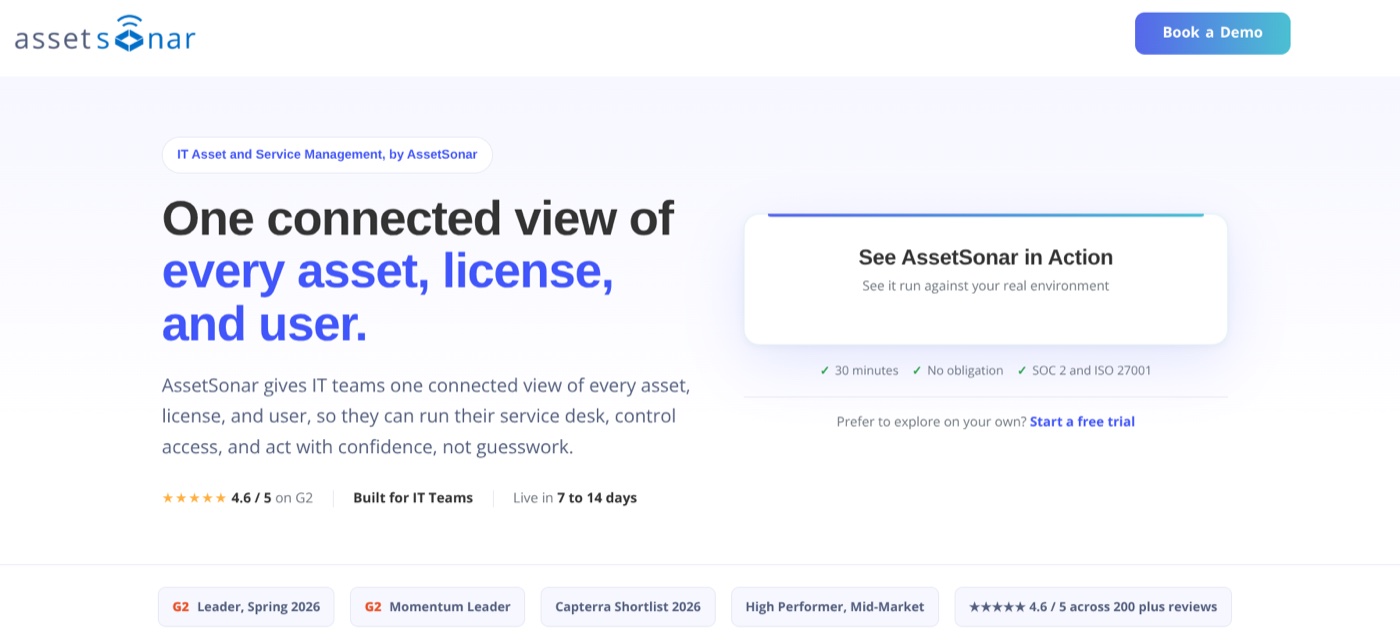
AssetSonar’s IT Graph connects information about devices, employees, licenses, and service history. You can see how they relate without switching between different systems. The platform also integrates with tools like Okta, Jamf, Microsoft Intune, and Jira.
Where do users push back?
The platform’s reporting tools don't always give users the flexibility they want. User reviews often point to limited filtering and dashboard customization. Pricing can also be a challenge for small teams.
Best for: Mid-sized to enterprise IT teams that want a clearer view of how devices, employees, and IT activities are connected.
Not for: Teams that need end-to-end hardware operations covering procurement, shipping, collection, storage, redeployment, and disposal. AssetSonar primarily coordinates these activities through software.
Freshservice
Freshservice is Freshworks’ IT service management software. It’s an alternative to Oomnitza for teams looking to connect hardware records with IT support work, including incident resolution, service requests, and change management.
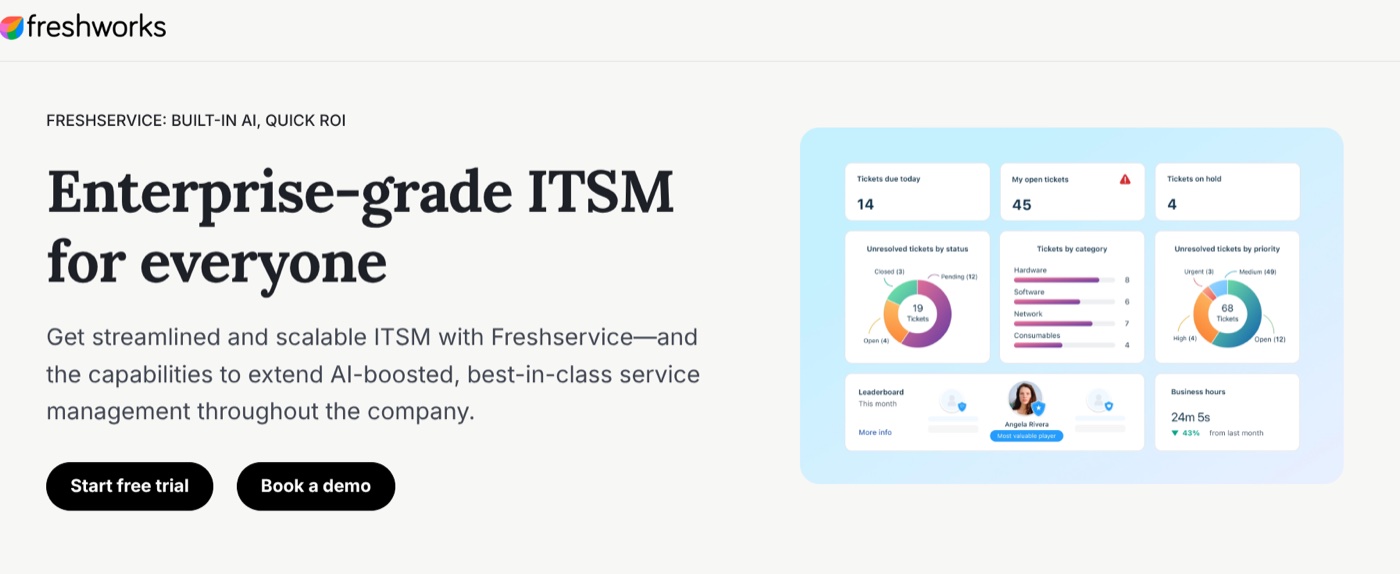
It provides automated asset discovery and a configuration management database (CMDB) that maps relationships between devices, applications, and services. The platform also includes a self-service portal, a knowledge base, and SLA policies for managing IT incident response.
Where do users push back?
Freshservice's higher-tier plans can get expensive. Platform users mention rising costs when adding advanced automation and asset management features. Complex workflows can also be restrictive when teams need customization beyond the standard settings.
Best for: Mid-sized companies that want to organize IT support across multiple departments without relying on manual coordination.
Not for: Smaller teams with basic IT needs, as Freshservice’s pricing and setup requirements may feel excessive.
Asset Panda
Asset Panda is an asset tracking and lifecycle management platform. It lets you create records to organize and track your company's equipment. It replaces Oomnitza when your main priority is keeping inventory organized around your own processes.
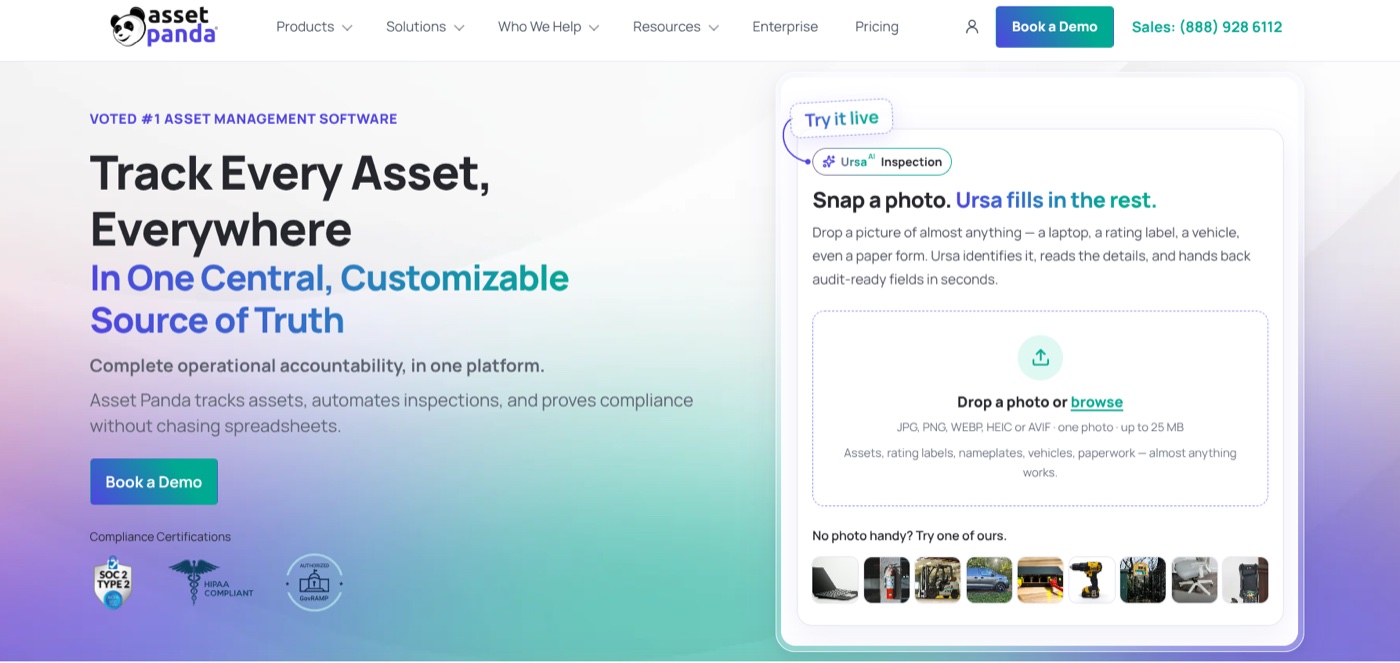
The platform lets you create custom fields, forms, and workflows for different asset types. You can also use its mobile app to scan barcodes, carry out inspections, and update records while checking equipment on-site.
Where do users push back?
Integrations can be a sticking point. Users have mentioned limited connections with tools like Jamf and Google Workspace. Connecting other platforms through APIs can also require extra work.
Best for: Operations-heavy companies that share equipment across departments, job sites, or facilities and need better visibility on their asset usage.
Not for: Businesses that only need a basic inventory tracker and have little use for custom workflows, inspections, or automation.
Teqtivity
Teqtivity is an IT asset management platform that lets you track equipment throughout its lifecycle, from purchase to retirement. It's an Oomnitza alternative if you want more control over how you organize your asset records and workflows.
You can customize fields, statuses, and approval rules to fit your IT processes. The platform connects to HR, identity, and MDM tools to keep asset records up to date. It also maintains activity logs and stores Certificates of Data Destruction (CODDs) for audits.
Where do users push back?
Advanced customization can require extra support. Platform users say certain workflows and integrations need help from Teqtivity's team, which can add time to the initial setup.
Best for: IT teams replacing spreadsheets and disconnected systems with a dedicated IT asset management platform as their needs grow.
Not for: Companies looking for a single platform to manage IT assets and run a full IT service desk without separate ticketing software.
Enterprise and software governance
As your company grows, tracking software licenses, subscriptions, and IT spending can become challenging.
Enterprise and software governance tools give you a clearer view of how you use software and spend on it. You can track usage, manage license costs, and ensure applications comply with your company's IT policies. Here are the platforms to consider:
ServiceNow
ServiceNow's Software Asset Management (SAM) helps you manage software across SaaS, cloud, and on-premises applications. It replaces Oomnitza's software governance capabilities, including license tracking, usage monitoring, and compliance management.
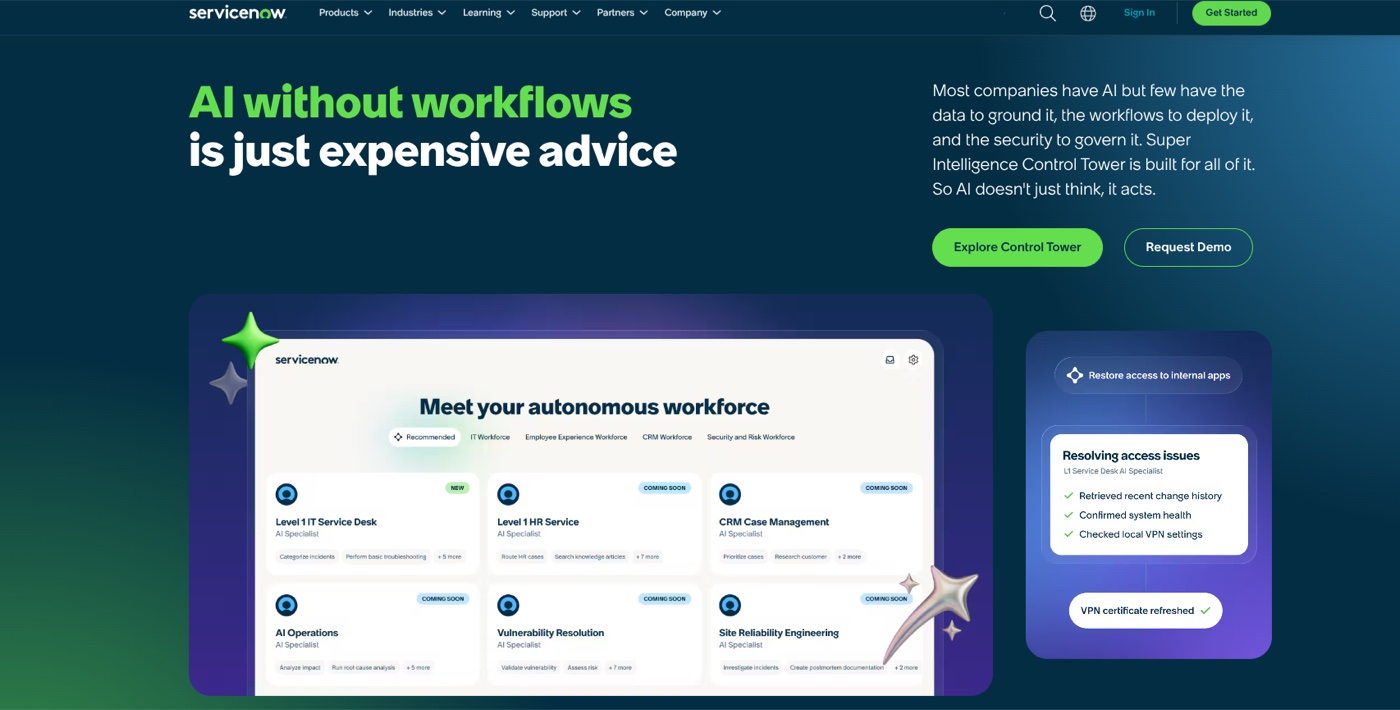
The platform lets you identify redundant applications and decide which to keep, replace, or retire. It flags restricted software and potential security vulnerabilities. Its AI agents also handle software requests, summarize compliance status, and evaluate applications for removal.
Where do users push back?
Pricing is a recurring concern with ServiceNow. Users mention high licensing and implementation costs, with additional charges for certain customizations and advanced modules. The platform also takes time to configure, especially if you lack dedicated technical expertise.
Best for: Large enterprises already using ServiceNow for IT service management and looking to bring software governance into the same platform.
Not for: Small IT teams looking for a lightweight inventory tool with minimal setup and administration.
Ivanti Neurons
Ivanti Neurons handles the software inventory, usage, and licensing across your IT environment. Its software management tools cover Oomnitza's tracking and governance capabilities.
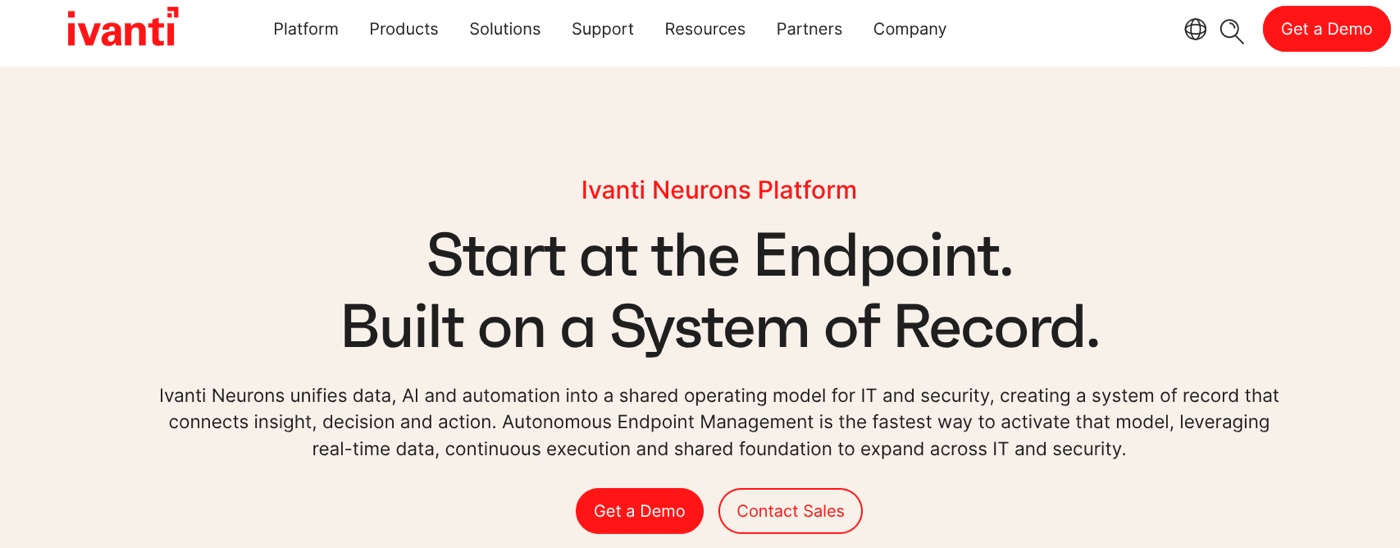
Its Software Inventory feature identifies installed applications and organizes them by publisher, product, and version. You can also check usage across your endpoints, including the last launch date.
Where do users push back?
Users say configuring workflows and customizing the platform takes considerable effort. Customizing reports and dashboards is another common concern.
Best for: IT teams managing large device fleets that want software discovery and asset management connected to their existing Ivanti tools.
Not for: Businesses that mainly need software license governance without extensive endpoint management capabilities.
Flexera One
Flexera One is an alternative to Oomnitza for companies that want more detailed control over software licenses, vendor agreements, and IT spending. Here you can compare purchased licenses with actual software usage to identify compliance risks.
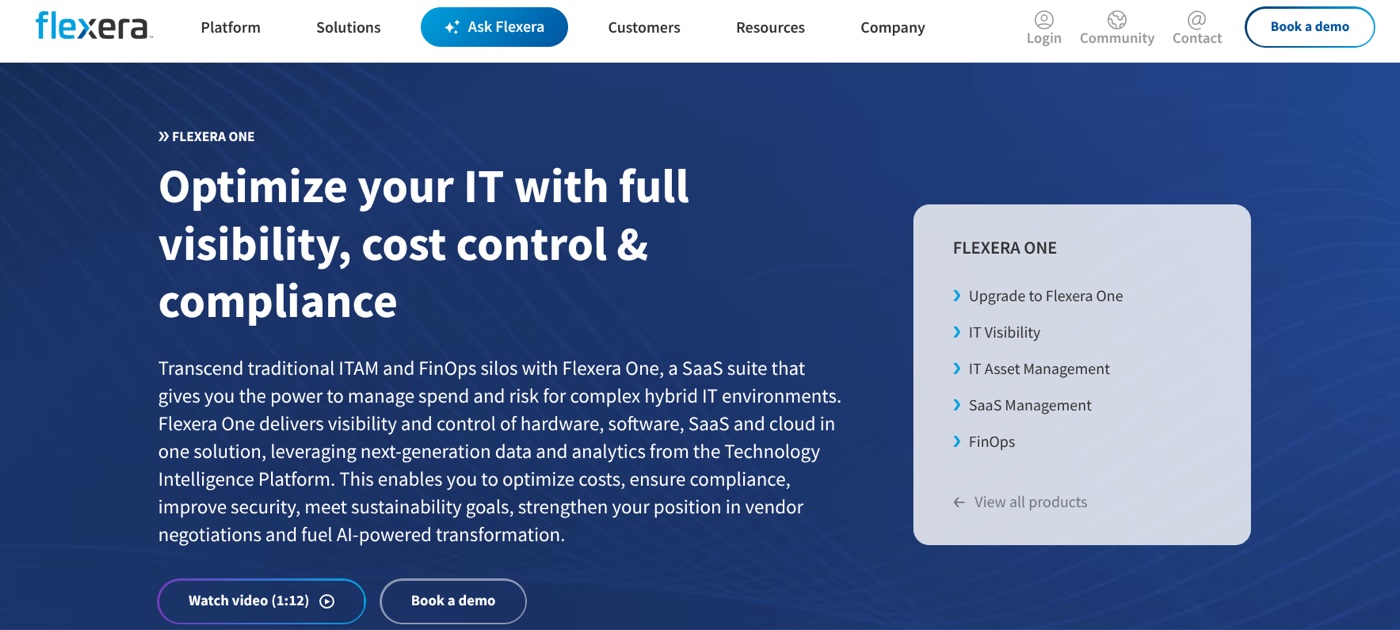
Its SaaS Management tools help you discover applications individual departments purchase without IT approval. It also lets you review subscription costs and upcoming renewals to spot unnecessary expenses.
Where do users push back?
The platform’s common concern is its initial training requirement. Platform users say it takes time to get familiar with its features, especially when configuring integrations. Teams also need additional guidance before using its advanced functions.
Best for: Large enterprises managing software from multiple vendors, especially those with high licensing costs and contracts to oversee.
Not for: Small businesses with limited IT budgets that don't need enterprise-level software asset management capabilities.
Hardware operations
Accurate asset records help you manage your IT equipment, but they don't deliver or return laptops. Oomnitza and the alternatives covered above can track device lifecycles and automate related workflows. You still need to arrange shipping, repairs, collection, and preparing equipment for reuse.
This gap becomes more noticeable when your employees work across different countries. International deliveries involve customs, taxes, and local logistics, which your IT team may have to coordinate separately. Firstbase handles the physical side of hardware management:
Firstbase
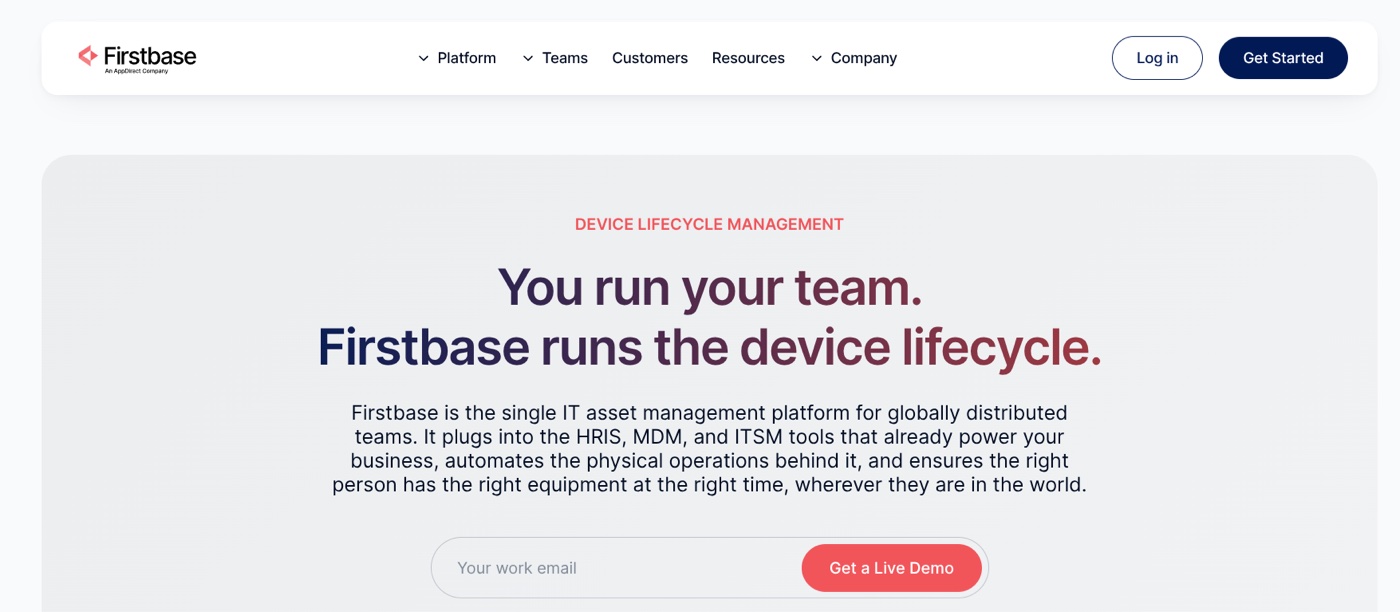
Firstbase puts the physical work behind your asset records. It handles device procurement, shipping, retrieval, and disposal, with records updated as equipment moves through each stage. Here's how that plays out across your hardware lifecycle:
Hardware procurement and global delivery
Firstbase sources, configures, and delivers employee devices across 150+ countries, with an average delivery time of 2-5 days. Its zero-touch deployment service prepares devices before they reach employees. Laptops can arrive MDM-enrolled and ready for your company's SSO setup.
The platform also coordinates international shipping, including customs clearance, duties, and import requirements.
At New Relic, Firstbase's zero-touch provisioning helps new employees set up their laptops without an in-person IT handoff. Thomas Olson, Manager of IT Program Management, explains:
“Having our laptops in a pending state, ready to be configured before they even leave the box, means a new employee can hit the ground running.”
Device repairs, replacements, and refreshes
In case of laptop failure, Firstbase can ship a replacement before collecting the faulty device. Eligible in-stock equipment can arrive within 1-2 business days through expedited shipping in the US, UK, and EU.
After receiving the damaged laptop, the platform checks the warranty status and arranges repairs through the manufacturer or a repair partner. Your IT team can track when the device ships for repair and when it's ready for reuse. You can also initiate hardware upgrades, with Firstbase shipping the new equipment and collecting older devices for reuse.
Device retrieval
Firstbase automates hardware retrieval through HRIS integrations. When an employee is marked for offboarding, the platform can initiate the return process with prepaid return kits, shipping labels, and pickups.
It also follows up with unresponsive employees and tracks pending returns. Through this automated process, customers achieve a 97%+ retrieval rate, compared to the industry average of 30-50%.
After asset recovery, devices undergo inspection, cleaning, secure data erasure, and OS restoration. The platform grades each device based on its condition and functionality. Usable devices are repackaged and restocked, while damaged units go for repair or warranty processing.
Secure data destruction and ITAD
Firstbase manages IT asset disposition across warehouses in 50+ countries. You can create an ITAD request in under 60 seconds, including bulk requests for tracked and untracked equipment stored at your offices.
The platform automatically generates NIST 800-88-aligned Certificates of Destruction and stores disposition records for audits. It also provides real-time resale estimates to help you assess the recovery value of aging devices.
What Firstbase doesn't replace?
Firstbase focuses on the physical hardware lifecycle, from procurement and deployment to retrieval and disposal. It doesn't replace tools that manage your SaaS licenses, software usage, cloud resources, or application access.
How Do You Migrate off Oomnitza?
Before you leave Oomnitza, you need to account for the data and workflows your team currently manages through it. The four steps below cover the migration from export to cutover.
Export your records from Oomnitza: Oomnitza lets you download hardware asset records in CSV or XLSX format. Choose the full inventory or specific categories, including endpoints, infrastructure, and networking. Each file has a 25,000-record limit, so larger inventories require separate batches.
Map your fields to the new platform: Match asset identifiers, employee assignments, and device statuses to your new platform's fields. Review custom fields separately, as their names and formats may differ between systems.
Clean your inventory before importing: Remove duplicates, correct missing serial numbers, and verify employee assignments. Separate active equipment from retired, lost, or disposed assets. Also, retain historical records that your IT, compliance, and finance teams still need.
Finalize the switch: Update your integrations to point to the replacement platform. Confirm access to audit records and disconnect Oomnitza.
How to Choose the Right Oomnitza Alternative for Your Team
Your choice depends on your IT team size, the assets you manage, and the problems you want to solve. Use this table to see whether switching platforms makes sense or whether you need additional support for physical hardware operations.
Option | Right choice IF | NOT the right choice IF | Add Firstbase IF |
Stay on Oomnitza | You have an established ITAM setup, reliable asset records, and workflows that meet your needs. | Your team spends too much time maintaining the platform or needs simpler asset tracking. | - You have clear asset visibility, but the physical work behind each device still falls on your IT team. |
Enterprise asset management (ServiceNow, Ivanti, Flexera One) | You run a large IT environment with compliance and asset management needs. | You have a smaller team that needs basic inventory tracking without enterprise-level complexity. | You manage thousands of devices, but shipping replacements and collecting old equipment still take manual work. |
Mid-market asset management (AssetSonar, Freshservice, Teqtivity) | You need hardware inventory tracking, asset assignments, and IT service workflows. | You require advanced software license optimization or complex enterprise governance. | Your team can track assigned devices but still handles employee deliveries and returns manually. |
Lightweight tracker (Asset Panda) | You have a small IT team and need a simpler way to record assets, ownership, and status. | You need in-depth automation, software governance, or broad enterprise integrations. | Your inventory is organized, but IT still spends hours packing, shipping, and recovering laptops. |
The Right ITAM Tool Still Needs the Right Hardware Support
Your ITAM or HAM platform can tell you which employee has a laptop, its current status, and when it's due for replacement. But delivering, repairing, retrieving, and disposing of devices still requires coordination.
Firstbase manages these processes end to end. It works alongside your existing MDM, HRIS, and other management tools, so you don't have to replace a system that's already doing its job.
Even untracked office equipment and older device fleets can be brought into the process. You can arrange their collection and disposal without first recording every device in your inventory.
Keep your asset records where they belong and let Firstbase handle the logistics side. Keeping Oomnitza? Book a demo to see how Firstbase handles the shipping, returns, and disposal for the devices you already track.
Written by
Ahmad Zakaria
Ahmad Zakaria covers IT operations, hardware lifecycle management, and distributed workforce solutions at Firstbase. His content is built from real customer data, operator interviews, and hands-on experience managing devices across 150+ countries.
Get started with
Firstbase today
Remote and hybrid work aren't going anywhere. It's our mission to make it easier to manage the assets your distributed team needs—from onboarding through offboarding and every repair, replacement, and upgrade in between.
Fill out the form and a member from our team will reach out by phone!
Get a Live Demo