Best Laptop Inventory Management Platforms for Teams That Ship Globally
Laptop inventory management has a branding problem. The name suggests it's about inventory, about knowing what you own and where it sits. And that's exactly where most tools stop. They give you a dashboard, a serial…
 Chris HerdJuly 7, 2026
Table of contents
Laptop inventory management has a branding problem. The name suggests it's about inventory, about knowing what you own and where it sits. And that's exactly where most tools stop. They give you a dashboard, a serial number, and a location tag. You get a system of record.
But a system of record doesn't ship a laptop or clear customs. It doesn't chase down a former employee who left three months ago with a MacBook Pro still assigned to their name.
For IT managers & IT Ops leads with remote distributed teams, the hard part is about what happens to that device across its full lifecycle: procurement, deployment, maintenance, retrieval, and disposal. There are five stages, and most ITAM tools cover one or maybe two.
This guide breaks down where laptop inventory management falls short for remote and hybrid teams, compares tools across categories (from asset discovery platforms like Lansweeper to full-lifecycle operations platforms like Firstbase), and gives you a decision framework to match the right solution to your setup.
TL;DR Top Laptop Inventory Management Platforms at a Glance
Category | Platforms | What they do | Where they stop | Best for | Not for |
|---|---|---|---|---|---|
Asset discovery | Lansweeper, Snipe-IT | Agentless network scanning, barcode/QR-based inventory with check-in/check-out | No procurement, shipping, retrieval, or disposal | Single country IT teams under 200 employees | Distributed teams shipping internationally |
End-user ITAM | Teqtivity, EZO AssetSonar | Device assignments, check-in/check-out, audit trails, compliance | No warehouses, no logistics, no device imaging | Teams that need clean records of who has what | Multi-country ops needing physical fulfillment |
ITAM governance | ServiceNow ITAM, Asset Panda, InvGate | CMDB, procurement workflows, stockroom automation, license compliance, Health Rules (InvGate) | Records and workflows only; no physical execution | IT teams needing lifecycle governance, compliance reporting, and audit readiness | Teams needing procurement-to-disposal execution |
Returns and warehousing | Hello Retriever, Allwhere, Workwize, GroWrk | Retrieval, and varying levels of procurement, deployment, and storage (48-150+ countries) | No Apple Authorized Reseller status; partner-dependent supply chains | Multi-country teams with shipping and retrieval challenges | Teams wanting single-vendor-owned operations |
Full lifecycle operations | Firstbase | Procurement through disposal, owned warehouse, 150+ countries, NIST 800-88 wipe, Apple Authorized Reseller | Doesn't replace MDM or identity tools | IT managers at 500-person distributed companies who want one vendor, one invoice, zero logistics overhead | Teams managing fewer than 50 devices with no plans to scale |
Customers report hitting 98% new-hire satisfaction on onboarding by automating the full device lifecycle, from equipment selection to delivery. Take a self-guided tour to see how it works.
Best Laptop Inventory Management Software
We've grouped tools by what they do. Each category covers one or two layers of IT management, and some cover an entire lifecycle.
Asset Discovery and IT Inventory Visibility
These three platforms show which devices are on your network and what's installed on them.
Lansweeper
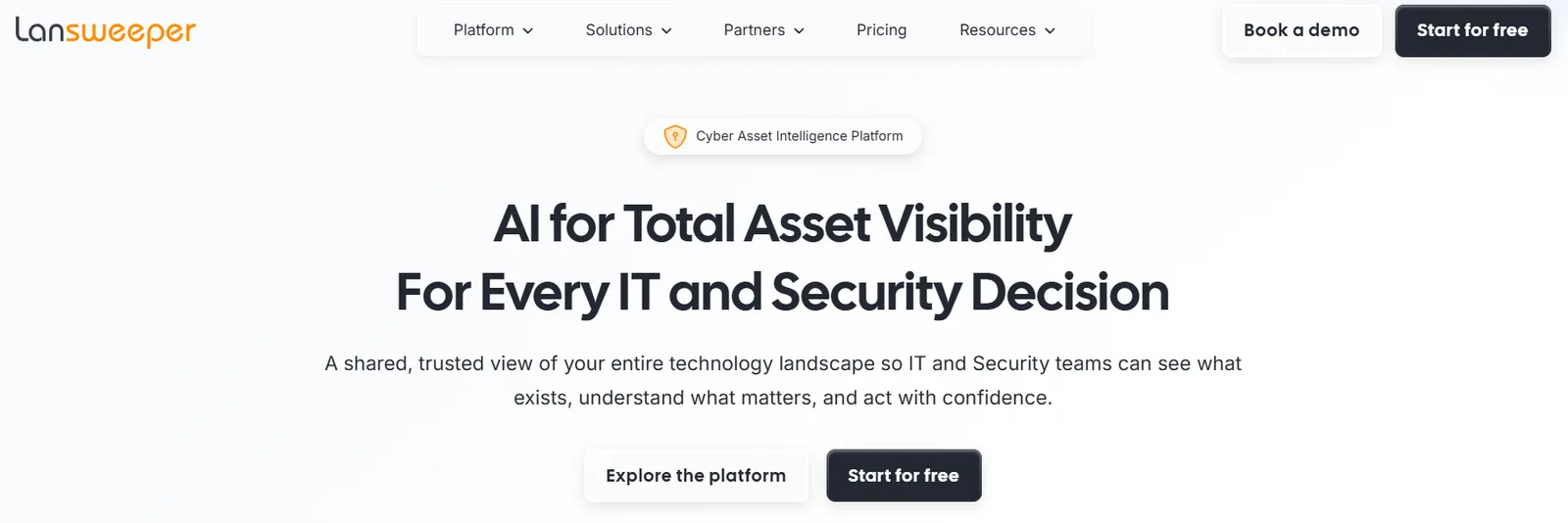
Lansweeper focuses heavily on asset discovery. It scans IT, OT, cloud, and endpoint environments, then brings asset data into a central inventory. Lansweeper supports active and passive scanning, plus agent-based and agentless discovery methods. It scans network ranges, queries Active Directory, pulls WMI data on Windows endpoints, and uses SSH and SNMP for Linux and network hardware.
But it's a discovery engine. It won't track ownership changes, manage procurement, or handle anything that happens after a device is found.
Snipe-IT
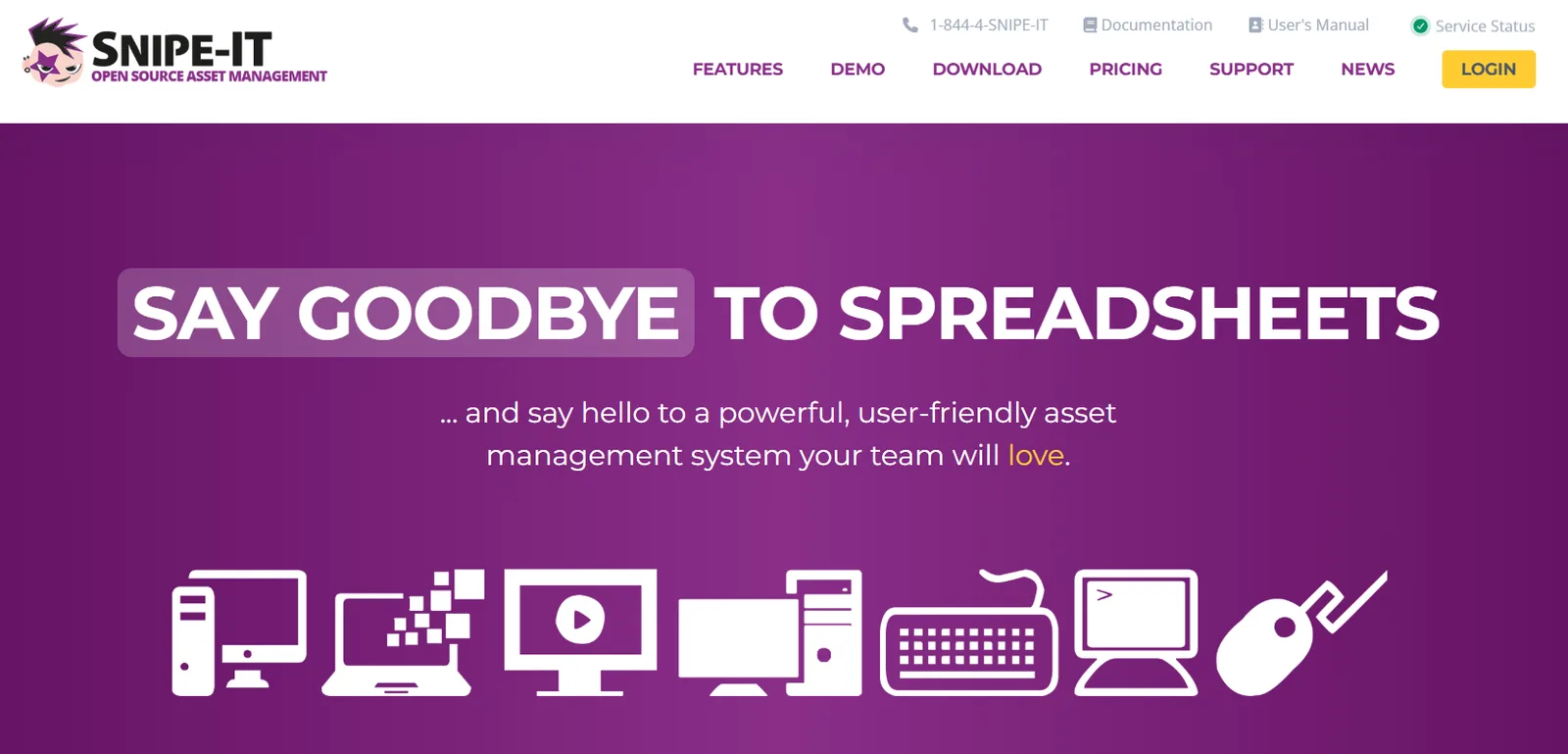
Snipe-IT is an open-source ITAM system built on PHP (Laravel). It tracks hardware, software licenses, peripherals, and accessories through check-in/check-out workflows, with full audit logs on every action. It supports barcode and QR code scanning, custom fields, license expiration alerts, and a REST API with native Jamf and Kandji integrations. Available in 55+ languages.
Unlike Lansweeper, Snipe-IT doesn't scan your network. You add assets manually or import them via CSV/API. It's an inventory record system, not a discovery engine. Self-hosted is completely free; cloud plans have no per-device pricing. The downside: you install, patch, and maintain it yourself.
Where this category stops
Lansweeper scans your network but doesn't manage any lifecycle stage after discovery. Users flag increasing prices and a push to force users into the cloud version. Snipe-IT users report not receiving notifications about dual asset holders or license expirations, both of which should be standard for any inventory tool. Neither procures devices, holds inventory, configures laptops before shipment, ships to employees, retrieves hardware during offboarding, or performs certified data wipes. They build the record, but the physical work is still on your IT team.
End-User IT Asset Management
If the first category is about finding your devices, this one is about knowing who has them and what state they're in.
Teqtivity
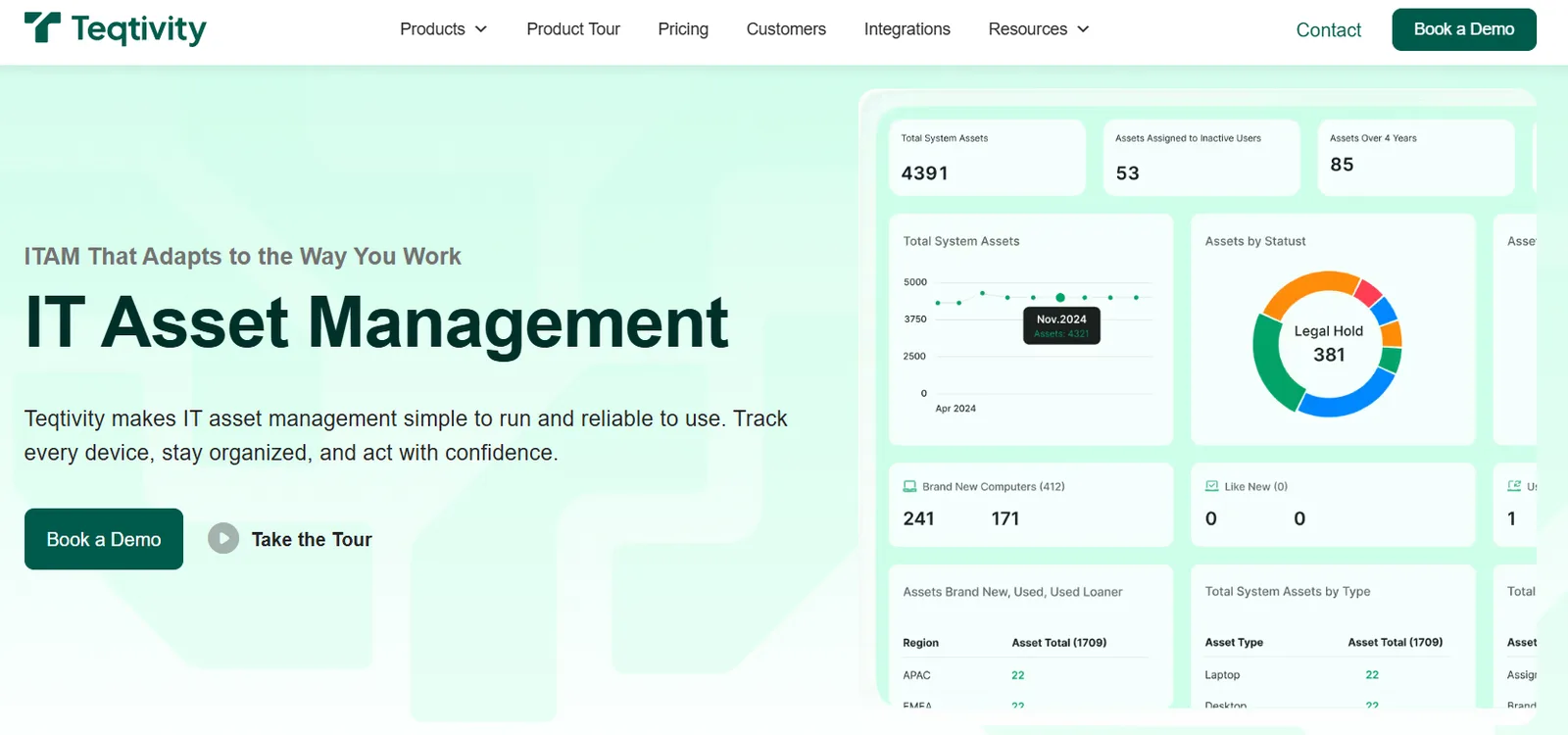
Teqtivity is a cloud-based ITAM platform that tracks laptops, desktops, mobile devices, and accessories through the full lifecycle.
What makes it different from the discovery tools above is the employee-facing workflow layer. IT teams can automate check-ins and check-outs, assign devices to specific users or departments, and track transfers and repairs with full audit trails. Teqtivity supports SOC 2 and HIPAA compliance and integrates with Jamf, Kandji, Microsoft Intune, Okta, Jira, and Zendesk.
EZO AssetSonar
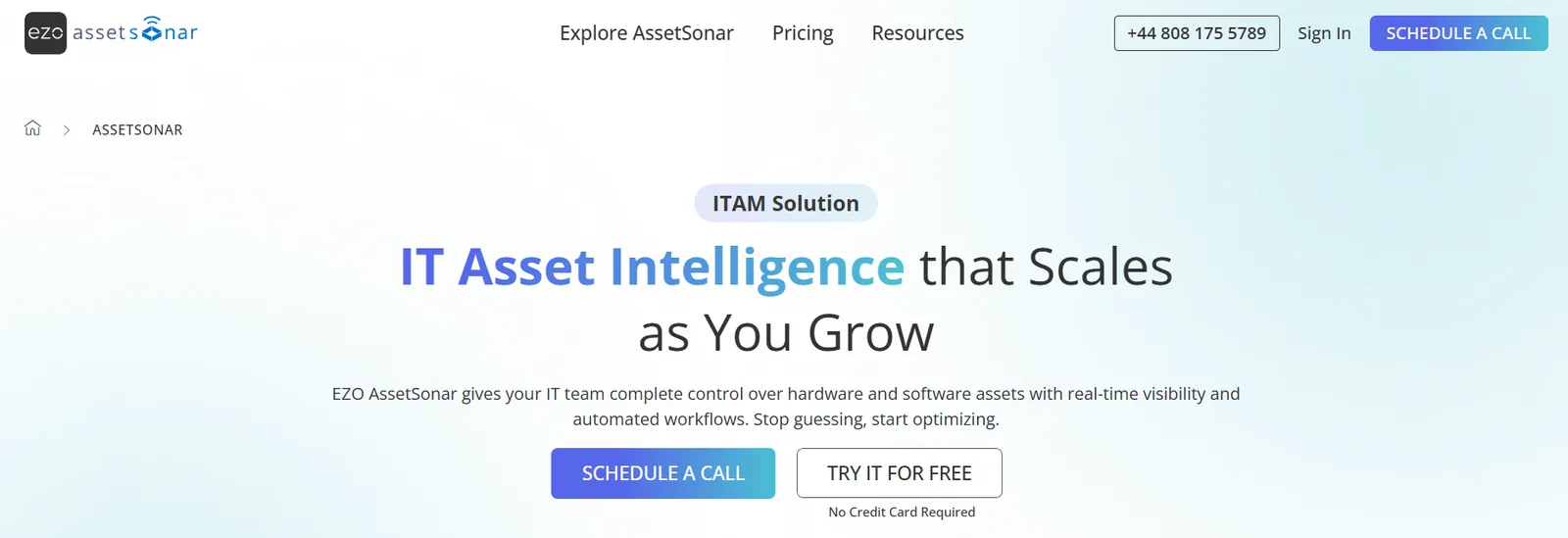
EZO AssetSonar is an ITAM platform that covers both hardware and software asset management. For laptop inventory management, AssetSonar is useful when IT wants more than a list of laptops. Teams can track assets, manage ownership, connect assets to tickets, and use barcode or QR code scanning through its mobile app.
AssetSonar integrates with Jamf, Intune, SCCM, Zendesk, Jira, and identity providers like Okta and Azure AD.
Where this category stops
Teqtivity integrates with partners for procurement, shipping, retrieval, and disposal. But users note that integrations don't always work 100% of the time, so IT teams still have to manually verify that assets are assigned correctly. AssetSonar can flag a device for retrieval during offboarding, but users report having to pull every item ever logged into AssetSonar, export to Excel, and manually filter. Both platforms coordinate the lifecycle through integrations and partner connections. But they don't own warehouses, hold inventory, image devices, or run the logistics themselves.
ITAM and Enterprise Workflow Governance
The tools above tell you what you own, but the following three manage the rules, workflows, and compliance requirements around those assets.
ServiceNow ITAM
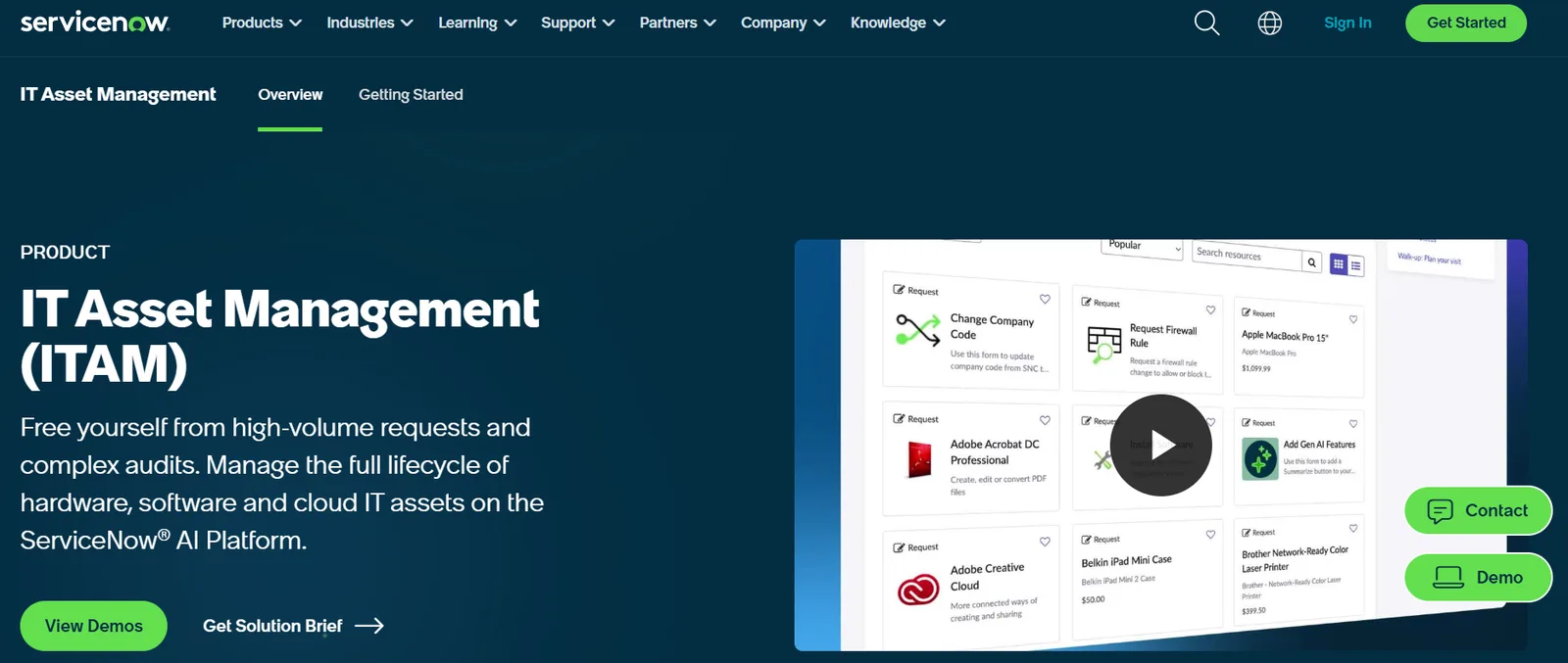
ServiceNow ITAM runs on the ServiceNow AI Platform and covers the full lifecycle of hardware, software, and cloud assets. For hardware specifically, it manages procurement through retirement with the CMDB as a single source of truth. It automates stockroom inventory management, hardware request fulfillment, and repair workflows through AI Agents.
It connects to service catalogs and procurement for real-time visibility, and maintains audit-ready license and asset records for compliance. It's built for enterprises that already run ServiceNow for ITSM and want asset governance on the same platform.
Asset Panda
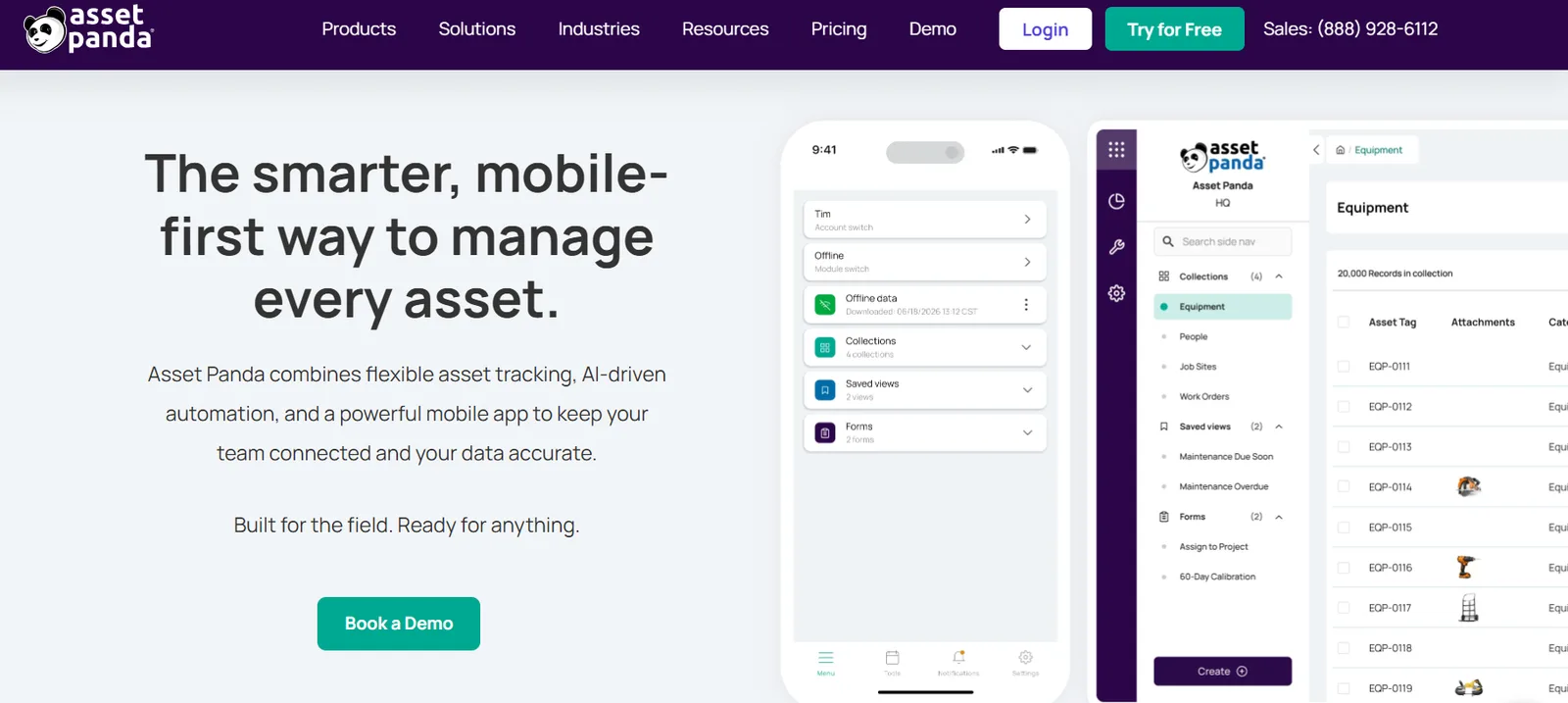
Asset Panda is a cloud-based, mobile-first asset management platform built to track both physical and digital assets. The platform is highly configurable: teams can adapt fields, workflows, and use cases. Its mobile app supports barcode scanning, GPS tracking, digital signatures, and mobile auditing.
For lifecycle management, it stores full asset records from acquisition to disposal, including assignment history, repair logs, depreciation, and maintenance schedules. Work orders can be created and assigned directly from the platform.
InvGate Asset Management
InvGate Asset Management helps teams discover, centralize, and manage IT assets across physical, virtual, and cloud environments. Its network discovery features scan defined IP ranges and use standard protocols to identify connected devices. InvGate also supports inventory views, cost tracking, CMDB mapping, alerts, and lets teams set Health Rules to monitor compliance across their inventory.
Atlas, InvGate's AI engine, surfaces insights and automates routine tasks, while Smart Recommendations suggests actions based on what it detects across the environment. The platform also holds SOC 2 Type II, ISO 27001:2022, and ISO 9001 certifications.
Where this category stops
ServiceNow offers procurement workflows but relies on external vendors for physical execution. Users find managing a large asset base in ServiceNow "technically cumbersome," with multiple asset types, service mappings, and CSDM journeys requiring niche skills. Asset Panda users flag the lack of integration with tools like Jamf and Google Workspace, which limits workflow automation and cross-platform data gathering. InvGate has no vulnerability control and no remote software deployment module. None of these platforms ships a laptop, coordinates a retrieval, runs a warehouse, or wipes a returned device. The consequence is that your ITAM records say a device was ordered, assigned, and flagged for return. But your IT team is still the one boxing it, printing the FedEx label, and following up when the ex-employee doesn't respond.
Laptop Returns and Warehousing
This is the category where platforms start handling the physical work.
Hello Retriever
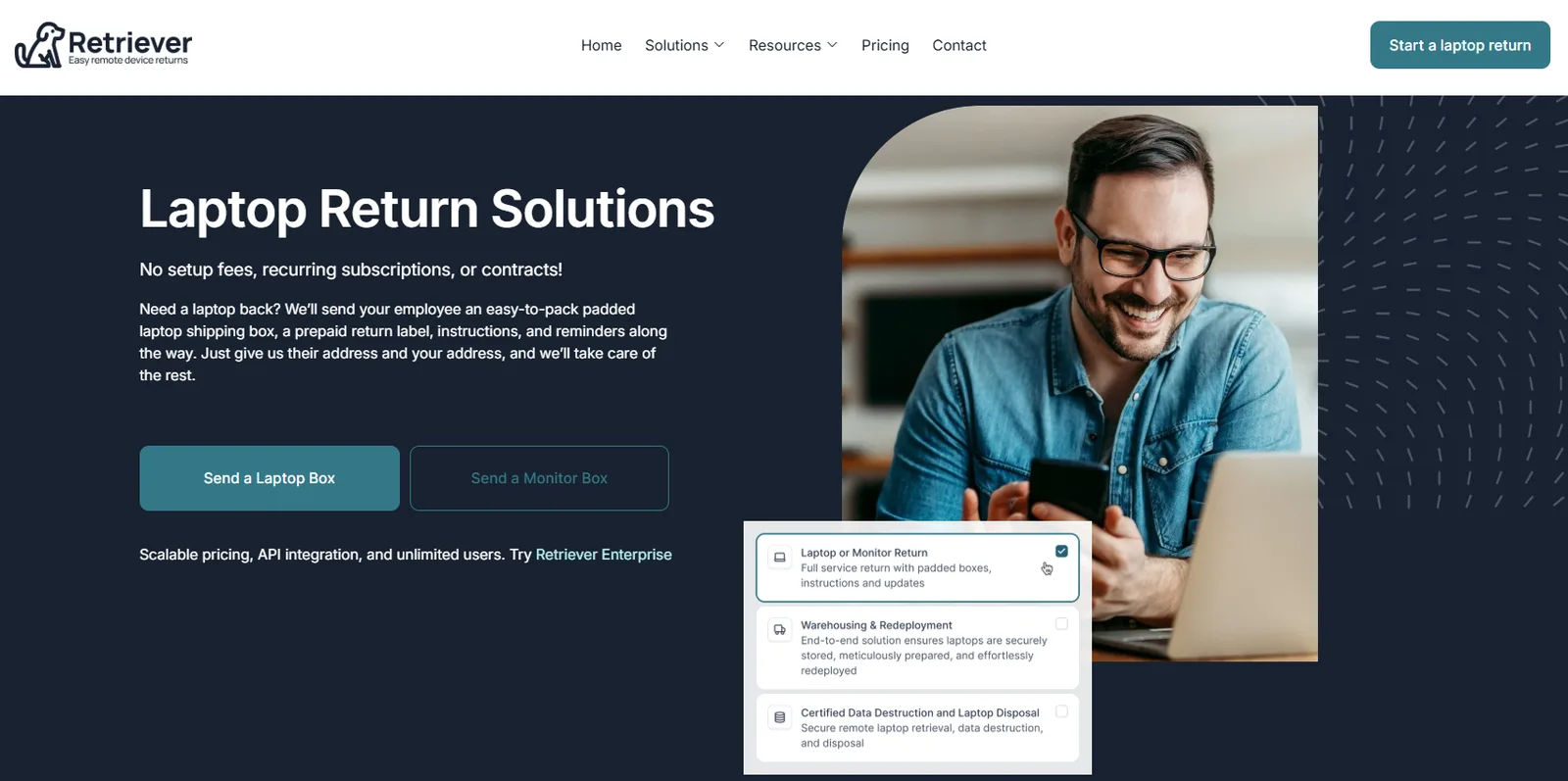
Hello Retriever is the most focused. It returns laptops and monitors. You enter an employee's address, Retriever ships them a padded box with a prepaid label and packing instructions, and then sends automated reminders until the device comes back.
Enterprise accounts get a portal with batch returns, real-time tracking, and API access for connecting to Workday, Okta, Jira, or Zapier. The trade-off is that Retriever doesn't handle procurement, device imaging, MDM enrollment, warehousing, or ITAD.
Allwhere
Allwhere covers more of the lifecycle through regional depots. It can ship preconfigured devices to new hires, send retrieval kits to departing employees, and store returned hardware at its depots for redeployment. It operates in 48 countries with delivery from regional warehouses.
The platform has expanded its API to support custom automations: HRIS-triggered procurement on hire, automatic retrieval initiation on termination, and real-time inventory sync. The scope is broader than Retriever, but 48 countries is still a smaller footprint than some competitors in this category.
Workwize
Workwize covers procurement (buy or rent), zero-touch deployment, retrieval, storage, and disposal across 100+ countries. It integrates with 82+ HRIS systems (including HiBob and BambooHR) and MDM tools like Jamf.
The platform connects to a global network of IT suppliers and warehouses, so retrieved devices can be refreshed and redeployed locally instead of shipping everything back to a central location.
GroWrk
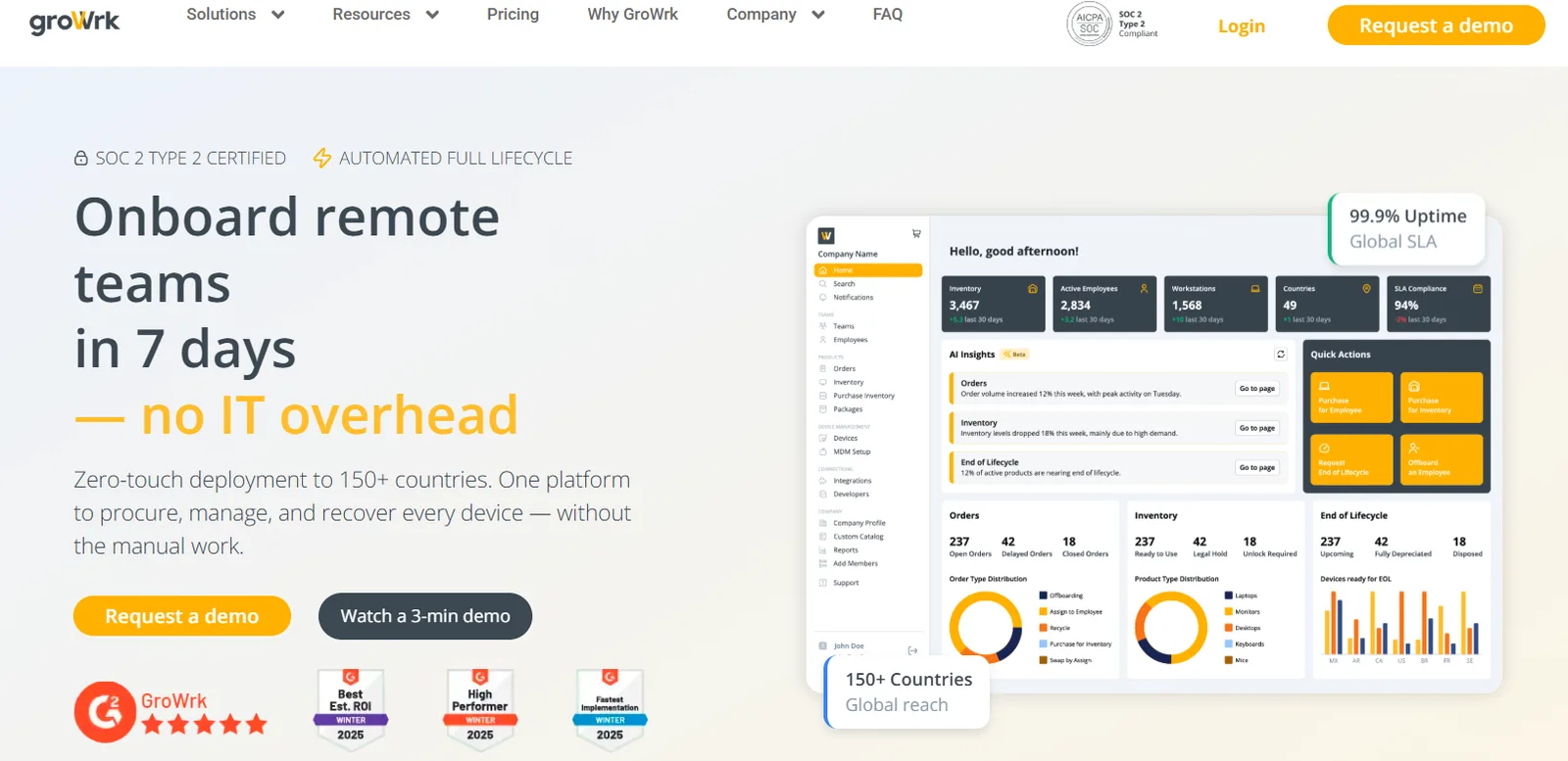
GroWrk is the broadest in this group. It operates in 150+ countries with local warehousing, procurement, MDM-configured deployment (supporting Jamf, Intune, Addigy, Kandji), retrieval, certified data destruction (NIST 800-88, DoD 5220.22-M), and e-waste recycling.
It holds SOC 2 and ISO 27001 certifications. GroWrk also includes an AI-powered support chatbot and a depreciation tracker for monitoring asset value over time.
Where this category stops
Hello Retriever handles retrieval only; it doesn't procure, image, or deploy devices. The other three (Allwhere, Workwize, GroWrk) cover more of the lifecycle, but there are gaps worth knowing. Workwize and GroWrk come closest to full lifecycle platforms in this group, but neither bundles procurement, logistics, ITAD, and warehouse operations under a single per-seat price the way a full managed operations model would. Workwize users report that implementation took months longer than expected, SLAs were rarely met outside the US, and global device collection was a pain point. They've also noted slow serial-number updates and no link between a Workwize order and the supplier order, which means order status visibility breaks at the partner handoff. GroWrk users point out that direct-purchase hardware costs run 2-3x higher than buying and shipping to their warehouse yourself. All four rely on partner networks for at least part of their supply chain. In practice, that means your experience in one country can be completely different from another. The service isn't uniform because the operation isn't owned.
Full Hardware Lifecycle Operations
Every tool listed above handles a piece of the device lifecycle. Firstbase handles all of it. Procurement, imaging, MDM enrollment, global shipping, retrieval, certified data wipe, repairs, redeployment, and disposal.
Firstbase
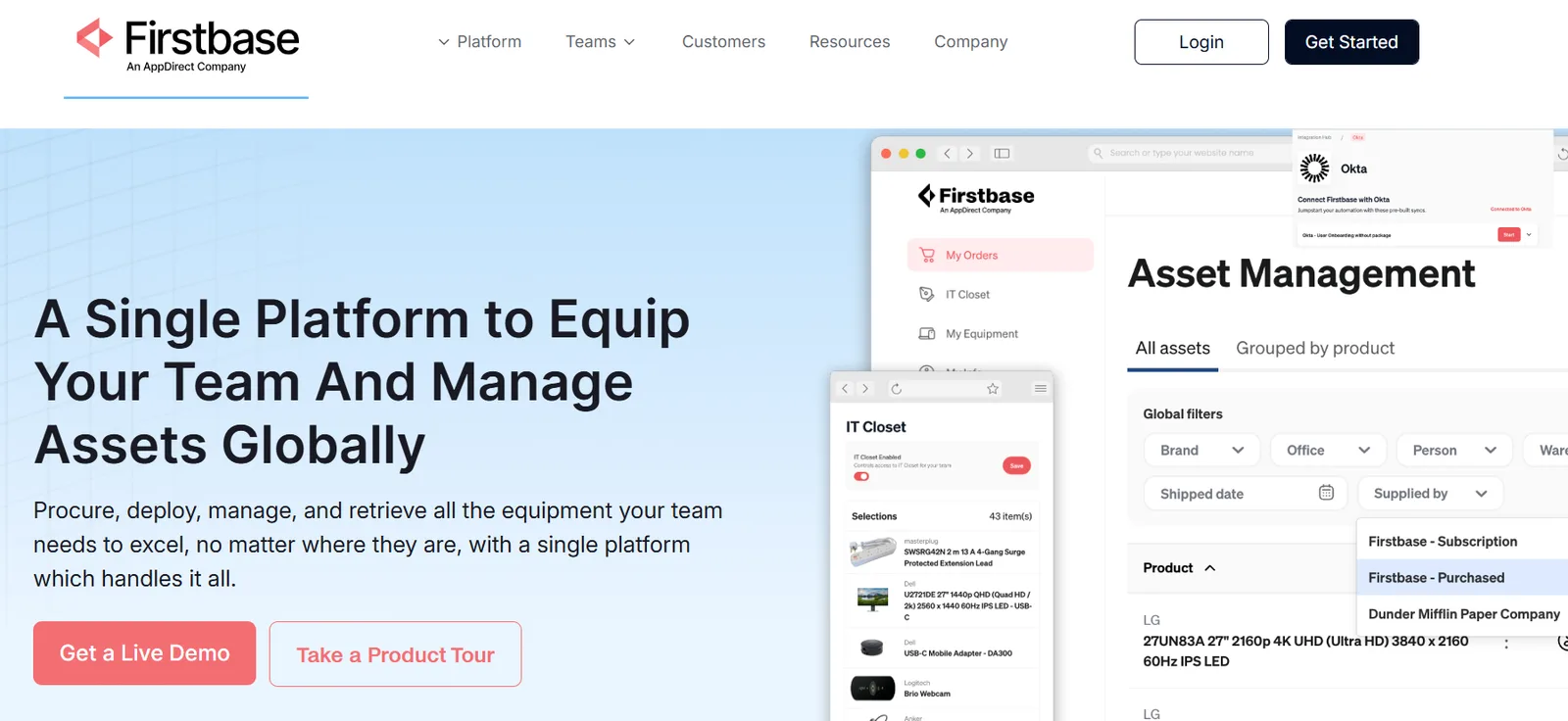
Firstbase a SaaS platform backed by its own warehouse and a network of strategically located 3PL partners across 150+ countries, with customs and VAT clearance included.
It's an Apple Authorized Reseller (one of roughly 200 in the US), which means it can enroll devices directly into a customer's Apple Business Manager account for zero-touch deployment. It also procures from Dell, Lenovo, and other OEMs, or it can ingest your existing fleet. Purchase, lease, or ship your own hardware; Firstbase is vendor-neutral.
What Doesn't Firstbase Handle?
Firstbase doesn't replace your MDM, IT Service Management, or identity provider. If you need to push security policies to endpoints, that's still Jamf or Kandji. If you need to route service tickets, that's still ServiceNow or Zendesk. Firstbase integrates with those tools so that HR and IT events trigger physical actions automatically. It's a hardware operations platform.
The biggest benefit of Firstbase is the time it saves us. Tasks like recovering a machine, shipping it, receiving it, testing it, and performing QA used to add up significantly. Firstbase streamlines all of this, which has been invaluable for our team.
Jared Allenbrand
What does it cost when the laptop inventory stays manual?
Manual hardware inventory management usually looks simple at first: order the device, image it, ship it, update the record, and ask for it back later. The cost shows up when those steps depend on different people, vendors, spreadsheets, carriers, and follow-up emails.
Here's the common workflow that creates the cost:
Procurement delays: IT has to forecast device needs, check stock, raise POs, work with VARs, and wait for available models. A U.S. Treasury audit noted that IT personnel wanted laptop requests submitted four weeks before a new hire's start date so teams could purchase, configure, and ship the device.
Imaging challenges: Devices often need configuration before they reach employees. If laptops ship to one office or to one IT admin first, every hire adds prep time before delivery begins.
Shipping and customs overhead: Most remote organizations spend about $100 per year in shipping per remote employee, or $100K per 1,000 employees. International shipments add customs clearance, duties, taxes, lithium-ion battery regulations, and country-specific importing rules.
IT hours burned on logistics: Address confirmations, FedEx label printing, vendor calls, return follow-ups, and repair coordination all add up to roughly five hours per remote worker per year. For 1,000 employees, that's 5,000 staff hours, about 2.5 full-time IT positions worth of work that has nothing to do with security, infrastructure, or strategy.
Retrieval losses: Capterra found that 71% of HR workers who handled offboarding had at least one employee fail to return company equipment. Remote and hybrid employees were 17% more likely to keep equipment than on-site employees, and the average loss per incident was $1,963.
Security exposure: Unreturned laptops are not only a hardware cost. 59% of the equipment kept by former employees contained confidential or sensitive data. Morgan Stanley paid a $35 million fine for misplacing hard drives and servers.
Visibility gaps: When inventory records don't match physical devices, Finance overbuys, IT loses redeployable stock, and regular audits take longer.
Firstbase provided a fantastic solution by managing and shipping equipment to all our fully remote team members. It has saved us hundreds of hours dealing with equipment ordering and returns. We've been able to focus on projects that mean more to the company, on both the HR and IT ends.
Caitlin Nielson
How to Build a Complete Laptop Inventory System Covering Tracking + Operations?
The costs in the previous section fix themselves only when the tracking layer connects to an IT operations layer.
With a complete laptop inventory management system like Firstbase, teams can see what they own, the condition of their devices, where they are, and what can be reused. More importantly, Firstbase handles the operational steps behind those updates, so the inventory record reflects real device movement.
Here's what that shift looks like in practice.
Area | Without lifecycle operations | With Firstbase |
|---|---|---|
Device retrieval rate | 30-50% industry average | 90%+, completed in under 30 days |
Manual lifecycle work | 5,000 IT hours/year per 1,000 employees | 75% reduction across the equipment lifecycle |
Retrieval turnaround | 30+ days (MSP average, post-warehouse only) | Under 30 days, offboarding trigger to wiped device back in inventory |
Lost device cost | $67,500/year (45 laptops at $1,500 each, 1K employees) | $175,000+ recouped through wipe, refurbish, and redeploy |
Offboarding cost per employee | Varies; multiple vendors, manual coordination | $125 less per departing employee vs. internal handling |
IT headcount required for logistics | Approximately 2.5 FTEs per 1,000 employees | 3-person IT team supporting 300+ employees, as seen with Cresta.ai |
Audit readiness | Scattered records across spreadsheets and disconnected tools | Per-device chain of custody, NIST 800-88 wipe certificates |
When to Choose Each Type of Laptop Inventory Solution
Here's a checklist to quickly make an informed decision:
If you... | Start here |
|---|---|
Run a single-country IT team and need visibility into what's on your network | Lansweeper or Snipe-IT |
Have outgrown spreadsheets and need per-employee device records with audit trails | Teqtivity or AssetSonar |
Need CMDB, procurement workflows, and compliance reporting tied to your ITSM platform | ServiceNow ITAM, Asset Panda, or InvGate |
Handle onboarding and deployment fine, but can't get devices back when people leave | Hello Retriever |
Operate in multiple countries and need procurement, deployment, and retrieval handled through regional partners | Allwhere, Workwize, or GroWrk |
What Does a Complete Laptop Inventory System Actually Require?
Not all laptop inventory management tools solve procurement challenges, retrieval failures, or the IT hours lost to shipping coordination.
Firstbase closes that gap without replacing your existing stack. It plugs into your HRIS, MDM, and ITSM tools, then takes ownership of the physical work: global procurement, deployment, retrieval, wipe, repair, and redeployment. Your software layer stays yours, but the operational load doesn't.
The change shows up in how IT teams spend their weeks. No more driving to FedEx, chasing down ex-employees who won't return a laptop, or spending time on address confirmations instead of infrastructure work.
Customers report getting back over 97% of employee equipment, while freeing up 10-15 hours per week for their team to spend on higher-priority work. Book a demo to see how it works with your setup.
Written by
Chris Herd
Chris Herd is the visionary founder and CEO of Firstbase, recently acquired by AppDirect, who pioneered the end-to-end hardware provisioning platform now used by tens of thousands of remote employees. Including employees from Spotify, UI Path, Verint and WeWork. With roots in fintech, Chris experienced firsthand the logistical pains of remote hardware management. His company has since scaled, backed by top-tier investors like Andreessen Horowitz and Kleiner Perkins, before its recent strategic acquisition. As an outspoken champion of remote-first culture, Chris continues to shape how companies equip, empower, and trust their distributed teams.
Get started with
Firstbase today
Remote and hybrid work aren't going anywhere. It's our mission to make it easier to manage the assets your distributed team needs—from onboarding through offboarding and every repair, replacement, and upgrade in between.
Fill out the form and a member from our team will reach out by phone!
Get a Live Demo