IT Procurement Services Companies
Compare IT procurement services companies across consulting, P2P software, resellers, and device lifecycle platforms to find the one that fits your team
 Ahmad ZakariaNovember 26, 2026
Table of contents
If you lead IT for a distributed, Apple-first company with 1,000+ employees, on a lean team, this will sound familiar.
A new hire starts Monday in a country where you have no office or supplier, and they need a MacBook. Shipping one from home means customs paperwork and a courier you've never used. Buying locally means first finding a vendor who'll accept an international wire. And the price can catch you off guard; in some markets, say Brazil, devices cost three to four times what you'd expect to pay.
So you search for IT procurement services companies, and the results lump four different businesses together. Some companies help you negotiate and manage enterprise spend. Some handle purchasing approvals and workflows. Resellers source and sell the hardware. Device lifecycle platforms like Firstbase go further, managing the equipment from purchase through delivery, retrieval, and redeployment.
In this guide, we’re going to find out what each does and which fits your hiring needs.
What do IT procurement services companies do?
An IT procurement services company takes over one or more stages of the source-to-pay cycle for IT purchases: strategic sourcing and supplier contracts, transaction management (requisitions, purchase orders, and invoice matching), or physical fulfillment of the hardware.
Each of the four categories owns a different stage, and only one goes all the way to the employee's door.
Category | Example providers | What they do | Who they serve | What they don't do | Pricing structures |
|---|---|---|---|---|---|
Procurement outsourcing and consulting | GEP Smart, Accenture, IBM Procurement Services | Outsource or support sourcing, category management, supplier management, contracts, spend analysis, and procurement operations. | Enterprise procurement teams. | Not primarily built around employee device fulfillment and lifecycle operations. | Custom pricing. GEP offers custom pricing; Accenture and IBM require direct inquiries for pricing details. |
Procure-to-pay software | Coupa, SAP Ariba | Manage purchasing workflows, approvals, catalogs, POs, supplier transactions, and invoicing. | Procurement and finance teams. | Doesn't provide the physical device operation. | Quote-based pricing. SAP Ariba Sourcing Standard is priced per user per year, with prices available on request. Coupa does not publicly disclose its pricing. |
IT resellers | CDW, SHI, Insight | Supply hardware, software, and IT services, with procurement and related technology services. | Companies buying technology at scale. | May offer deployment and lifecycle services, but those aren't what defines the reseller model. | Pricing on request. Public pricing is not available. Insight offers financing and leasing options, along with low monthly payment programs. |
Managed service providers (MSPs) | Corsica Technologies, CMIT Solutions | Support IT procurement, hardware and software selection, deployment, maintenance, and ongoing IT support. Services vary by provider. | Businesses that need help managing technology purchases and ongoing IT operations. | Global device sourcing, cross-border fulfillment, and employee device lifecycle coverage offered by dedicated lifecycle platforms. | Corsica offers fixed-fee, predictable monthly pricing through its service packages. CMIT does not publish a fixed public price list for IT procurement. |
Device lifecycle platforms | Firstbase, GroWrk, Workwize, Deel IT | Connect procurement with storage, logistics, deployment, retrieval, redeployment, and retirement. | Distributed IT teams managing employee equipment across locations. | Not a replacement for enterprise procurement strategy or P2P software. | Varies by provider. Firstbase offers transparent, all-in pricing. GroWrk offers pay-as-you-go pricing with individual order charges or a subscription model. Workwize and Deel IT use tiered plans, with pricing available on request or based on the services selected. |
Why does IT procurement break for distributed teams?
For a distributed team, buying the laptop is only the first part. The challenging part is getting the right device to the right country, ready to use, on time, and at a predictable cost.
Sourcing: A supplier may not serve the country where your new hire lives. Dell Ireland, for example, ships only within Ireland, so its Irish entity cannot ship a device to Germany.
Landed cost: Buying centrally and shipping internationally can add shipping costs, customs duties, taxes, and clearance delays. Exporting devices can also create warranty and local-equipment compatibility issues.
Readiness: An unconfigured laptop still leaves work for IT. Manual provisioning can mean imaging the device, installing MDM, configuring apps and security controls, repacking it, and arranging shipment.
Timing: Roughly 60% of Apple orders are configure-to-order. If a reseller doesn't have that configuration in stock, lead times can run 6-8 weeks.
Added cost: At about 5 IT hours per remote employee annually, 1,000 employees represent roughly 5,000 hours of logistics work. Shipping can add another $100,000 a year at $100 per remote employee.
How do the four types of IT procurement companies compare?
There is no single type of IT procurement provider. Some are built to run procurement as a business function, some provide the software behind purchasing workflows, while others handle the physical device lifecycle. Let’s discuss all of them.
Procurement outsourcing and consulting
Procurement outsourcing and consulting firms’ work can include sourcing strategy, supplier management, category management, contracts, purchasing operations, and spend optimization. Let’s look at a few examples.
GEP
GEP is a global leader in procurement consulting and managed services with its own source-to-pay platform, GEP Quantum Intelligence. Employees log requests through one intake point that routes them automatically, and AI agents create RFx documents, onboard suppliers, and flag risky contract clauses. The P2P side automates invoice coding and exception handling.

IBM Procurement Services
IBM Procurement Services runs buying for every IBM brand and offers the same procurement team's services to external clients. Suppliers work through IBM's supply portal, which holds the applications, compliance guidelines, and terms they need to do business with it.
Accenture
Accenture runs source-to-contract work (category analysis, sourcing strategy, contract services, and supplier relationship management) alongside procure-to-pay services. It also automates repetitive tasks like order processing, inventory management, and shipment tracking, and reduces invoice exceptions.
Where procurement outsourcing stops short
This model fits companies looking to transform or outsource procurement operations. It is not primarily designed to manage the physical fulfillment of individual employee devices across countries.
If the requirement is optimizing suppliers and spend, this category fits. If the requirement is getting a configured device to a new hire in another country, the problem extends beyond procurement into logistics and device lifecycle management.
Procure-to-pay software
Procure-to-pay (P2P) software manages the purchasing process from requisition and approval through ordering, receipt, reconciliation, invoicing, and payment. It gives procurement and finance teams a controlled purchasing workflow while improving visibility into spend and compliance. Coupa and SAP Ariba are good examples.
Coupa
Coupa puts intake, purchasing, inventory, and accounts payable all on one platform, with a single login for suppliers. It flags maverick spend, tracks on-hand inventory balances, and uses artificial intelligence to cut invoice cycle time.
Some users find the platform difficult to customize for highly specific processes and consider its pricing relatively high.
SAP Ariba
SAP Ariba starts with an AI intake assistant and a dashboard for tracking requests. Employees buy from a centralized catalog with guided recommendations, and a no-code builder lets admins change intake-to-procure workflows. Its Receiving and Invoicing assistants handle goods receipts, returns, and AP, and spend can be tracked across multiple ERPs.
Users have also pointed to a learning curve, interface limitations, and challenges with customizing reports.
Where procure-to-pay software stops short
When IT needs procurement decisions tied to the employee and their location, a P2P workflow can approve a MacBook purchase. But it does not determine whether that device should be bought locally or imported, which supplier can fulfill it in that country, or whether the chosen configuration is available there.
That makes P2P a strong procurement control layer, but not necessarily the system that should own distributed IT procurement.
IT resellers
IT resellers are technology providers that sell hardware, software, and related IT services from multiple vendors, often adding procurement, implementation, support, and lifecycle services around those products.
CDW
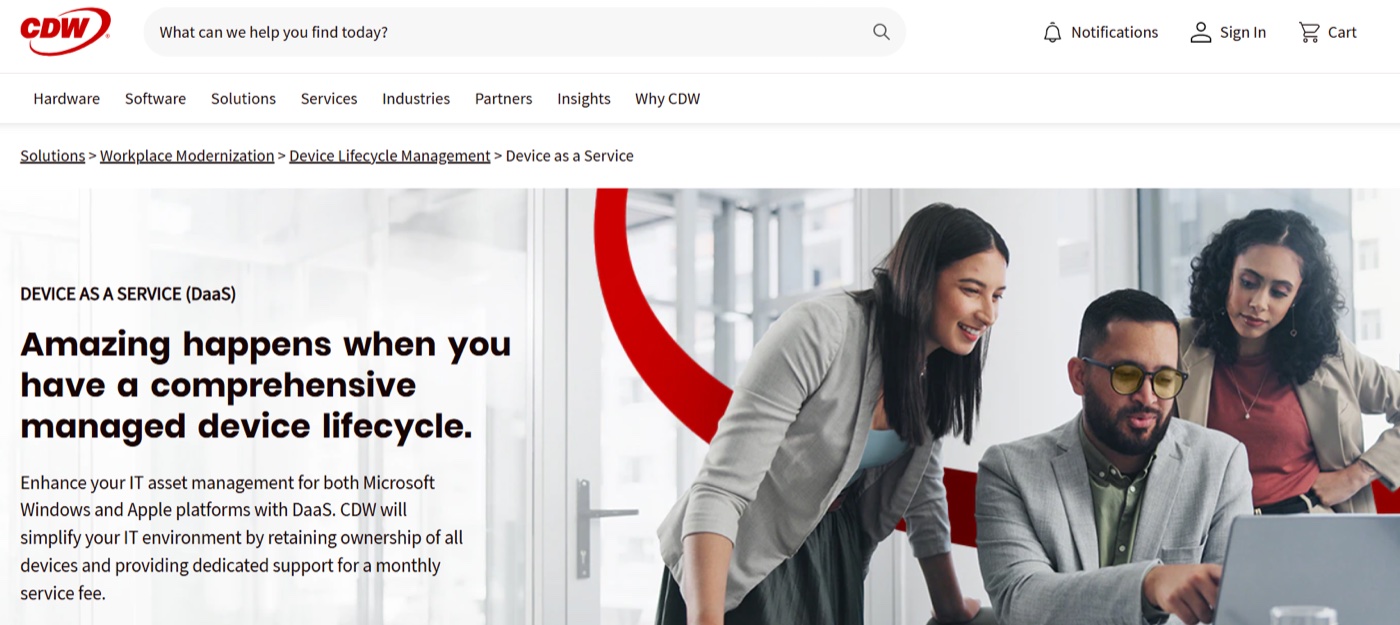
CDW offers hardware, software, and services, including Device as a Service (DaaS). Its DaaS offering combines devices, software, and services with predictable monthly costs, device refreshes, device-health and patching insights, and lifecycle management.
SHI
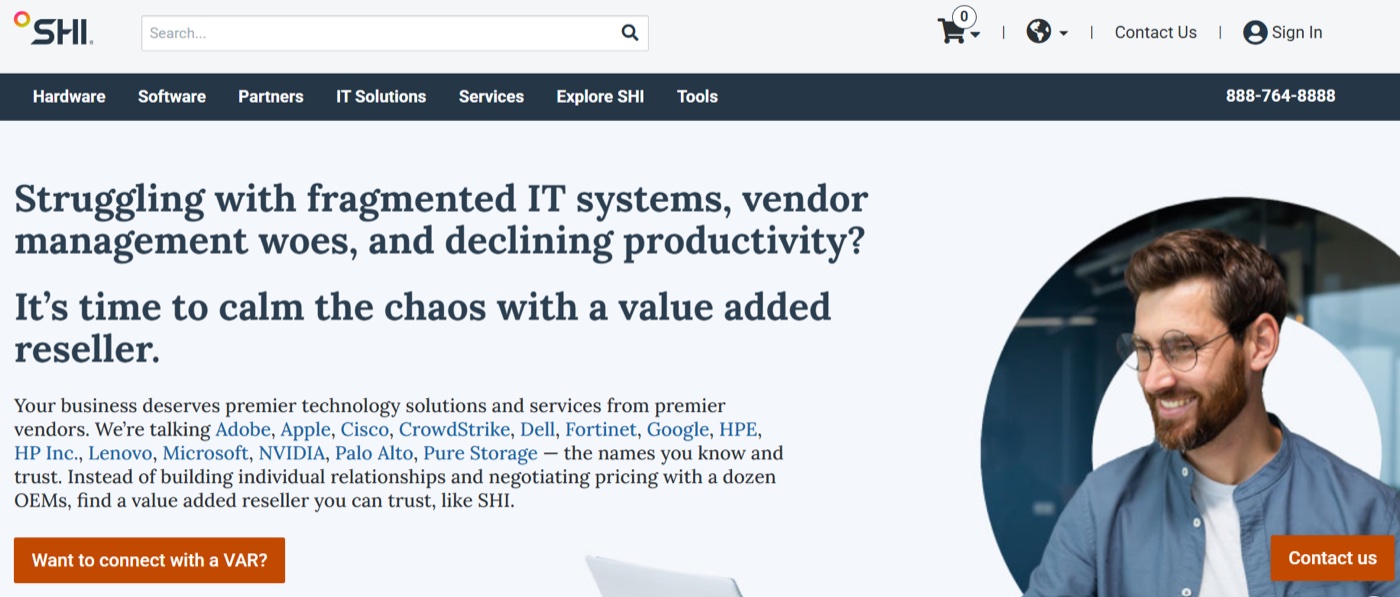
SHI is a value-added reseller and global solutions integrator with relationships across major technology vendors. It helps organizations select technology, equip employees with devices and peripherals, implement solutions, and provide ongoing support. Its offering also includes IT asset management and lifecycle-related services.
Insight
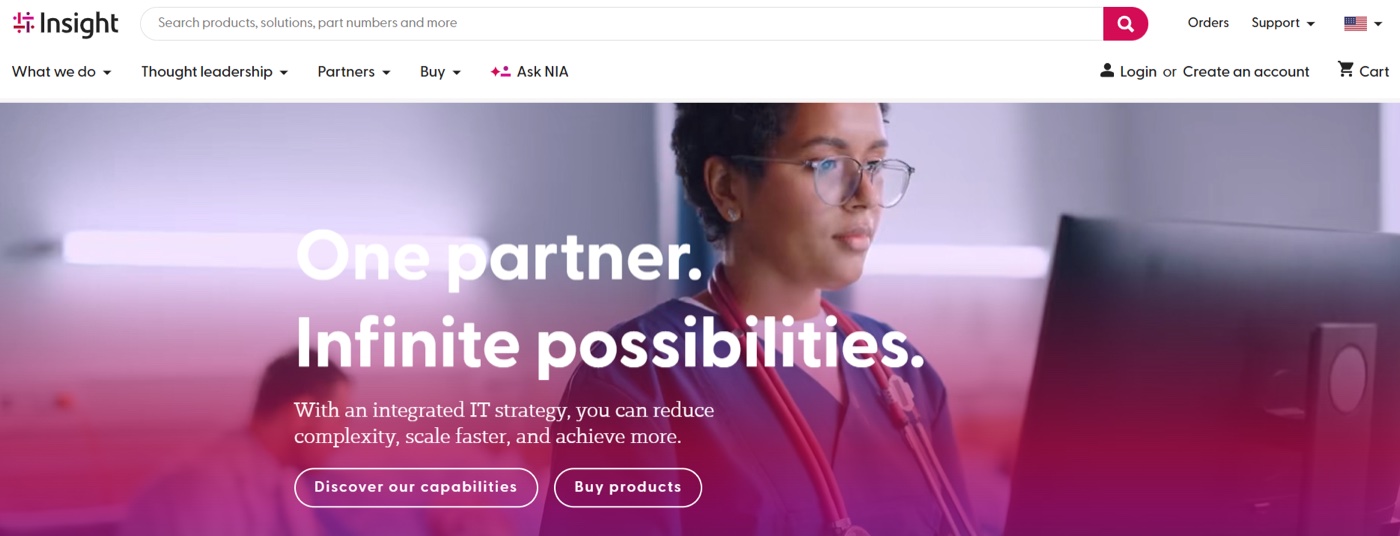
Insight provides centralized IT procurement solutions for hardware and software, with digital tools for purchasing, vendor management, tracking, and reporting. Its model extends beyond purchasing into plan, procure, deploy, manage, and refresh, including device configuration and deployment, lifecycle visibility, warranties, and usage.
Where the reseller model stops short
Resellers organize by country, so each new hiring location can mean another entity to deal with. Imaging quality varies between VARs, and some IT teams end up doing it themselves. Retrieval is another gap. Resellers focus on selling technology, while device retrieval and redeployment require a separate, dedicated process. Some offer return services, but recovering equipment from departing remote employees isn't their primary focus.
Managed service providers
Managed service providers (MSPs) take responsibility for some or all of a company's ongoing IT operations. They can also guide technology purchases, from choosing suitable hardware and software to negotiating vendor agreements and managing equipment after deployment.
Corsica Technologies
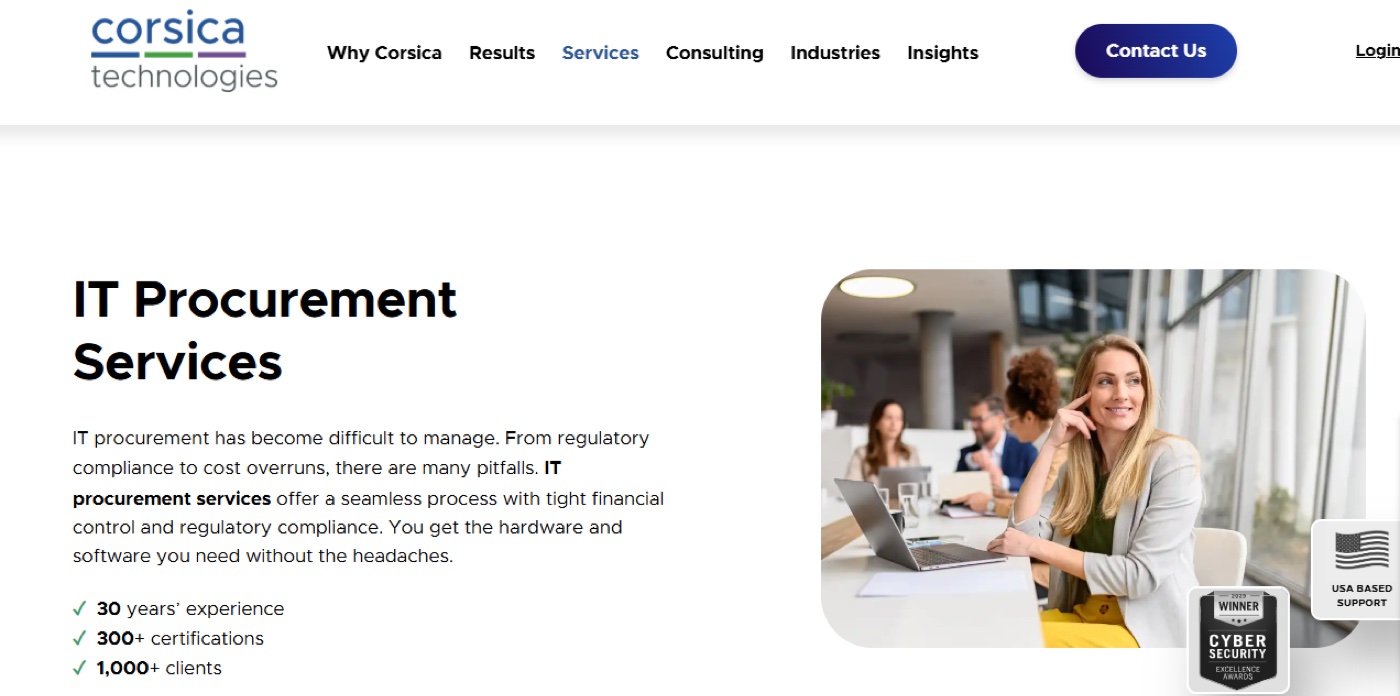
Corsica Technologies helps businesses procure and manage their IT equipment. Its team sources hardware and software to match business needs, then negotiates pricing for the client to review and approve.
Once approved, Corsica can configure and deploy devices using tools such as Microsoft Intune and Autopilot. Its asset lifecycle service continues beyond deployment, covering equipment maintenance through to disposal.
However, customer feedback point to inconsistent support experiences. Some users report difficulty reaching the team, delayed responses, and missed license renewals that affected essential business services.
CMIT Solutions
CMIT Solutions helps businesses make informed IT purchasing decisions. Its team evaluates business needs, compares suitable options, and negotiates pricing before the company commits to a purchase.
The provider also helps businesses integrate new equipment into their existing IT environment. Its support continues after installation, with technical assistance available when issues arise.
Some users raise concerns about support responsiveness. They’ve described repeated attempts to get help with an unresolved IT issue over three weeks, with no technician following up as promised.
Where MSPs stop short
MSPs can manage IT procurement alongside ongoing support and maintenance. But their primary focus is often the broader IT environment. For distributed companies, a new hire needs a laptop sourced locally, configured before delivery, and ready on their first day. Device retrieval and redeployment also require coordination beyond routine IT support.
If these processes span multiple countries, you must check whether the MSP can manage the full device lifecycle or whether your IT team will need a separate provider for procurement logistics and asset recovery.
Device lifecycle platforms
These platforms manage each device from purchase to retirement. They procure and pre-configure it, ship it to the employee, and handle repairs while it's in use. When the employee leaves, they retrieve it for storage, redeployment, or certified disposal.
Firstbase
Firstbase takes an OEM-neutral approach. That is, companies can buy, lease, or supply their own equipment, including managing an existing fleet. It supports 150+ countries, with 2-5 day average delivery, MDM enrollment and SSO connection before delivery, and all-in pricing. Local-currency invoicing is available in the US, UK, EU, and Canada. Apple Business Partner status applies in the United States.
Firstbase addresses the needs of a global company in an efficient manner. The procurement team at Firstbase is able to purchase assets at highly competitive rates. As a result, this reduces internal overhead on our part.
- Francis Calata, VP of Corporate IT, Earnest
GroWrk
GroWrk manages procurement function, provisioning, tracking, maintenance, retrieval, storage, redeployment, and end-of-life across 150+ countries. Its newer MCP integration lets authorized AI assistants search inventory and execute defined lifecycle actions. Pricing has à la carte and Flex models.

Some users have reported orders changing after submitting specifications, delays in getting quotes for custom configurations, and lag between a device’s actual retrieval status and what appears in the dashboard.
Workwize
Workwize covers automated procurement, pre-configured devices, deployment, lifecycle tracking, repairs, retrievals, and certified disposal across 130+ countries. Its plans range from Basic to Enterprise, with features such as automatic deployment, restocking, and custom integrations at higher tiers. Some user concerns around platform limitations and usability can be seen across review platforms.
Deel IT
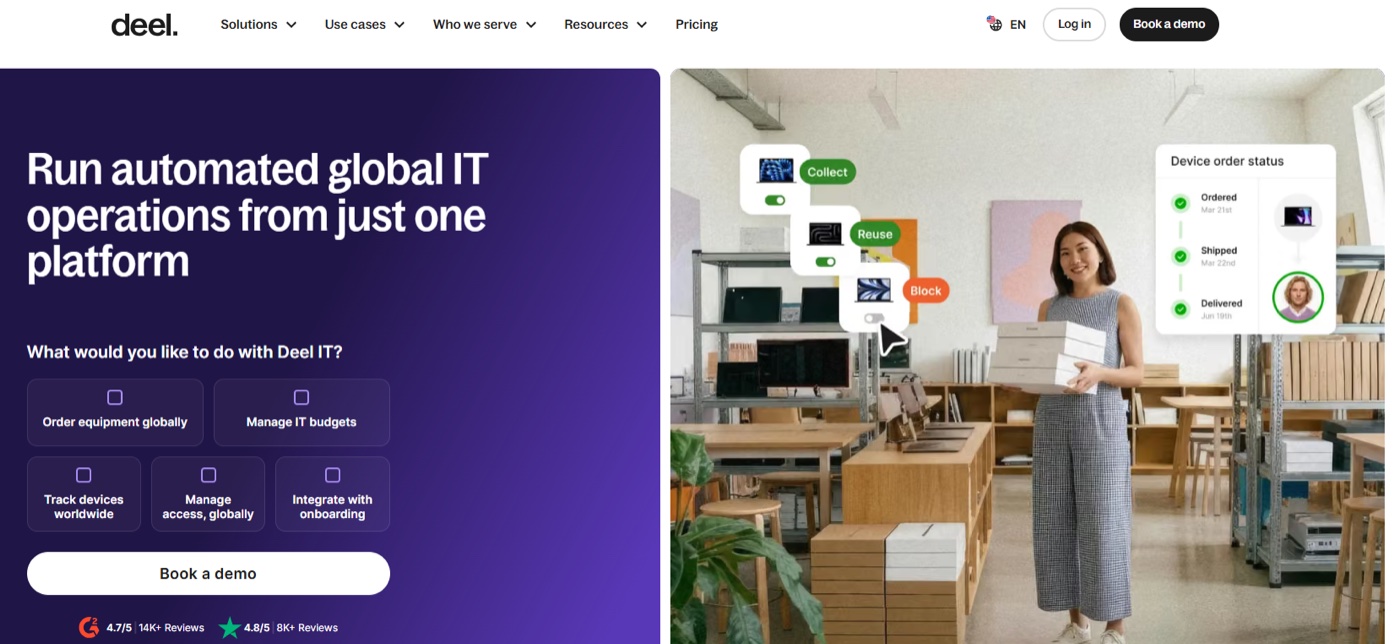
Deel IT connects hardware procurement with HR-driven IT automation. Devices can be configured, MDM-enrolled, and shipped globally, while the platform also handles access, support, repairs, recovery, and reuse. Pricing is plan-based and varies by services selected.
Some of the reported issues include devices remaining unmonitored without an alert, incomplete fleet coverage during reconciliation, and onboarding failures that required additional intervention.
Where the lifecycle model stops short
Device lifecycle platforms can cover procurement management, deployment, tracking, support, retrieval, storage, and end-of-life management, but coverage depth varies by provider. Some offer stronger capabilities for global procurement and local fulfillment, while others emphasize automation, integrations, MDM, inventory, or employee support.
Pricing models also differ, from per-order charges to subscriptions and tiered plans. For distributed IT teams, you need to check if the platform covers the specific lifecycle stages and countries you need without leaving key processes dependent on separate vendors or manual work.
What should you ask an IT procurement provider?
The procurement model matters as much as the hardware price. Use these evaluation criteria to make sure you’re signing up for the right platform.
1. How do you source devices in a country you haven't shipped to before?
Buying in-country skips import duties and customs holds, but only works where the provider already has suppliers. Otherwise, it needs to know each country's clearance rules. Ask how they test a new route. Firstbase buys through distributors and strategic resellers. When it opened local warehouses in 10 new countries, its operations team sent 50 decoy shipments to test each one's import and export process and device handling before relying on it.
2. How do you make sure stock is ready before a new hire starts?
Custom configurations can take weeks, so ordering after an offer is signed often misses day one. Ask whether they hold minimum stock per region. Firstbase recommends regional stock levels based on your hiring plans and can reorder automatically when inventory falls below them.
3. Will the laptop set itself up when the employee signs in?
That needs the serial registered to your company's enrollment program before shipping, plus an MDM ready to push apps and security policies. Firstbase connects to your MDM to prepare each laptop, which is how one company manages 4,000 laptops with a single procurement specialist.
4. Can a hire or an exit trigger an order or return automatically?
If your HR system can start orders and returns, a hire or exit doesn't need a ticket. Ask what connects natively and what the API exposes. Firstbase's API covers orders, returns, replacements, restocking, and SCIM-based offboarding, and its backend links directly to OEM partner programs, logistics partners, and its US warehouse.
5. Do we have to buy devices through you, or can we lease or use our existing equipment?
Check whether the provider locks you into buying hardware through its own supply chain or lets you choose how to source devices. Leasing and using equipment you already own can give you more flexibility, especially if you have an existing fleet to manage.
Firstbase takes an OEM-neutral approach. You can purchase or lease devices through Firstbase, or supply your own equipment. Firstbase can also manage your existing fleet, so you don't have to replace your current devices or start a separate process to bring them under management.
6. What's your retrieval rate, and how fast can a returned device be reused?
Every laptop that stays with a former employee is usually replaced with a new purchase, so the retrieval rate feeds straight into your procurement budget. Industry analysts put the average at 30-50%. Ask the provider for its own rate, and how long it takes a returned device to go from the employee's home back into usable stock.
Firstbase recovers over 90% of devices. Departing employees get a return kit with boxes and labels, so they can send equipment back without leaving home. Within 30 days of offboarding, the device is back in inventory, wiped and graded for the next hire. After a reduction in force, one software company used this process to recoup more than $175,000 in device reuse.
Which procurement provider fits, and when have you outgrown it?
Category | Right choice if | Not the right choice if | Add Firstbase if |
|---|---|---|---|
Consulting and outsourcing | You're overhauling enterprise spend across many categories | Your main problem is getting individual employee devices fulfilled across countries | You need the procurement process connected to the physical device lifecycle |
P2P software | You need controlled requisitions, approvals, catalogs, purchase orders, invoicing, and spend visibility | IT needs the system to handle country-level device sourcing and fulfillment | A purchase approval now needs to become a device order, delivery, and lifecycle workflow automation |
IT reseller | You buy technology at scale and want hardware, software, procurement, and related services through a technology provider. | You're hiring where it has no entity. | You're hiring in countries you've never shipped to, or leavers' laptops aren't coming back |
Buying it yourself (Amazon, a local store) | A handful of hires are near one office | IT is shipping from home and chasing returns | Hiring has become international, device volume is increasing, or manual fulfillment is consuming IT time. |
Note
You don't need Firstbase if you hire in one country, from an office, with low turnover.
Why do distributed teams need more than a procurement provider?
A signed purchase order has never set up a laptop. Someone still has to find the device in the right country, get it through customs, enroll it in your MDM before it ships, and get it back when the employee leaves. Consultancies, P2P software, and resellers each handle their part of the buying well, but someone usually ends up being your IT team.
Firstbase is built for that stretch. It sources devices locally so they arrive without customs surprises, enrolled and ready for first login. When an employee leaves, the same platform brings the device back for the next hire. For a 1,000-person distributed workforce, removing the roughly 5,000 annual IT hours spent on end-user computing logistics could free capacity equivalent to 2.5 IT positions.
Customers report 1.8x better asset tracking and a 75% reduction in the manual work in their device lifecycle. Book a demo to see what that looks like for your fleet.
Written by
Ahmad Zakaria
Ahmad Zakaria covers IT operations, hardware lifecycle management, and distributed workforce solutions at Firstbase. His content is built from real customer data, operator interviews, and hands-on experience managing devices across 150+ countries.
Get started with
Firstbase today
Remote and hybrid work aren't going anywhere. It's our mission to make it easier to manage the assets your distributed team needs—from onboarding through offboarding and every repair, replacement, and upgrade in between.
Fill out the form and a member from our team will reach out by phone!
Get a Live Demo