IT Operations Automation Tools Every IT Team Should Know
Every IT operations automation tool guide lists the same solutions. They suggest tools like Okta for provisioning, Workato for syncing HRIS to your ITSM, and Freshservice for ticket routing. It is all useful, but none…
 Ahmad ZakariaOctober 8, 2026
Table of contents
- TL; DR: A Quick Overview of The Best IT Process Automation Tools
- What Does IT Operations Automation Actually Cover? (and What It Doesn't)
- What Are The Top IT Operations Automation Tools Available In 2026?
- What Users Actually Say About IT Automation Solutions
- The Automation Layer That Completes the Device Lifecycle
- What a Complete IT Operations Automation Stack Looks Like
Every IT operations automation tool guide lists the same solutions. They suggest tools like Okta for provisioning, Workato for syncing HRIS to your ITSM, and Freshservice for ticket routing.
It is all useful, but none of it touches on what a distributed IT team spends most of its time on: hardware.
Here's what actually consumes a week if you’re an IT Admin or Director, managing 500+ devices across a dozen countries:
- Manual efforts on syncing MDM and ITSM every time a device ships or gets swapped
- Chasing down laptops from people who left three weeks ago
- Answering "where's my equipment" DMs that a status page should be handling
- Coordinating retrieval, wipes, and redeployment with zero system visibility
Software automation capabilities solved the digital half of IT ops, but it never touched the physical half. So, in this guide, we’ll break down where each category of automation software stops, and where a device lifecycle automation platform like Firstbase picks up the work that's still stuck in spreadsheets and Slack threads.
TL; DR: A Quick Overview of The Best IT Process Automation Tools
| Use cases | Platform(s) | Capabilities | Limitations | Physical Execution |
|---|---|---|---|---|
| Access provisioning/ deprovisioning | Okta, JumpCloud | Grants/revokes access on HR events; SCIM sync; audit trails | Admin console gets complex past basic setup; occasional sync delays cause access gaps | No |
| HRIS → ITSM → MDM sync | Workato, Zapier, Make | Syncs records across systems; role-based permission updates; flags stale accounts | Record caps slow large syncs; operational costs climb with task volume; limited real-time triggers | No |
| Approval routing | Jira Service Management, Freshservice, ServiceNow | Routes equipment/access requests through sign-off chains; AI-suggested next steps | Ticket visibility issues; stale connector records; heavy setup and licensing overhead | No |
| Compliance evidence collection | Drata | Auto-pulls evidence across 300+ tools; maps controls to 30+ frameworks | Can misflag compliant devices when MDM data doesn't sync cleanly | No |
| Device lifecycle automation | Firstbase | Sourcing, shipping, retrieval, wipes, redeployment across 150+ countries; API-triggered returns, replacements, restocking, offboarding | Doesn't replace identity/ITSM tools, runs alongside them | Yes |
Teams that automate their device lifecycle with Firstbase report a 75% reduction in manual intervention across procurement, shipping, and retrieval. Take a self-guided tour and see exactly where that time gets back to your team.
What Does IT Operations Automation Actually Cover? (and What It Doesn't)
Every tool in this space calls itself an IT operations automation tool. But look at what these platforms are actually built to do; they just automate one side of a coin, the software.
| What Automation Handles | What It Doesn't |
|---|---|
| Grants or revokes system access the moment an HR event fires (new hire, termination, role change) | Doesn't touch the physical device tied to that account. Someone still has to retrieve it, wipe it, and get it back into rotation |
| Pushes a status update from one platform to another (HRIS to ITSM to MDM) the instant a record changes | Doesn't create the event it's syncing. If a device never actually shipped, the sync just repeats a status that isn't true |
| Moves an equipment or access request through the right sign-off chain based on department, role, or spend rules | Doesn't fulfill the request once it's approved. A signature isn't a shipment |
| Creates a ticket or fires a Slack/Teams alert when a tracked status changes | Doesn't generate the underlying event. No notification exists for a retrieval nobody scheduled |
| Pulls proof that a digital control is active: encryption on, MFA enabled, patch levels current | Can't produce a certificate of data destruction. It isn't in the room when a drive actually gets wiped |
This is the actual gap. Every category above assumes a device is already sitting where it's supposed to be
What Are The Top IT Operations Automation Tools Available In 2026?
You need to know what that workflow automation looks like when you put real platforms to the test. Below, we go category by category:
Access Provisioning/Deprovisioning
Provisioning comes down to the same four operations across most identity platforms: create a user, read and match existing accounts, update attributes as the source changes, and deprovision when someone leaves. Okta and JumpCloud both automate that loop, just through different architectures.
Okta routes most connections through SCIM, syncing records across the 700+ deep integrations in its Integration Network. Where an app isn't SCIM-ready, it falls back on an on-premises agent or a direct API, and the flow runs both ways: build an account in Okta and push it out, or create it externally and pull it in.
JumpCloud takes a more centralized approach, collapsing identity into a single credential set per user, synced through whatever HR tool or directory already exists, then governed by group-based rules that update automatically as roles change.
Deprovisioning looks similar on both sides. Okta doesn't delete an account when someone leaves; it deactivates access and holds the record for a retention window. JumpCloud suspends the account and its access in a single action, then logs the change in an immutable audit trail.
HRIS → ITSM → MDM Sync
When a record changes in one system, these platforms are built to carry that update to employee records, tickets, and asset status.
Workato is a workflow orchestration layer that links SaaS tools, on-prem ERPs, databases, and data warehouses into a unified execution system, with an aim of accessing and syncing data across platforms without duplicating it.
That's built for large, multi-system enterprise environments: real-time signals feeding into decisions, stateful execution for long-running processes, and governance (SOC 2, ISO 27001, PCI) baked in for large enterprises that need an audit trail for every sync.
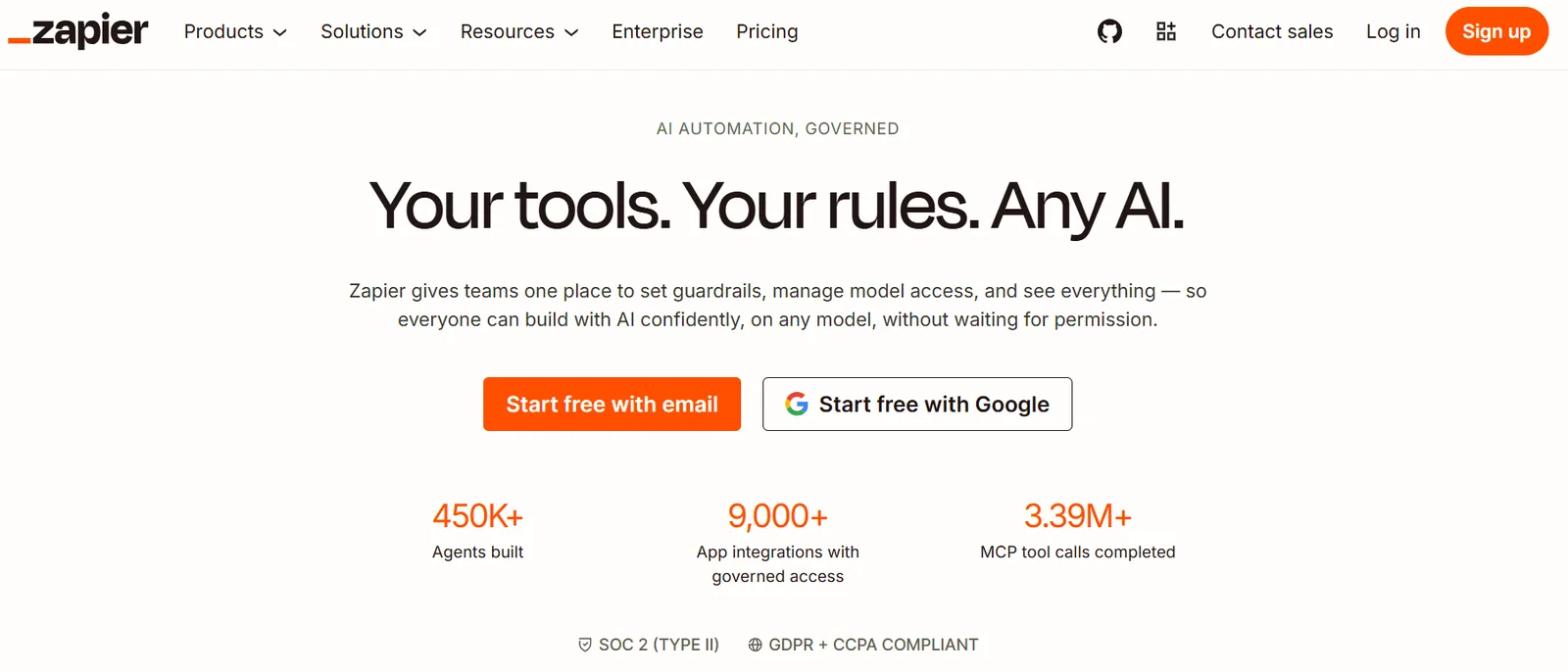
Zapier specifically leans into the handoff between HR and IT. It connects an ATS to an HRIS so that a new hire's data and job metadata transfer without manual re-entry, and frames the goal as making access "day one ready" the moment the handoff occurs. It leverages its 9,000+ integration capabilities to connect IT Service Management platforms, monitoring tools, and communication channels into a single workflow. Its asset management automation tracks hardware and software through their lifecycle with automated status updates and alerts.
Make takes a more workflow-first approach. Its canvas manages role-based permissions across every connected system the second an HR event triggers, and separately scans for provisioned accounts with no recent activity to flag or deprovision on its own. A separate document automation layer keeps records in sync when a system configuration changes, so nothing goes stale between HR's record and IT's.
Approval Routing for Equipment Requests
When a request needs human sign-off before it becomes a ticket or a shipment, these three platforms are the ones most IT teams route it through.
Jira Service Management handles it through Request Management, where requests move through defined stages, with AI agents triaging and suggesting resolution steps along the way. Its Asset Management module tracks inventory, ownership, and lifecycle alongside the request itself, so an approver can see what's already assigned before signing off on something new. The whole flow is on Atlassian's Teamwork Graph, which pulls context from connected tools without extra setup, and extends further through 1,000+ Marketplace integrations.
Freshservice runs this through a drag-and-drop automation builder that orchestrates the approval across connected systems, with Freddy AI assistant suggesting next-best actions based on patterns learned from prior requests. Its unified platform keeps service, assets, and operations in one place, so an equipment request and the asset record it touches aren't managed in separate tools.
ServiceNow takes the broadest swing at it: AI agents handle incident routing and intelligent automation for recommendations, and its single data model means an equipment request, the asset it references, and the workflow design that approves it all live on the same platform instead of being stitched together after the fact.
Compliance Evidence Collection
Approval and fulfillment get most of the attention in this guide, but you also need to prove the controls held.
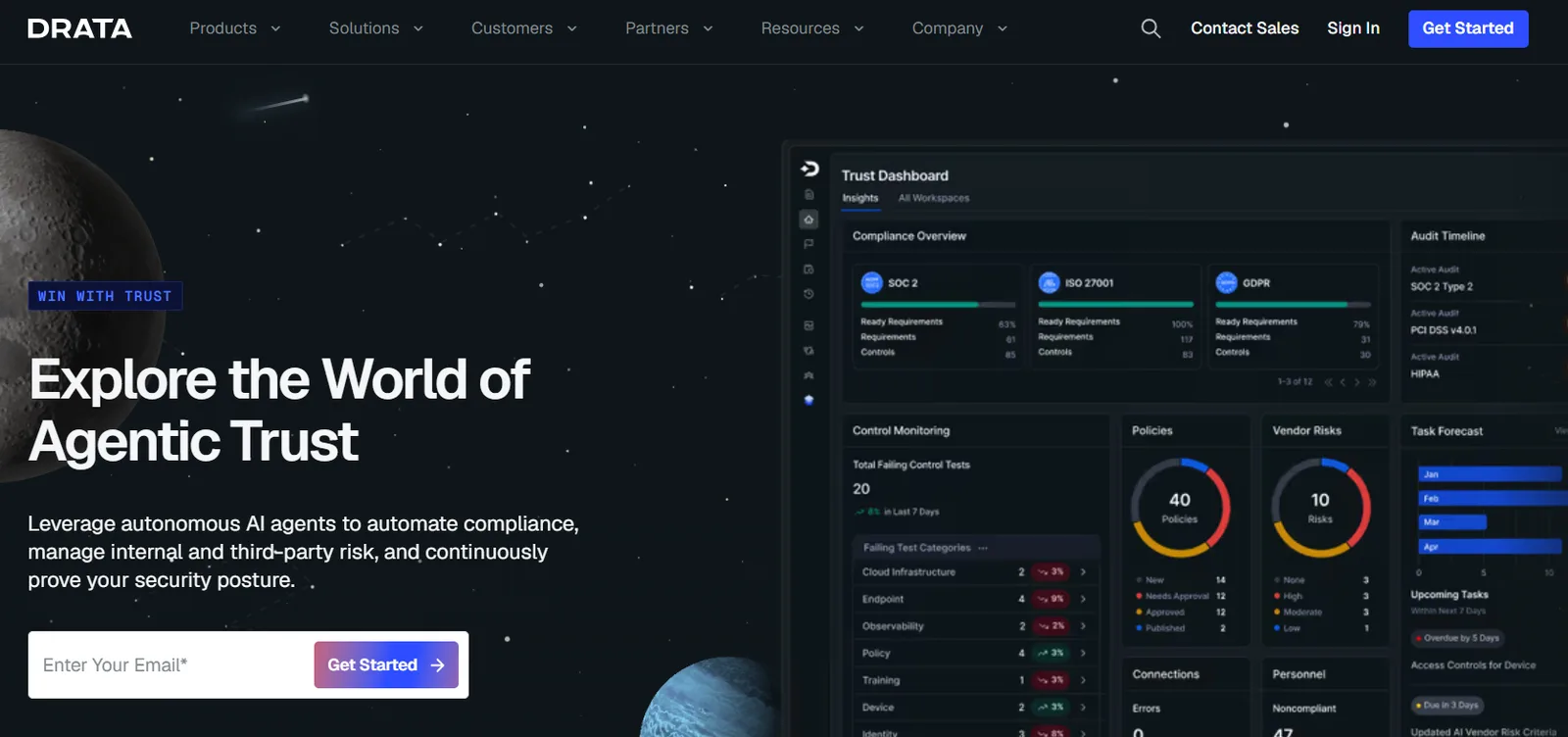
Drata connects to 300+ integrated tools (or a custom one via API) to automatically pull evidence, instead of someone chasing screenshots across systems. Controls map once and reuse it across 30+ frameworks, so one piece of evidence can satisfy SOC 2, ISO 27001, and more without re-uploading. Status updates daily, and drift triggers an alert instead of surfacing during audit week.
It’s strong for proving a digital control held: encryption on, access reviewed, policy acknowledged. It can't prove that a drive was physically destroyed, since that event never occurs within a connected tool.
Device Lifecycle Process Automation
Every platform above ends at the same wall. They can make decisions, log tickets, and file evidence, but the equipment itself still needs a system to back it up.
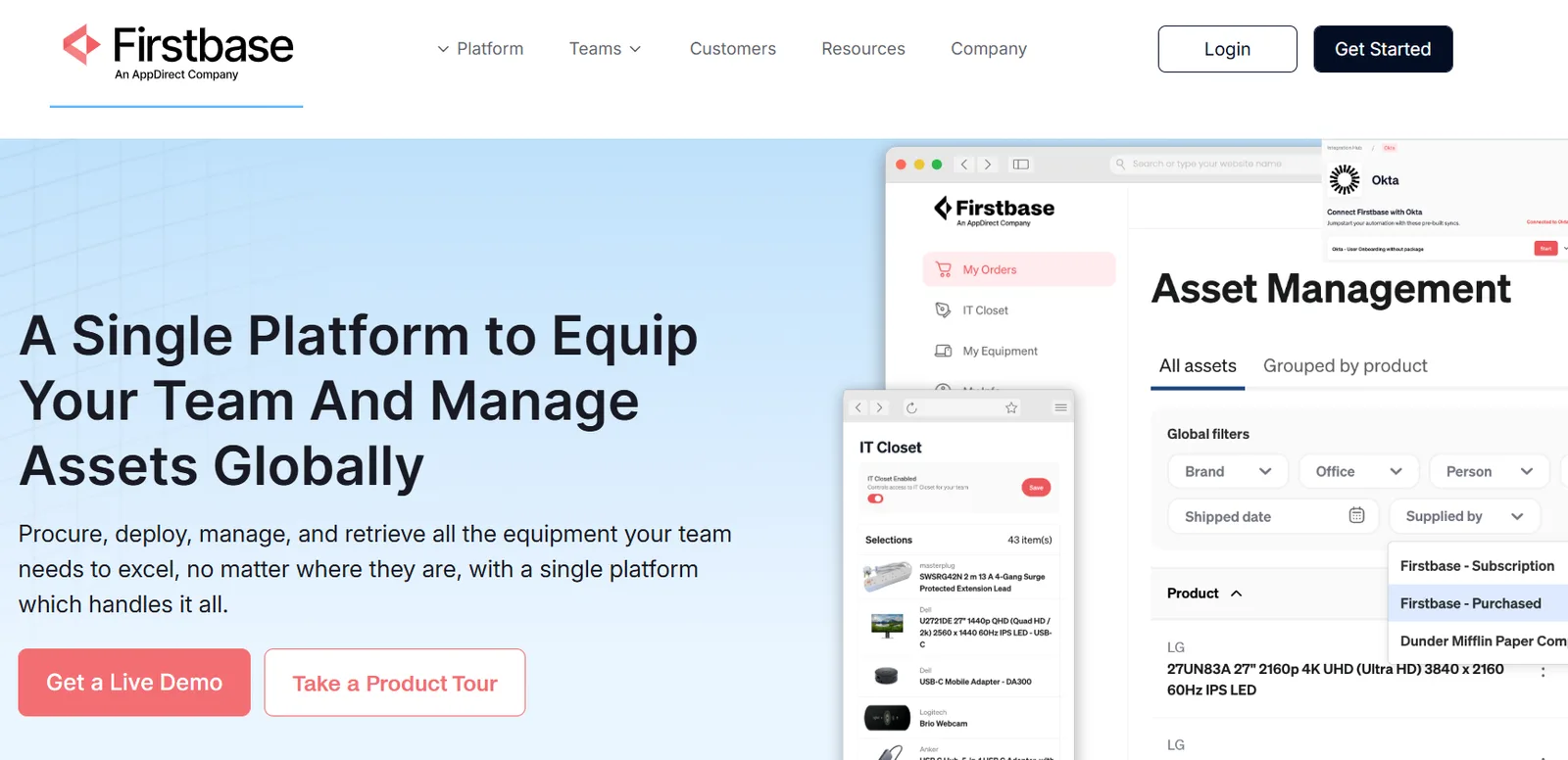
Firstbase runs the physical side across 150+ countries, with local warehouses in strategic hubs so shipping doesn't route through a single US facility for every order.
On retrieval, the industry average for recovering equipment from departing employees is 30-50%. Firstbase's process ships retrieval kits directly to employees, with automated address confirmation and real-time tracking, and achieves 90%+ delivery.
The full cycle (from the offboarding trigger to the device being back in inventory, graded, and wiped) takes under 30 days. For comparison, most MSPs take 30 days just to process a device once it's already sitting in their warehouse.
Data destruction is governed by NIST 800-88 standards, with auto-generated Certificates of Destruction, and ITAD pickup now covers 50+ countries for office-stored devices, not just warehouse returns. Wiped and graded equipment goes back into inventory for the next hire instead of sitting in a supply closet.
"We're a very lean team trying to be as efficient as possible. Removing the complex tasks of boxing up computers and driving to FedEx has allowed us to tackle larger projects and strategic initiatives."
Jared Allenbrand, Head of IT, Cresta
What Users Actually Say About IT Automation Solutions
Let’s look at what reviews and opinions users have about these platforms.
For example, Okta's admin console gets confusing once you're past basic setup. MFA rules, group assignments, layered access control policies, all that takes real onboarding time before a new admin trusts themselves to change anything. Sync delays between Okta and downstream apps also show up during provisioning, causing brief access gaps that users find annoying to trace.
JumpCloud users describe something similar on the MDM side: policies for enforcing custom compliance are thin, so teams end up leaning on manual commands instead. Bulk actions and multi-panel edits in the console feel slow too.
Workato's Lookup Table caps out at 100k records, and CSV parsing stops at 50k, a real wall for anyone syncing large asset lists. Its cache also holds onto stale data with no fix besides rebuilding the recipe from scratch.
Zapier and Make both get flagged for cost creeping up fast as task volume grows, and Make specifically lacks instant triggers, forcing workarounds like mailhooks for something as simple as a new email.
On the ticketing side, Jira Service Management users lose time just figuring out which ticket is theirs, and pulling SLA data for compliance reporting eats an extra hour most weeks.
Freshservice's Jamf connector only adds records, never removes them, so stale device entries pile up and need manual cleanup.
ServiceNow's power comes with real setup overhead, higher licensing costs, and slower performance as reports and customizations stack up. Drata, meanwhile, sometimes flags a device as non-compliant even when Intune or JAMF confirms that every policy has passed.
The Automation Layer That Completes the Device Lifecycle
The most notable limitation around the platforms that we discussed is that none of these platforms touch the device itself, only the data describing it.
Firstbase's API is the layer that executes the physical event your other tools are waiting to hear about, then reports back once it's done.
- Returns and replacements: Start a return order and choose whether to ship it to a Firstbase warehouse or an office. The reasons are fixed values like fulfillment error, off-cycle, damaged, or other for returns; fulfillment error, damaged, upgrade, or standard lifecycle for replacements. A replacement order returns the old device and orders the new one in a single step; if either half fails, both are canceled together rather than left half-processed.
- Offboarding and reactivation: A dedicated endpoint specifies exactly what is returned, what the employee keeps and why, and how the return should be handled, all in a single structured request. Reactivating a returning employee automatically cancels any return order still in motion.
- Warehouse restocking and inventory thresholds: Set a minimum and maximum stock level per product per warehouse. Cross the minimum with auto-restock on, and a restocking order triggers automatically. You supply the PO number, billing type, and expected ship date at creation, so procurement has a complete record without having to chase anyone down afterward.
- Shipment notices and package management: Flag inbound equipment before it arrives, with per-package tracking and item counts. Package management defines equipment bundles with category rules, delivery settings, and approval requirements built into the bundle itself, so a role-based kit doesn't need manual assembly every time.
- Asset creation and querying: Add equipment purchased outside Firstbase by SKU or by category and description, with serial number, condition (NEW or USED), and renewal date recorded, then assign it to a person or office at creation. Every resource, orders, returns, replacements, restocking orders, inventory levels, assets, shipment notices, packages, offices, filters by status, date range, category, product, serial number, person, or country.
A few questions come up almost every time a team scopes this out:
Neither replaces the other. Firstbase runs the physical side (sourcing, shipping, retrieval, wipes), while your identity and ticketing tools keep doing what they already do. For example, New Relic didn't drop Okta to adopt Firstbase; the two run together, with Firstbase authenticating through the same SSO credentials the rest of the org already uses.
Faster than most IT teams expect going in. One Firstbase customer had their HRIS integration built in two weeks, with the setup on their end taking about half an hour once it went live. From there, onboarding kicks off automatically the moment a new hire lands in the HRIS, no manual ticket required on either side.
What a Complete IT Operations Automation Stack Looks Like
The split worth remembering before your next business process automation purchase is that digital orchestration and physical fulfillment are two different problems, and buying more of the first doesn't solve the second.
A complete stack keeps Okta, Workato, Freshservice, or whatever's already working, and adds Firstbase underneath to handle the part none of them were built for: getting hardware to people and back again. Customers that ran their offboarding through Firstbase recovered $175,000+ in reusable devices and saved 700+ hours of internal coordination during a single reduction-in-force event.
That's what closing the physical gap actually looks like in a P&L. Book a demo to see where it fits into yours.
Written by
Ahmad Zakaria
Ahmad Zakaria covers IT operations, hardware lifecycle management, and distributed workforce solutions at Firstbase. His content is built from real customer data, operator interviews, and hands-on experience managing devices across 150+ countries.
Get started with
Firstbase today
Remote and hybrid work aren't going anywhere. It's our mission to make it easier to manage the assets your distributed team needs—from onboarding through offboarding and every repair, replacement, and upgrade in between.
Fill out the form and a member from our team will reach out by phone!
Get a Live Demo