IT Inventory Management Software: 6 Best Platforms for Asset Control
Compare IT inventory management software by tracking and execution layers for distributed teams.
 Ahmad ZakariaMay 26, 2026
Table of contents
- TL;DR: 6 Best IT Inventory Management Software
- What IT Inventory Tools Handle — and What They Don't
- 6 Best IT Inventory Management Software: 2026 Edition
- The Ghost Asset Problem: Why Inventory Software Alone Doesn't Solve It
- The P&L Impact of Ghost Assets
- How Do You Close the Gap Between Inventory Visibility and Lifecycle Execution?
IT inventory management gives teams visibility into their devices — ownership, location, and status across the organization. It shows where assets are, but it does not ensure what happens to them over time.
When execution breaks, gaps appear across the lifecycle. Devices remain assigned but no longer in use, returned assets are not tracked, and some never make it back at all. These gaps create ghost assets.
As organizations expand across locations and time zones, those gaps stack up. IT, HR, and operations teams complete offboarding in one system, follow up on retrieval in another, and manage logistics outside both.
None of these tools really nail the people side of offboarding. Automation can revoke access and track returns, but someone still has to chase that device in another country.
Reddit user, r/ITManagers
In this article, we evaluate the 6 best IT inventory management platforms, what each one covers, and where their scope ends — plus how Firstbase addresses these gaps by executing the asset lifecycle end-to-end.
We're Firstbase, and we understand how this category works in practice. This evaluation focuses on what matters for distributed teams: best-fit use case, core ITAM functionalities, coverage across the device lifecycle, and key considerations.
TL;DR: 6 Best IT Inventory Management Software
| Platform | Best Fit | Lifecycle? | Key Gap |
|---|---|---|---|
| Firstbase | Distributed teams, 500–1,500 employees | Yes, end-to-end | Includes physical ops |
| ServiceNow | Large enterprises with ITSM | Partial (workflow) | No physical execution |
| Freshservice | Mid-sized, quick deployment | Partial (inventory) | No logistics or retrieval |
| JumpCloud | Identity-first, zero-trust | No (control only) | No hardware lifecycle |
| Jamf | Apple-centric organizations | Partial (device mgmt) | No cross-platform or physical ops |
| Asset Panda | Flexible asset tracking | Partial (configurable) | No logistics or ITAD |
What IT Inventory Tools Handle — and What They Don't
Devices move across procurement, deployment, usage, repair, and recovery. IT inventory systems track these transitions but don't control how devices actually move across vendors, regions, and employees.
| Layer | What It Handles | How It Shows Up |
|---|---|---|
| Software visibility | Asset records created, assigned, updated across MDM, HRIS, service tools | Status changes, logs, records updated |
| Physical operations | Devices procured, shipped, repaired, reassigned, recovered across vendors | Outcomes reflected after actions completed outside the system |
Teams using Firstbase get:
SEE IT IN ACTION
Take a self-guided tour of Firstbase
See how Firstbase closes the gap between inventory visibility and physical lifecycle execution.
Take the Tour →6 Best IT Inventory Management Software: 2026 Edition
Most IT inventory tools promise visibility, but that alone doesn't translate into control. The platforms below show how different tools approach inventory, and where their scope begins and ends.
Firstbase
Ideal for: Distributed companies (50–1,500 employees) managing global device fleets where IT needs control beyond tracking
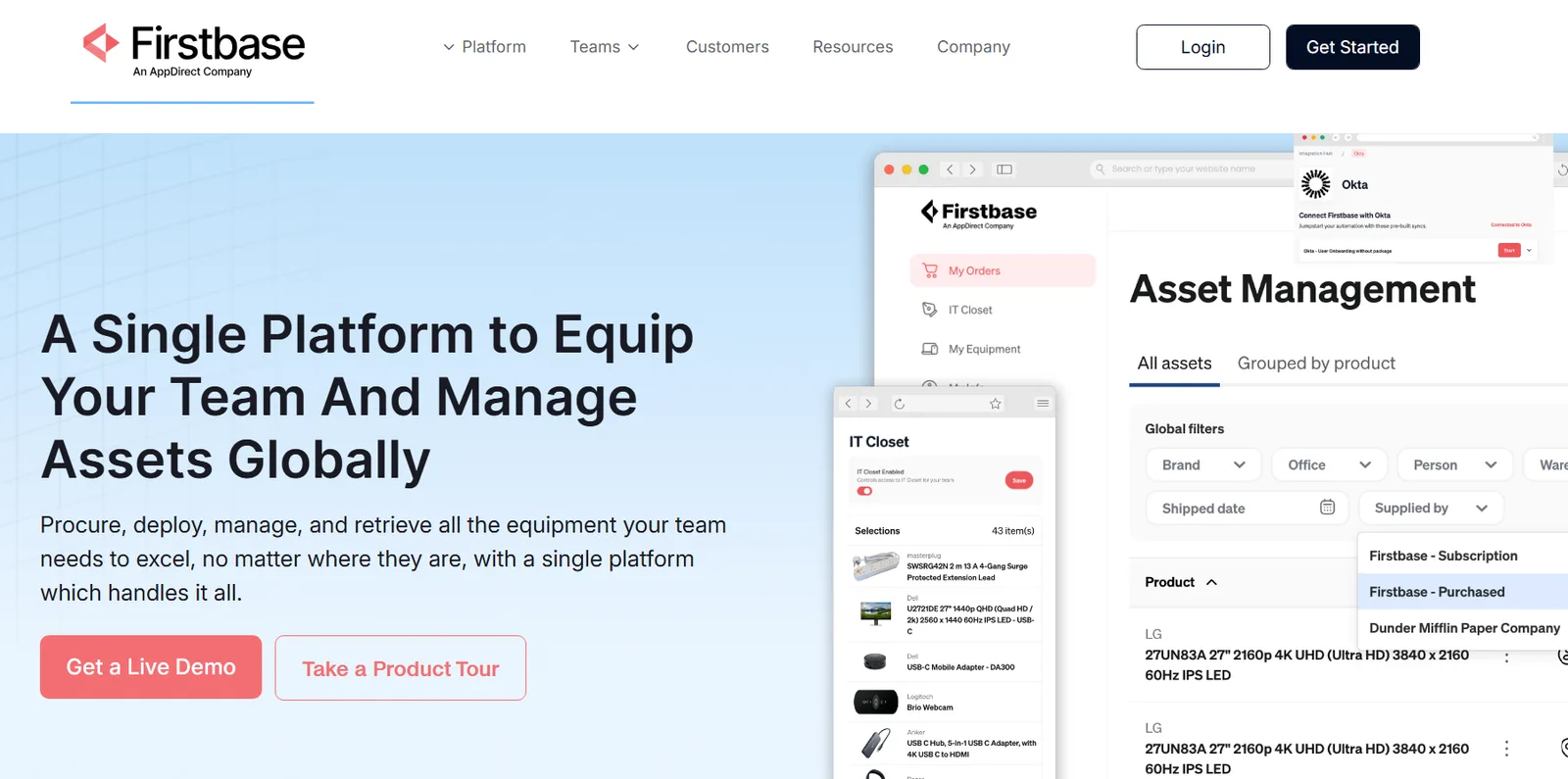
Firstbase operates as the execution layer. When a device needs to be retrieved, it triggers the workflow through HRIS integrations, ships prepaid return kits, coordinates courier pickup with 48-hour global turnaround, tracks through live chain of custody, and routes back into inventory with NIST 800-88-compliant data sanitization.
- Automated inventory reconciliation: Continuously syncs asset data across systems, reducing IT workload on asset operations by up to 75%.
- Real-time asset tracking: GPS, barcode scanning, and user attribution improve inventory clarity by 1.8x across users, regions, and lifecycle stages.
- Exception and gap detection: Identifies unreturned or mismatched assets early, reducing lost asset costs by 30% in year one.
- Full physical lifecycle: Handles procurement, configuration, deployment, retrieval, and certified IT asset disposition across 150+ countries.
Considerations
If your requirements are limited to tracking assets or running audits, without the need for a full lifecycle management platform, a standalone ITAM tool may be a simpler fit. Firstbase is also not suitable for single-location teams, organizations focused only on software license management, ITSM-only workflows, or environments where devices do not move across users or regions.
Does this platform fully manage the asset lifecycle, or will our team still need to coordinate across multiple tools and manual workflows?
Firstbase centralizes and automates the full asset lifecycle, from procurement to redeployment, within a single system. Once a workflow is triggered (like onboarding or offboarding), it handles configuration, shipping, tracking, retrieval, storage, deployment, or redeployment without manual coordination.
Your existing systems, like HRIS, MDM, and finance tools, remain in place, but your team no longer has to manage handoffs between them manually. Instead of coordinating across multiple tools and vendors, everything runs through one lifecycle workflow, with automation handling transitions in the background.
ServiceNow
Ideal for: Large organizations needing structured ITSM with integrated asset tracking
ServiceNow brings asset management into the same system where IT work happens, tying devices to tickets, employee records, and service processes.
- Unified asset visibility: Centralized management of hardware, software licenses, and cloud resources.
- Workflow-driven updates: Automated asset record updates during onboarding, transfers, and offboarding.
- CMDB dependency mapping: Links assets to users, services, and configuration items.
- Contract tracking: Warranties, leases, and vendor contracts alongside asset records.
Considerations
Implementation can take up to 12 months. Does not handle physical execution — shipping, retrieval, or disposal.
Freshservice
Ideal for: Mid-sized teams needing quick-to-deploy ITAM integrated with service desk
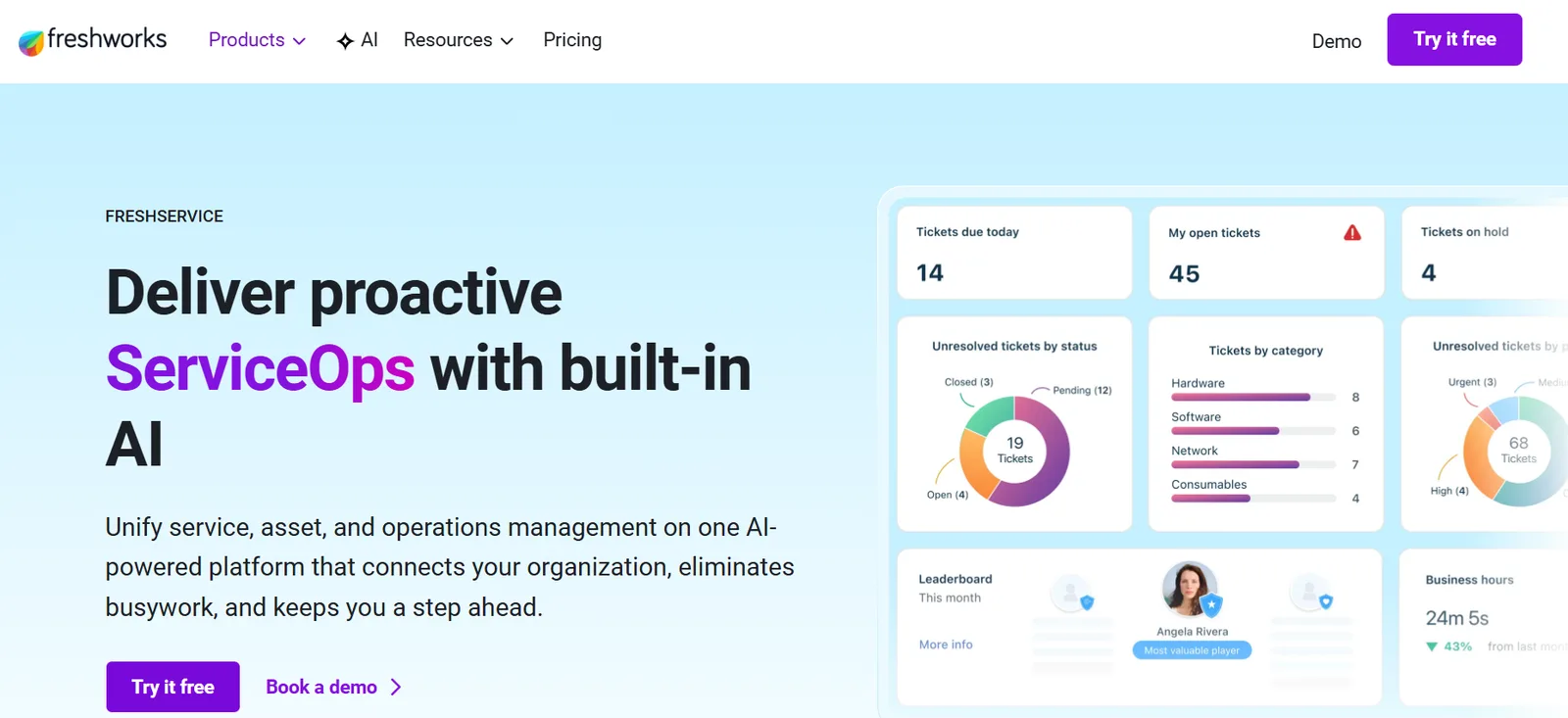
Freshservice is an ITSM tool with built-in ITAM. For IT teams handling onboarding, offboarding, and support, it brings asset tracking into the same system.
- Software license optimization: Monitors usage against entitlements to reduce overspending.
- Asset-to-service linking: Connects asset records to incidents, requests, and changes.
- 1000+ integrations: Jira, Slack, Azure AD, and more via marketplace.
- No-code analytics: Real-time dashboards for SLA, tickets, and projects.
Considerations
Caps the number of asset units. Hardware Asset Management and CMDB not available in the base plan. No logistics, procurement, or retrieval layer.
JumpCloud
Ideal for: Identity-first, zero-trust environments (100–2,000 employees)
JumpCloud is a directory-first platform combining identity, access, and device management across Windows, macOS, and Linux. Inventory sits alongside identity and access control instead of operating as a separate layer.
- Automated asset data population: Auto-populates device specs via native agents and integrations.
- Asset-to-record linkage: Scannable labels connect physical devices to digital records.
- HRIS integration: Automated provisioning and deprovisioning through HR system sync.
- Search and filtering: Quickly identify asset information across the fleet.
Considerations
Cannot provision hardware globally, retrieve devices, or manage logistics. MDM integrations lack depth, and setup requires technical expertise.
Jamf
Ideal for: Organizations with a predominantly Apple device fleet
Jamf is an Apple-focused device management platform with inventory, configuration, and security tightly integrated into the Apple ecosystem.
- Zero-touch deployment: Apple Business Manager integration for automated device setup.
- Patch management: Automates OS and third-party updates for security and compliance.
- Automated data collection: Captures hardware identifiers, OS versions, apps, and storage metrics.
- Smart targeting: Triggers device actions based on predefined conditions.
Considerations
Apple-only scope limits applicability in mixed-device fleets. Does not extend to procurement, logistics, retrieval, or certified disposal.
Asset Panda
Ideal for: Teams needing flexible, configurable asset tracking
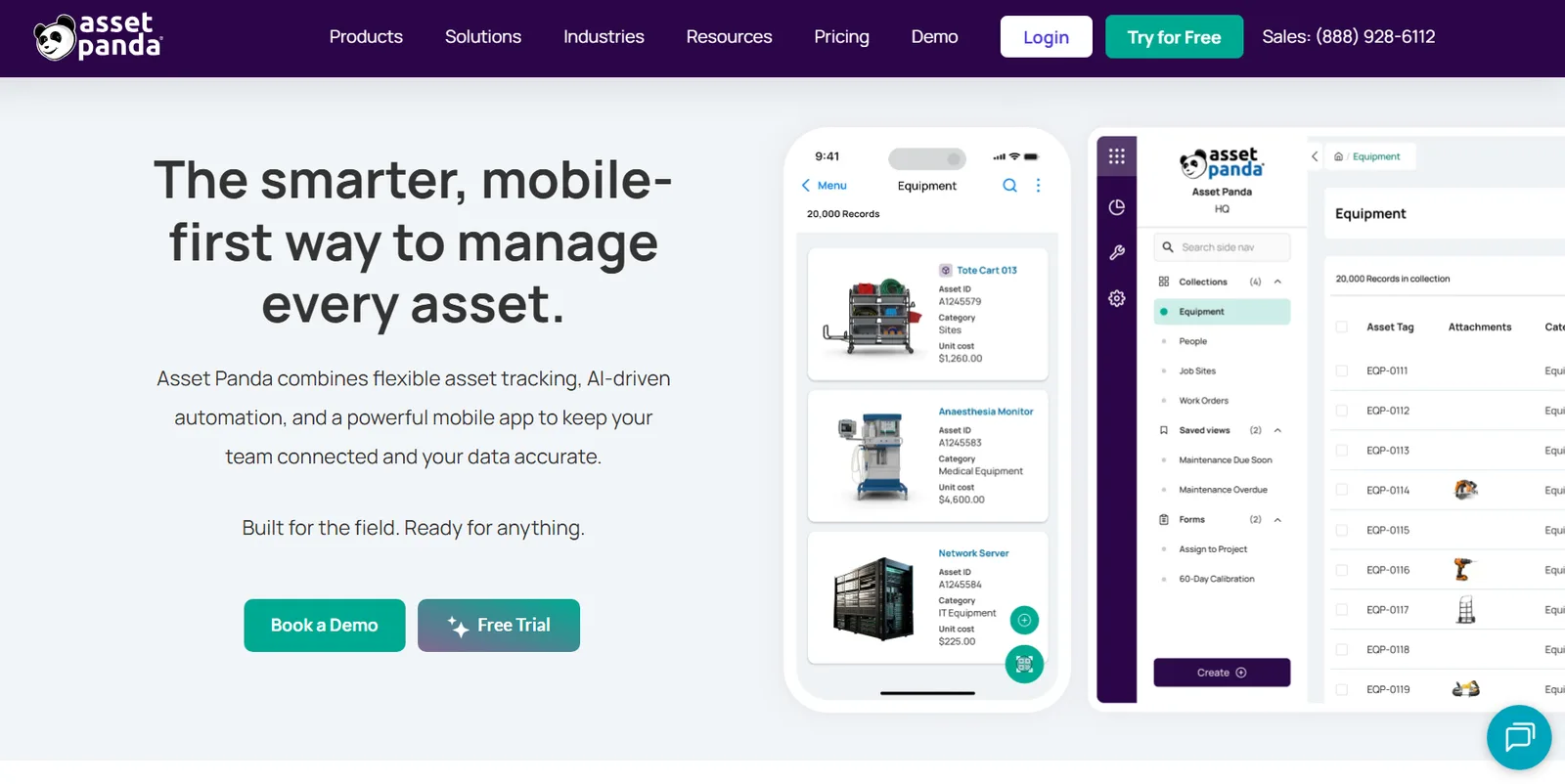
Asset Panda is a configurable asset tracking system that lets teams define how devices are recorded, categorized, and updated using custom fields, workflows, and asset types.
- Field-level tracking: Real-time location, status, and ownership via barcode/QR scans.
- Check-in/check-out: Assignment and return tracking for basic lifecycle transitions.
- Centralized inventory: Structured details including location, ownership, value, and warranty data.
- Budgeting insights: Uses lifecycle and depreciation data to inform procurement decisions.
Considerations
Flexibility comes with configuration overhead. Does not handle physical procurement, global logistics, retrieval, or certified ITAD.
The Ghost Asset Problem: Why Inventory Software Alone Doesn't Solve It
Inventory tools record who has the device. They do not ensure retrieval, custody, or lifecycle closure. Ghost assets result from broken operational steps across IT, logistics, finance, and HR teams. Let's look at the reasons and ways to rectify them.
Reasons behind ghost assets
| Cause | What happens | Failure point | Impact |
|---|---|---|---|
| Retrieval failure | Employee exits, device not returned | No logistics orchestration | Lost devices contribute directly to data loss exposure. 41% of data loss incidents involve lost or stolen devices. |
| Manual offboarding workflows | HR updates status, IT action delayed | No automated trigger | 57% of organizations still use manual asset tracking methods, increasing the risk of missing or unaccounted assets. |
| Poor asset tracking | Devices exist, but are not updated in the system | No real-time tracking | Untracked assets reduce utilization and increase unnecessary purchases. |
| Missing chain-of-custody | Device returned, but not logged | No audit trail | Missing audit logs increase compliance risk and remediation cost. 73% of enterprises report data leaks linked to process gaps. |
| Unstructured disposal (ITAD gap) | Device wiped/discarded without records | No lifecycle closure | Sensitive data remains on improperly wiped devices, exposing organizations to regulatory penalties that can exceed $100,000. |
So, what actually prevents ghost assets?
Asset tracking is only the basic step. To avoid ghost assets, you should have:
- Provisioning control: Devices must be procured, configured, and assigned through a standardized workflow that has accurate records of ownership from day one.
- Assignment and visibility: Asset status must stay in sync across HRIS, IT inventory, and MDM systems without any manual work.
- Retrieval execution: Offboarding must automatically trigger device recovery with defined ownership, SLA, and global logistics support.
- Disposal and data security: Devices must be securely wiped and processed through certified ITAD workflows with documented proof.
- Lifecycle closure and finance alignment: Every asset must reach a final state with visibility into recovery, redeployment, or write-off.
The P&L Impact of Ghost Assets
When lifecycle controls are missing, ghost assets form at every stage, from provisioning to disposal. Firstbase addresses each gap, providing real financial outcomes.
| Lifecycle gap | What breaks without it | How Firstbase handles it |
|---|---|---|
| Manual provisioning and poor onboarding control | Devices are over-provisioned or untracked from day one, leading to idle inventory and unnecessary purchases. | Centralizes procurement to reduce stock levels by up to 30% and minimize idle inventory and unexpected CapEx. |
| Disconnected systems (HRIS, ITAM, MDM) | Asset data falls out of sync, creating inaccurate inventory and audit gaps. | Syncs HRIS, ITAM, and MDM systems to keep asset data aligned and save 700+ IT hours annually. |
| Manual retrieval workflows | Delays and missed recoveries increase device loss and replacement spend. | Triggers retrieval workflows with prepaid kits and tracking, improving recovery rates from 60–70% to 97%. |
| No global logistics layer | International device recovery fails, increasing permanent asset loss and shipping inefficiencies. | Supports operations across 150+ countries with bonded warehouses. |
| Lack of chain-of-custody tracking | Devices get lost in transit or unverified on return, breaking audit trails. | Logs every asset movement, improving tracking accuracy by up to 1.8× and closing audit gaps. |
| No ITAD or improper disposal | Residual data risk leads to compliance exposure and potential penalties. | Performs NIST 800-88-compliant data destruction, with certificates and resale credits to offset costs. |
| Operational inefficiency | IT teams spend significant time managing devices instead of strategic work. | Automates procurement, deployment, and returns, saving 500+ IT hours per 100 employees annually. |
How Do You Close the Gap Between Inventory Visibility and Lifecycle Execution?
An IT inventory management system captures tracking and status but does not extend into execution. As teams scale, these gaps expand across systems, logistics, and ownership.
Firstbase manages the full physical lifecycle — devices configured and shipped within 2–5 business days, retrieval triggered automatically during offboarding, return kits dispatched in minutes, pickups scheduled within 48 hours across 150+ countries. Once returned, devices are securely wiped (NIST 800-88), inspected, and either reassigned or resold.
Written by
Ahmad Zakaria
Ahmad Zakaria covers IT operations, hardware lifecycle management, and distributed workforce solutions at Firstbase. His content is built from real customer data, operator interviews, and hands-on experience managing devices across 150+ countries.
Get started with
Firstbase today
Remote and hybrid work aren't going anywhere. It's our mission to make it easier to manage the assets your distributed team needs—from onboarding through offboarding and every repair, replacement, and upgrade in between.
Fill out the form and a member from our team will reach out by phone!
Get a Live Demo