Asset Panda Review
Asset Panda Review for 2025 Remote Operations
 Chris HerdNovember 3, 2025
Table of contents
When companies search for an Asset Panda review, they’re usually comparing dashboards and barcode features. That’s the easy part. The real problem isn’t tracking. It’s everything that happens before and after: global shipping, customs, retrieval, and reconciliation across HR and Finance.
Asset Panda handles asset visibility well, but it stops there. Tracking alone doesn’t recover devices, prevent freight overages, or close audit loops. In a world where 56% of workers are in hybrid arrangements, teams need more than record-keeping. They need an automation layer that manages the full device lifecycle.
Not just that, global device ops have two costly drains: slow cross-border deliveries and poor retrieval success. Shipments often take 6-10 days, and barely half of the devices return with proof of data wipe. Lifecycle platforms like Firstbase fix both. With 48-hour global SLAs and 97% retrieval within 30 days, it closes the loop that traditional tracking tools can’t.
In this review, we’ll see how the hidden cost of do‑it‑yourself logistics dwarfs software licences. And you’ll learn why companies moving to Firstbase are saving headcount, cash, and time. Let’s get into it.
A detailed Asset Panda review: What it delivers (and what it doesn’t)
Asset Panda is a cloud-based ITAM platform founded in 2012. It was originally built to replace manual spreadsheets and paper lists for tracking IT equipment and inventory.
Over time, the software expanded into a broader system that helps organizations manage and audit their physical and digital assets in one place.
Today, Asset Panda is used across more than 140 industries and 60 countries, helping companies monitor millions of assets (from laptops and tools to vehicles and leased equipment). The platform gives your business a single, accurate record of where every asset is, who’s responsible for it, and what it’s worth.
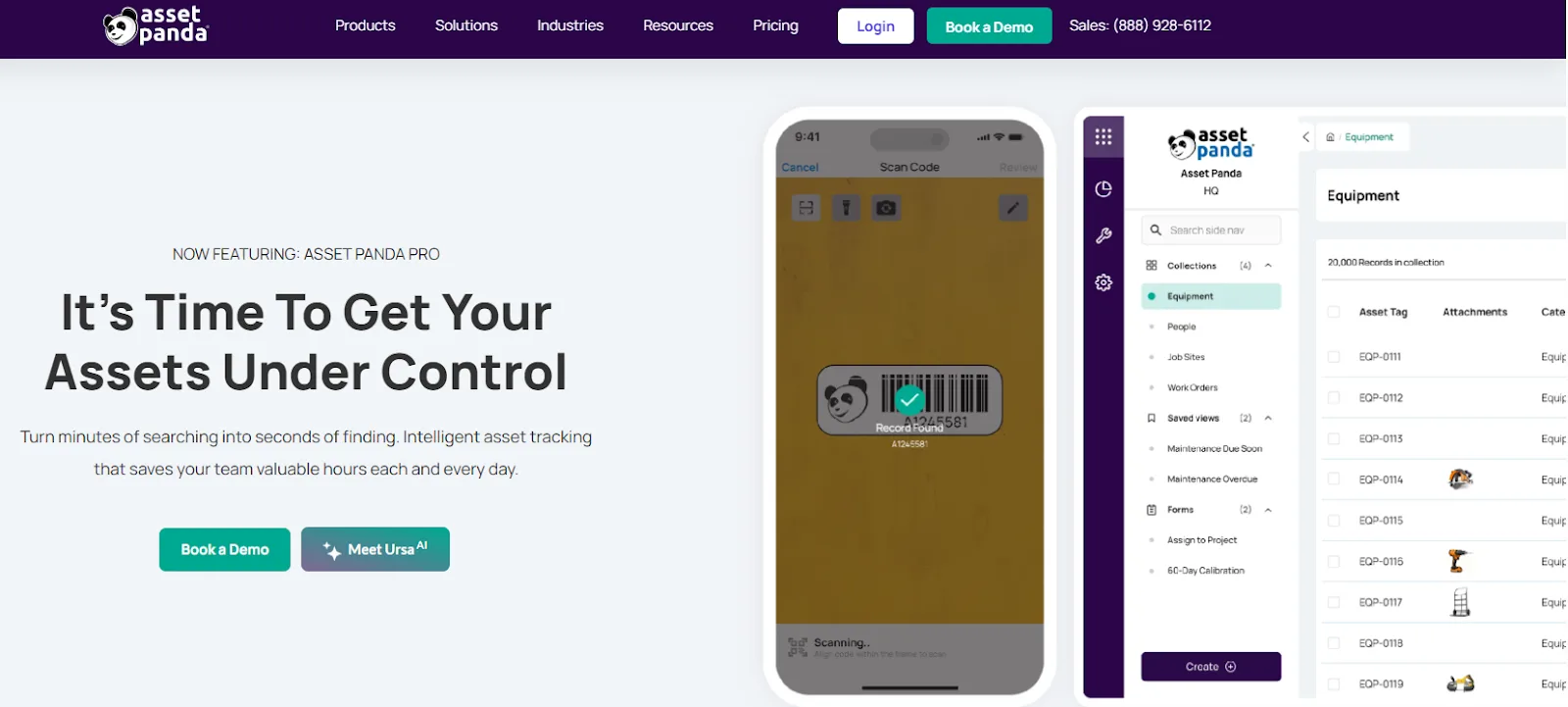
You can customize fields, set maintenance schedules, and run reports even without knowing any code.
The company has earned a niche with small IT teams and MSPs with that flexibility. When all you need is an accurate list of serial numbers and the ability to assign laptops to employees, Asset Panda delivers.
Here are a few remarkable features that Asset Panda offers:
Asset Panda’s biggest win is its ability to consolidate everything about a company’s hardware or equipment into one system. Your teams can track hardware, software, and equipment across their lifecycle, all while logging warranty data, manuals, and action histories in one place.
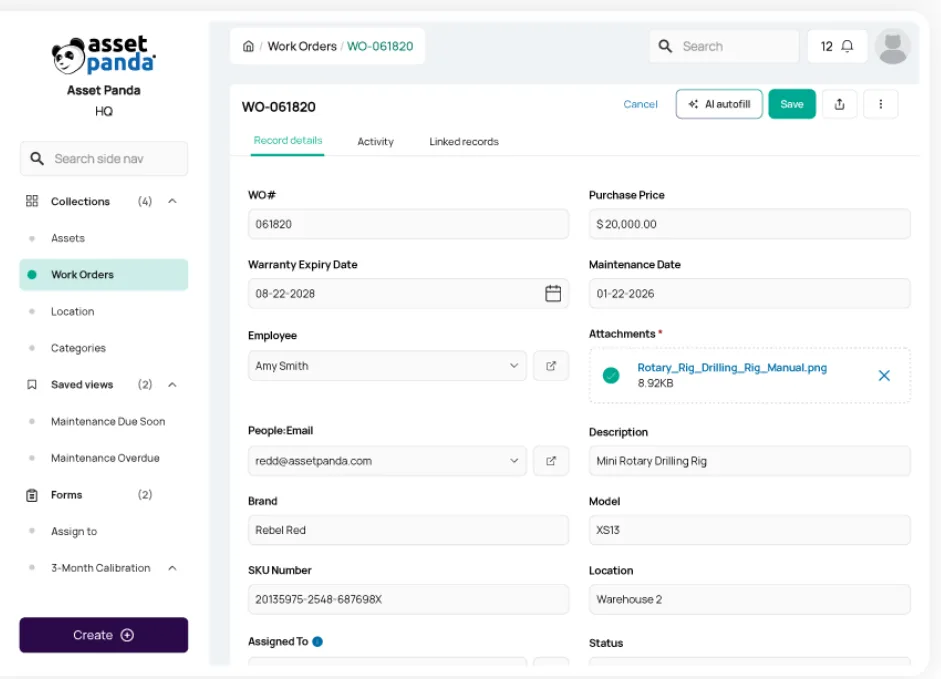
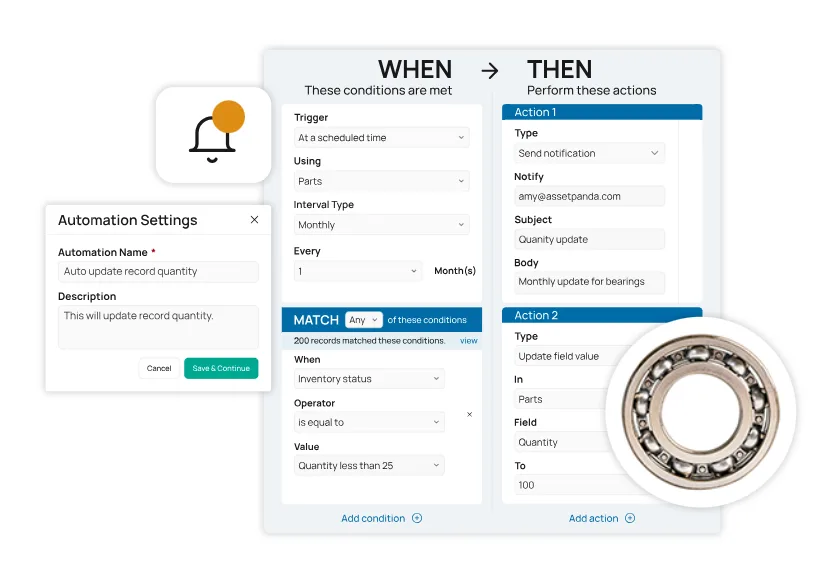
You’ll have features like barcode and QR scanning, maintenance scheduling, compliance management, and custom workflows. All this reduces manual record-keeping and spreadsheet dependency.
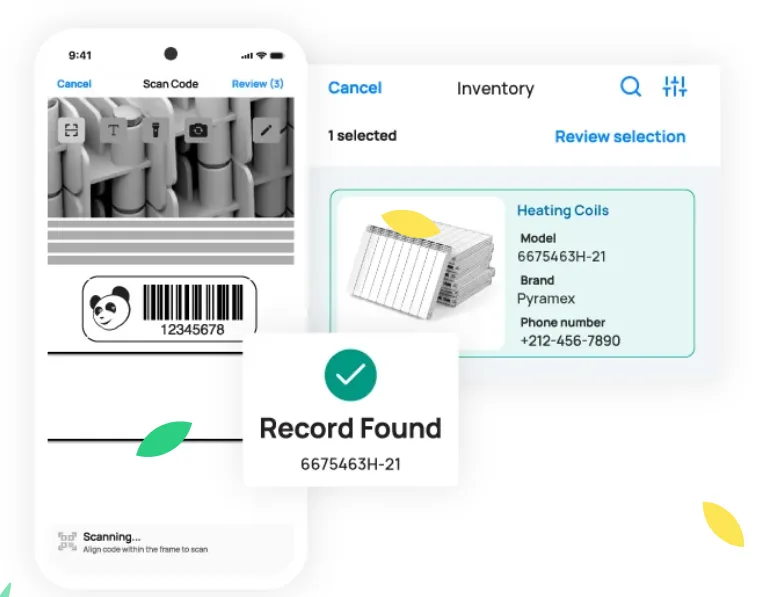
You can build custom modules, assign unique permissions, and integrate Asset Panda with tools like Azure Active Directory, Jamf Pro, Google Workspace, and Microsoft Intune.
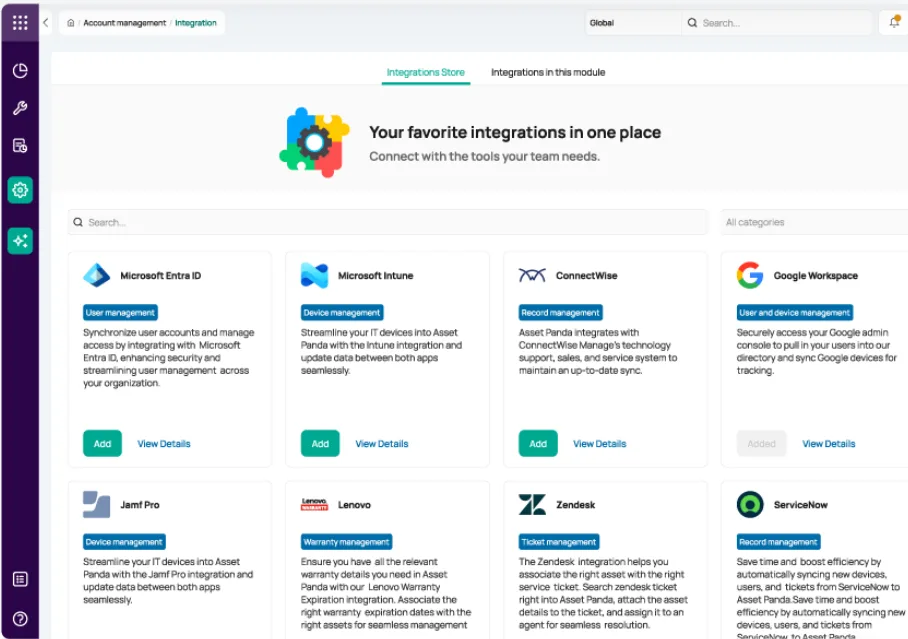
Asset Panda also doubles as a lightweight inventory management system. Teams can track stock, spare parts, or tools directly through the web or mobile app, complete with built-in barcode scanning. The platform makes it easy to check out items, pull required parts, and run quick audits or inspections without third-party hardware.
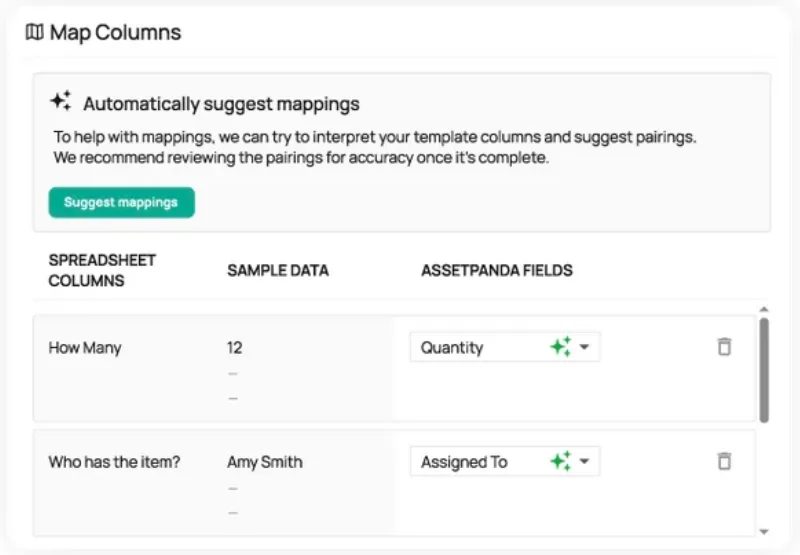
Recent AI-assisted features to Ursa AI (its AI suite), like column mapping and auto-translation, make setup faster and multilingual use easier. For IT managers who want better visibility and custom workflows, it’s a capable, flexible platform.
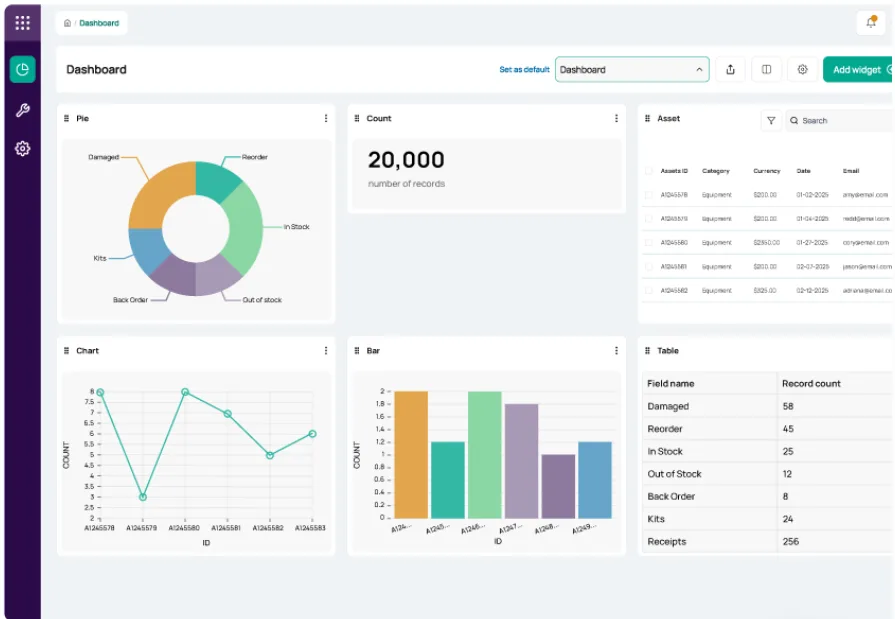
Asset Panda’s reporting tools give teams a clear view of asset usage, financial performance, and maintenance status. The dashboard is easy to navigate, with both pre-built and custom report options. Users can filter data by location, department, or asset type to analyze trends like utilization, depreciation, and maintenance costs.
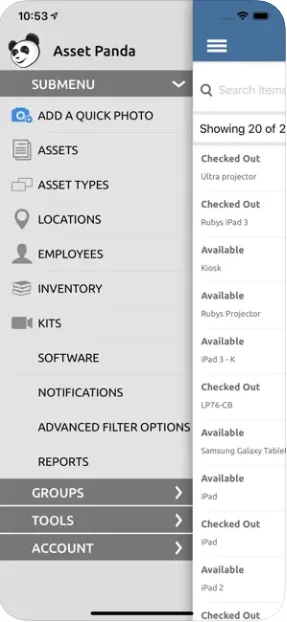
The mobile app (iOS and Android) lets users scan barcodes and QR codes, check asset records, and complete audits from the field. Offline mode allows local data entry and syncs once the connection is restored. It’s ideal for teams managing warehouses or remote job sites.
Where it falls short
Despite its robust feature set, several user reviews highlight friction once teams move from tracking to operational management.
One recurring complaint is about data export limitations: exporting or downloading asset data isn’t always straightforward. It sometimes requires reports to be emailed, which slows audits and data analysis.

The pricing can also catch growing companies off guard. It’s based on the number of assets, not users, so costs rise quickly as your inventory scales.

There’s also a learning curve for advanced setup, as some users put it. Workflows and API configurations aren’t as no-code as advertised, and users mention that some screens lag or take too many clicks to get through.

Finally, Asset Panda focuses on tracking, not logistics. It doesn’t handle global device delivery, retrieval, resale, or customs coordination, all of which are essential for distributed companies.
That gap becomes real costs when assets need to be shipped, recovered, or redeployed across borders. In other words, Asset Panda helps you know where your assets are, but not how to move them efficiently.
Hidden costs of DIY logistics
Teams that lean on DIY logistics often pay much more than they anticipate. Let’s enumerate where the cost leaks occur and why tracking software alone can’t plug them.
Time Lost to Shipping and Returns
Even a small remote workforce creates an outsized logistical load. A Firstbase field study found that IT teams spend roughly 500 hours per 100 remote employees on routine device logistics: packing, labeling, courier booking, shipment tracking, and retrieval follow-ups.
Scale that to 1,000 employees and the number jumps to 5,000 hours a year, or the equivalent of two to three full-time IT staff focused purely on shipping.
Turnover compounds the loss. Industry averages show that only 50–60% of company laptops are successfully retrieved. Even with a 70% retrieval rate, a 1,000-person organization loses about 45 devices annually.
At an average device cost of $1,500, that’s $67,500 gone (not counting monitors, accessories, or the administrative time wasted chasing down returns).
Risk and unpredictability
Unreturned devices are liabilities. Lost laptops may still contain sensitive data, and without chain‑of‑custody proof or certified destruction, firms face regulatory fines.
Analysts estimate that workers using outdated or poorly maintained hardware lose $3.6k in productivity per year. And companies can lose several thousand dollars per employee in tech support and downtime costs. For example, Morgan Stanley faced a $35 million penalty for failing to protect customer data.
And never forget to account for the customs fees, courier rates, and duty taxes that make the cost of do‑it‑yourself logistics unpredictable.
Employee experience
People‑ops leaders know that onboarding sets the tone for retention. Organizations with a great onboarding programme improve 82% new‑hire retention and 70% productivity.
Yet in many remote setups, employees wait days (or even weeks) for hardware shipped from headquarters. That delay hurts first impressions and engagement.
Gallup’s research found that 54% of remote workers say they would look for another job if their employer stopped offering remote work options. And delays, poor equipment handling, or inconsistent support make remote work feel harder than it should be. It all undercuts the flexibility employees value most.
Asset Panda can document that a device exists. But it cannot guarantee that it arrives on time, that it’s collected efficiently when an employee leaves, or that HR and IT can close the loop without manual work. That gap is where costs (and frustration) multiply.
What an Ops-Automation Layer Adds
An Ops-Automation layer fills the gap between software and real-world execution. It runs the workflows that make distributed asset management work at scale. That means connecting procurement, shipping, retrieval, refurbishment, and finance into one operational system instead of five disjointed handoffs.
At a practical level, that layer does three things traditional tracking tools can’t:
- Turns logistics into infrastructure: Instead of IT packaging boxes and chasing couriers, logistics becomes a service. Regional hubs and bonded warehouses handle storage and movement automatically, under guaranteed timelines. It’s how companies get out of the shipping business.
- Links physical operations to digital systems: HR, IT, and Finance workflows sync in real time. Say your HR offboards an employee, the system automatically triggers device retrieval, courier scheduling, data wipe, and asset updates in the finance ledger. No manual tickets or follow-ups.
- Reclaims visibility across the full lifecycle: An automation layer maintains live audit trails (when a laptop was shipped, received, wiped, or resold), closing the compliance and cost loops that tracking software leaves open. It replaces fragmented emails and spreadsheets with system-level accountability.
In short, an Ops-Automation layer moves teams from knowing what happened to controlling what happens next. It’s what allows distributed companies to operate like they’re still under one roof.
Five Capabilities You Still Need (and How Firstbase Covers Them)
Below are five capabilities every global IT, HR, and Finance team now needs. You’ll also see how Firstbase’s Ops-automation layer closes those gaps with measurable results.
Delivery and retrieval SLAs
Shipping is the simplest task on paper and the hardest in practice. Getting a laptop to a new hire in Berlin or retrieving one from a contractor in São Paulo means navigating customs, taxes, courier reliability, and tracking blind spots. Traditional vendors or in-house teams can’t guarantee uniform service levels across countries.
You’ll need a logistics network that operates as predictably as your software stack that delivers and retrieves devices on a fixed timetable, regardless of geography.
Firstbase runs a network of 150+ bonded warehouses that underpins its 48-hour ship-and-pickup SLA. Each location is strategically placed to cover major hiring regions and minimize customs delays. The model is independently validated through annual operational audits, so you’ll have consistent performance across continents.
That means every employee (new or departing) gets hardware moved within a two-day SLA. With this, you can eliminate onboarding delays and prevent the basic “where’s my laptop?” ticket spiral that eats IT hours.
Proven retrieval success rates
Every unreturned laptop represents exposure like untracked data, unverified wipes, and unresolved financial depreciation. With the average industry retrieval rate, you’ll risk all these.
A retrieval process that’s easy for employees, verifiable for IT, and measurable for Finance is what you need here.
Firstbase shows 97%+ retrieval success rates and full closure (from offboarding trigger to warehouse return) in under 30 days. So, automate address confirmation, ship retrieval kits directly to users, and handle courier pickup all without requiring the employee to leave home.
End-to-end lifecycle automation
Managing the equipment lifecycle (procurement, configuration, delivery, repair, retrieval, and redeployment) usually involves at least three departments and multiple vendors.
Manual coordination means long gaps and missed updates. So you’ll need a single system that automates every step, records every hand-off, and integrates with HRIS, ITSM, and finance tools.
The Firstbase platform links directly with platforms like Workday, BambooHR, ServiceNow, and Oomnitza, so data moves automatically instead of through emails and spreadsheets. Every device is tracked from purchase through setup, delivery, return, and retirement. When hardware is decommissioned, Firstbase provides NIST-certified proof of data destruction, so compliance never depends on a manual update.
You won’t need separate spreadsheets, vendor emails, and manual follow-ups, ensuring no device or cost slips through.
Transparent and predictable costs
DIY logistics are inherently volatile. Freight rates change, customs duties fluctuate, and courier surcharges add unpredictability to every shipment. Finance leaders can’t forecast accurately when each move is a new variable.
But if you have cost models that are predictable, consistent, and easy to tie to headcount rather than fluctuating shipment volumes, you win.
Firstbase introduced its per-seat pricing model to eliminate all uncertainty. The model rolls logistics, warehousing, and retrieval into a single predictable line item that the CFO can actually forecast. One global software company saved $125 per departing employee and saved 700+ hours of admin time.
Redeployment, resale, and sustainability
Unused devices are wasted capital. Industry research shows that roughly 30% of fixed IT assets are “ghosts” (recorded in inventory but not in use).
Firstbase retrieves devices quickly, grades their condition, and either redeploys or resells them to recapture value. In one customer merger, this process returned $175k in recovered hardware value.
When devices reach the end of life, Firstbase oversees NIST-certified destruction to ensure data security and support ESG reporting.
Why every Asset Panda review leads to the same answer: Firstbase
Asset Panda deserves credit for making asset tracking accessible. For teams with a handful of laptops and no cross‑border hiring, it can be adequate. But as work shifts permanently to distributed and hybrid models, the pain moves upstream.
That’s what defines the next generation of device lifecycle management. An Ops-automation layer that connects logistics, compliance, and finance into one closed loop.
Firstbase treats devices like infrastructure: always available, self‑service, and connected to the rest of your business. The platform’s global infrastructure and API integrations replace weeks of manual work with real-time orchestration. In doing so, companies free their teams to focus on outcomes rather than paperwork.
Per 1,500 employees, Firstbase customers save an average of $163,000 and 2.3K hours every year after adopting the platform. Book a Firstbase demo and measure how much time and capital you can reclaim.
Written by
Chris Herd
Chris Herd is the visionary founder and CEO of Firstbase, recently acquired by AppDirect, who pioneered the end-to-end hardware provisioning platform now used by tens of thousands of remote employees. Including employees from Spotify, UI Path, Verint and WeWork. With roots in fintech, Chris experienced firsthand the logistical pains of remote hardware management. His company has since scaled, backed by top-tier investors like Andreessen Horowitz and Kleiner Perkins, before its recent strategic acquisition. As an outspoken champion of remote-first culture, Chris continues to shape how companies equip, empower, and trust their distributed teams.
Get started with
Firstbase today
Remote and hybrid work aren't going anywhere. It's our mission to make it easier to manage the assets your distributed team needs—from onboarding through offboarding and every repair, replacement, and upgrade in between.
Fill out the form and a member from our team will reach out by phone!
Get a Live Demo